2026 Lift Chair Guide: Renting & Buying for the Elderly
September 25, 2026
Published by Life4Rent · Operated by Brohf Software OÜ
Last month, a neighbor spent over $2,000 on a motorized recliner for a three-week recovery, only to see it gather dust in the spare room once the stitches came out. It's a common mistake made during the rush of hospital discharge. You might think buying is the only way to ensure safety, but you can rent a lift chair for elderly relatives through local neighbors for a fraction of that retail price.
You likely feel the pressure to get everything ready before your loved one arrives home, yet the technical jargon around motors and positions feels overwhelming. It's completely normal to worry about whether a chair will arrive on time or if it will actually help them stand up safely. You want a solution that provides comfort without a permanent dent in your savings.
You can learn how to select the right model for your specific needs and why peer-to-peer rentals are often the most practical choice for temporary recovery. This guide breaks down the differences between 3-position and infinite-position chairs, clarifies what Medicare really covers, and shows you how Life4Rent connects you with affordable options in your own community.
What is a Lift Chair and How Does It Work?
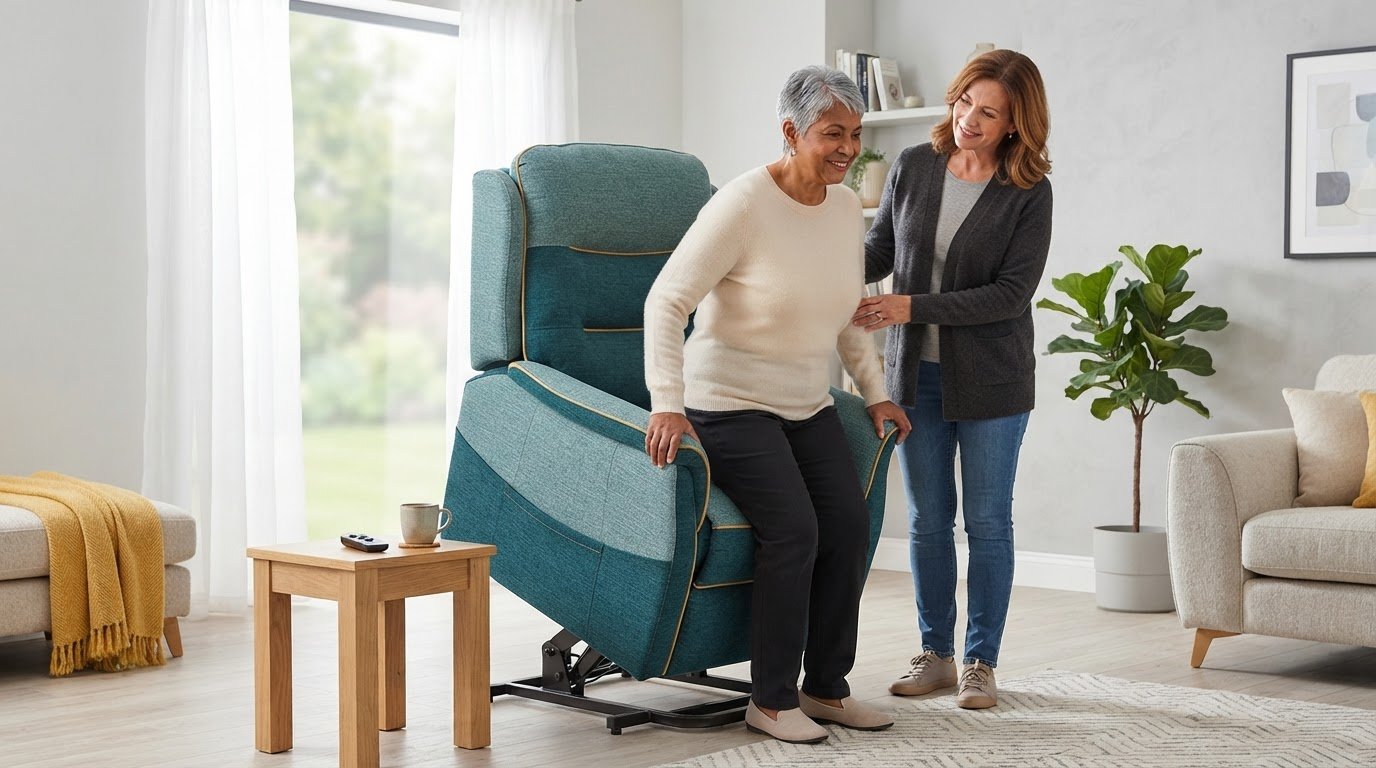
A lift chair looks almost identical to a standard living room recliner, but it hides a specialized mechanism underneath the fabric. A look at what is a lift chair helps clarify why these devices are so vital for home recovery. Inside the base, a powerful electric motor tilts the entire frame forward and upward, gently guiding the user into a standing position. This simple mechanical assist reduces the physical strain on weak knees and hips, providing independence for seniors who struggle to get up safely.
You don't need any technical skills to operate these devices. A simple remote control remains attached to the side pocket, allowing the user to manage the movement safely with a few basic button presses. If you need to rent a lift chair for elderly family members, knowing how these mechanisms function helps you select the right model from a local neighbor. This knowledge prevents you from spending money on unnecessary features that a short-term recovery might not require.
To better understand how these mechanisms operate in real life, watch this helpful video:
Differences Between 2-Position and 3-Position Chairs
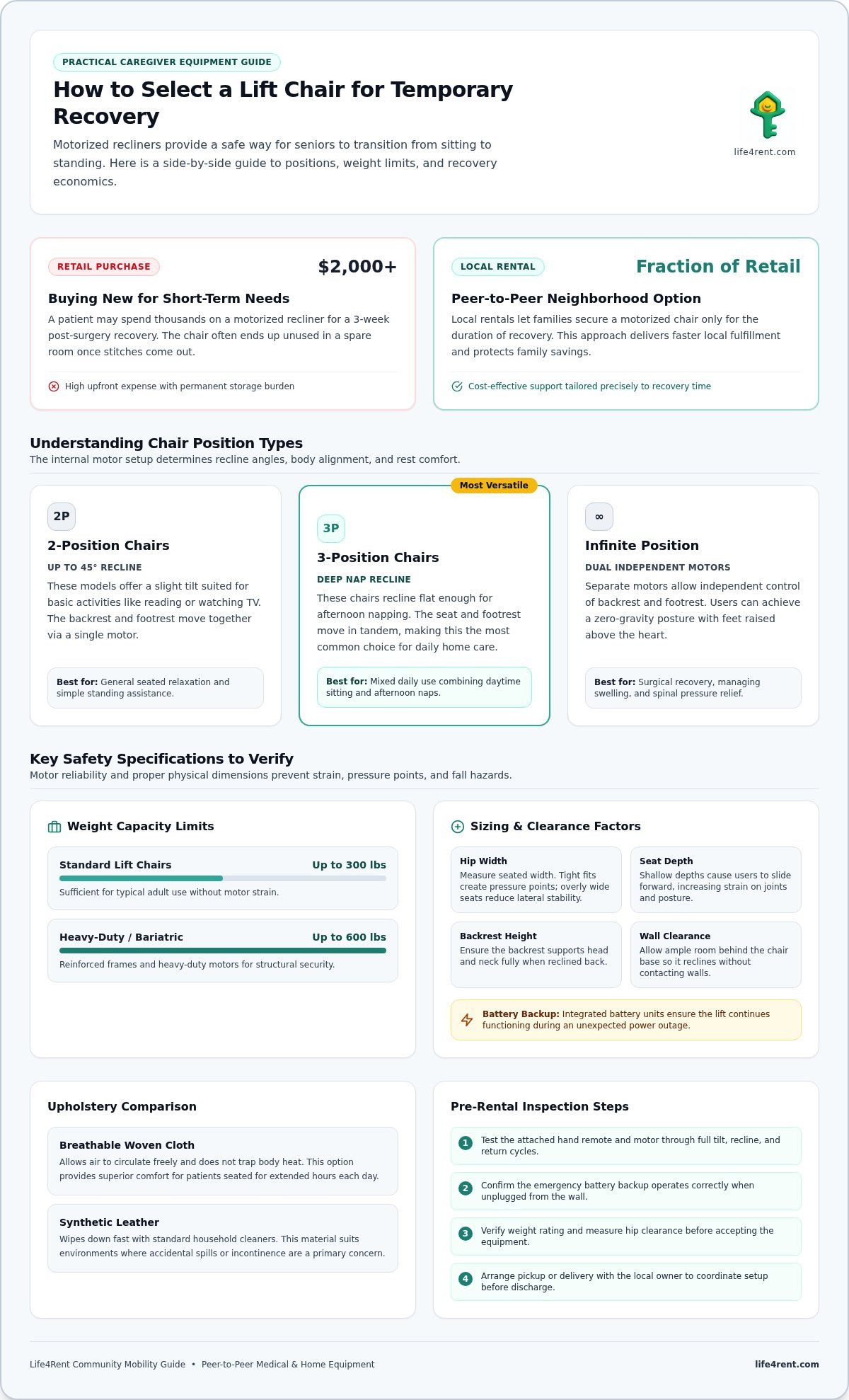
The right configuration depends on how your relative spends their day. A 2-position chair works best for basic tasks like reading or watching television, offering a slight recline up to a 45-degree angle. You'll find that 3-position chairs allow for a much deeper recline, flattening out sufficiently for a comfortable afternoon nap while the seat and footrest move together. Most family caregivers find the 3-position model is the most versatile option for daily use because it handles both relaxation and active sitting without requiring a complex setup.
The Benefit of Infinite Position Models
Some recoveries require precise body alignment to manage surgical pain or chronic swelling. Infinite position chairs use two separate motors to control the backrest and the leg rest independently, rather than moving them in tandem. This dual-motor setup means you can keep the back upright while raising the footrest completely for reading comfort. These advanced models often allow the user to achieve a specialized zero-gravity position, which raises the feet above the heart to improve blood circulation and relieve spinal pressure during long periods of rest.
Key Features to Evaluate Before You Rent
Careful selection of a mobility aid requires close attention to technical specifications that directly impact daily safety. Weight capacity stands out as the most critical safety specification to check before you rent a lift chair for elderly relatives. A chair with an inadequate motor can burn out quickly or fail to lift a person safely, which creates a serious fall risk. Mechanical reliability becomes even more dependable when the model includes an integrated battery backup. This feature ensures the chair remains fully operational during an unexpected power outage, preventing your relative from getting stuck in a reclined position.
You must also look closely at how the chair fits the physical dimensions of the user. Caregivers often overlook the depth of the seat, which can cause the user to slide forward if it is too shallow. Clear clearance around the base is another factor to consider, as these chairs need extra space behind them to recline fully without hitting the wall.
Size and Weight Capacity Requirements
Standard chairs usually support up to 300 pounds without straining the internal motor components. If your family member requires more structural support, heavy-duty or bariatric models are available and can handle up to 600 pounds safely. You should measure the user’s hip width while they are seated normally to ensure the seat fits properly. A seat that is too tight causes painful pressure points, while a seat that is too wide fails to provide the necessary lateral support for someone with limited core strength. Matching the user's height to the backrest is equally important, as their head needs proper support when fully reclined.
Material and Upholstery Choices
The outer surface of the furniture dictates how comfortable the user remains during extended periods of rest. Breathable fabrics like woven cloth are much better for long periods of sitting because they allow air to circulate and don't trap body heat. Conversely, synthetic leather is much easier to wipe down quickly if spills or accidents occur in the home. It’s a good idea to ask the owner about the fabric type before you book to ensure it aligns with your care routine. You can browse various upholstery styles from local neighbors on life4rent.com to find a practical match for your living room.
Rental vs. Purchase: A Cost and Utility Comparison
Financial decisions during a medical crisis require a clear look at total expenditures. New lift chairs often cost between $800 and $2,000, which represents a substantial upfront investment for a piece of specialized furniture. Short-term rentals through a peer-to-peer site save significant money by allowing you to pay only for the exact duration of the recovery. You also avoid the long-term storage problems that emerge once the user regains their mobility and no longer needs mechanical assistance in the living room. Choosing to rent a lift chair for elderly family members from a neighbor keeps your capital free for other essential medical needs.
Community connections offer a distinct advantage over traditional retail supply chains. You help your local community by renting from a neighbor who has an idle piece of equipment sitting in their home. This arrangement keeps financial resources within your immediate neighborhood rather than sending them to large medical supply corporations.
Short-Term Recovery vs. Permanent Need
Post-surgery patients typically need mobility assistance for less than two months while their bones and muscles heal. Renting is the logical choice for temporary mobility issues because it matches the financial commitment to the actual recovery timeline. If your relative faces a chronic, progressive condition, a permanent purchase might eventually make sense. Even in those situations, a short-term rental allows you to test a specific model in your home environment before committing to a major purchase. For families managing broader wellness and home assistance needs, platforms like Lumina offer downloadable caregiving ebooks that can guide you through the ongoing demands of patient care.
The Sharing Economy Advantage
Traditional medical supply stores often charge high delivery fees and require rigid monthly contracts. Peer-to-peer platforms like Life4Rent offer lower prices than medical supply stores because individual owners don't have corporate overhead costs to cover. You can frequently find a high-quality chair located just a few blocks away, which simplifies the logistics of transport. This localized approach also reduces the environmental impact of manufacturing new furniture, making it a sustainable choice that benefits both your wallet and the local ecosystem.
Quality Checklist for Peer-to-Peer Rentals
Safety remains the top priority when you bring a pre-owned mobility aid into your home. You must test the lifting mechanism personally to ensure it moves smoothly without any loud grinding noises or sudden jerks. A malfunctioning motor can startle a vulnerable user, which increases the risk of a balance loss during a transition. Check the remote control thoroughly for any frayed wires, loose connections, or unresponsive buttons that could leave your relative stranded mid-motion. It's also vital to inspect the upholstery for cleanliness, stubborn stains, or deep signs of wear that might compromise structural comfort.
Electrical reliability depends heavily on the auxiliary systems built into the frame. You should verify that the backup battery system has fresh batteries installed before the user sits down for the first time. If a storm hits or a circuit breaker trips, this secondary power source is the only thing that will prevent a senior from being stuck in a reclined position. You can find pre-inspected listings and chat directly with owners on life4rent.com to verify these safety features before booking.
Mechanical and Electrical Safety
Listen closely for unusual humming or clicking noises when the internal motor is running under a normal load. The scissor mechanisms beneath the footrest should slide evenly without catching on the frame components. A high-quality chair should stop immediately when you release the control button, giving the user complete authority over their movement. You must also ensure the main power cord is in good condition and not tucked tightly under the heavy metal frame, which can pinch the wires over time and create a fire hazard.
Hygiene and Fabric Care
Health considerations require open communication with the item owner before you finalize the rental. Ask the owner directly when the fabric was last professionally cleaned or sanitized. It's a smart habit to use a removable, washable cover for added protection against daily spills or sweat. You must also check the deep crevices for any lingering odors or stubborn pet hair, especially if the primary user suffers from chronic respiratory allergies or sensitive skin conditions.
How to Secure a Lift Chair on Life4Rent
Browse the peer to peer equipment rental listings to find specific mobility aids. Life4Rent organizes items into 17 categories, which makes it simple to find home medical goods in your area. Use the built-in filters to find chairs located within a few miles of your home. This localized search saves you money on transport and reduces the time spent waiting for a commercial delivery truck.
Message the owner through the platform to ask specific questions about the furniture's history and current condition. You should read reviews from previous renters to ensure the owner is reliable and maintains their equipment well. It's a good idea to confirm the exact dimensions of the chair to ensure it fits through your front door and hallway corners. You can rent a lift chair for elderly relatives much faster when you coordinate directly with a neighbor.
Check the availability calendar on the listing page to match your hospital discharge date. Some owners offer flexible rental periods, which is helpful if your recovery timeline changes unexpectedly. Reliable communication through the platform keeps your personal contact information private until the booking is confirmed. This extra layer of security helps build trust between neighbors in the marketplace.
Communication with the Equipment Owner
Ask the owner if they can assist with the initial setup in your home once the item arrives. Many neighbors are happy to show you how the remote works or help position the chair near a power outlet. You must also discuss the return process before the rental period begins to avoid any confusion later. Honest communication ensures both parties feel comfortable with the transaction and helps the user gain peace of mind.
Verify whether the owner has the original instruction manual or a digital copy. Familiarity with the specific troubleshooting steps for that model can save you a lot of stress during a late-night power flicker. You should also ask about any specific weight limits or maintenance requirements they have for their furniture. These small details prevent damage and ensure the equipment remains in top condition for the next person who needs it.
Listing Your Own Gear
You can list your own tool on rent or medical items once your recovery period ends. This provides a simple way to earn back some of the original costs of the equipment while helping another neighbor in need. Clear photos and a detailed description help you find potential renters fast. Most users find that listing their gear helps clear out space in their garage or spare room.
Set a fair daily or weekly price based on the current condition and original retail value of the item. You can adjust your availability based on your own schedule, giving you full control over the rental process. Local rentals reduce waste in the community and ensure that expensive medical equipment doesn't sit unused for years. It's a practical way to support others while managing your own household assets effectively.
Prepare for a Safe Recovery at Home
The choice between buying and renting depends on the length of the recovery period. You now know that 3-position and infinite-position models offer the most versatility for surgical recovery or managing chronic pain. Local listings provide a practical way to access this equipment without the steep retail prices often found in medical supply stores. These peer-to-peer options allow you to test specific features like battery backups and breathable fabrics in your own living room before making any long-term commitments.
You can easily find an affordable lift chair for rent on Life4Rent within your own neighborhood. This safe peer-to-peer marketplace features 17 categories of daily items, including essential mobility aids and home medical goods. When you rent a lift chair for elderly family members through this platform, you'll help your local community while ensuring your loved one has the mechanical support they need to stand up safely. It's a sensible approach that prioritizes comfort and budget.
Focus on the recovery process and let the right equipment handle the physical strain. A reliable lift chair makes a world of difference in daily independence and provides everyone in the house with much-needed peace of mind. You've got this, and the right tools are just a few clicks away.
Frequently Asked Questions
Does Medicare cover the cost of renting a lift chair?
Medicare Part B generally covers only the motorized lifting mechanism as Durable Medical Equipment, but it doesn't pay for the chair frame or fabric. You'll usually pay the full cost of a private rental upfront because Medicare is structured for purchases rather than short-term peer-to-peer agreements. Patients are responsible for the 20% coinsurance plus the full furniture price. You should check with your provider for specific reimbursement details before you rent a lift chair for elderly relatives.
How much space do I need behind the chair for it to recline?
Most standard models require between 18 and 24 inches of clearance from the wall to reach a full recline. If you have a smaller room, look for "wall-hugger" designs that only need about 4 to 6 inches of space. You should measure your available floor area and compare it to the specific dimensions provided by the owner on Life4Rent. Always account for the footrest extension in the front to ensure safe walking paths for caregivers.
Can I transport a lift chair in a standard SUV?
You can often fit these chairs into a large SUV or minivan if the backrest is removable, which is a common feature for many modern mobility models. These units weigh between 100 and 150 pounds, so you'll need at least two people to handle the heavy lifting safely. It's best to use a vehicle with a flat loading floor and plenty of tie-down points. Always confirm the base dimensions with the owner before you drive to pick it up.
What happens if the motor stops working during my rental?
You should contact the equipment owner immediately through the Life4Rent messaging system if the motor fails. Owners on this marketplace are responsible for providing functional gear, so they'll likely offer a replacement or a prorated refund for the downtime. It's a good practice to check the integrated battery backup as soon as the chair arrives in your home. This ensures the user isn't stuck if the main power cord becomes disconnected or the motor develops a fault.
Are lift chairs safe for people with dementia?
Lift chairs are safe only under close supervision for individuals with advanced cognitive impairment or dementia. The moving parts and remote control buttons can cause confusion or accidental injury if the user attempts to exit while the chair is still in motion. You might consider a model with a "lock-out" feature on the remote to prevent unsupervised use. Always consult with a physical therapist to determine if a motorized chair is appropriate for your specific care situation.
How do I clean a rented lift chair safely?
You should spot clean the upholstery using a damp cloth and mild soap, but avoid soaking the fabric, as moisture can damage the internal electronics. Synthetic leather models are much easier to sanitize with standard household wipes than woven cloth versions. It's a smart idea to use a removable, machine-washable cover throughout the rental period to maintain hygiene. Always ask the owner for their preferred cleaning methods to ensure you don't damage the material or void the rental agreement.
Is there a difference between a lift chair and a power recliner?
A standard power recliner only moves the backrest and footrest for comfort, while a lift chair features a specialized base that tilts forward to help the user stand up. You can't use a regular recliner to assist with mobility because it lacks the powerful lifting motor required to support a person's weight during the transition. When you rent a lift chair for elderly family members, you're specifically paying for that standing assistance. It's a medical tool rather than just furniture.
Can I sleep in a lift chair every night?
You can sleep in a lift chair, especially if you choose an infinite-position model that allows for a completely flat or "zero-gravity" layout. These positions help reduce pressure on the spine and improve circulation for patients recovering from surgery. However, standard 2-position chairs don't recline far enough for a full night's rest. You should ensure the chair has breathable fabric and sufficient padding to prevent skin irritation if the user spends more than 8 hours in it daily.
Life4Rent
Rent it. Earn from it. Own less, access more.
Browse peer-to-peer rentals near you, or list what you own and start earning — all protected by Life4Rent Protect.
About the author
Dublin, Ireland
Michael covers consumer rights, rental law, and EU platform regulation for the Life4Rent Renting Academy. He has reported on digital market policy and renter protections across Europe, and brings a clear, practical perspective to topics like deposit disputes, insurance, and the legal rights of renters and owners.