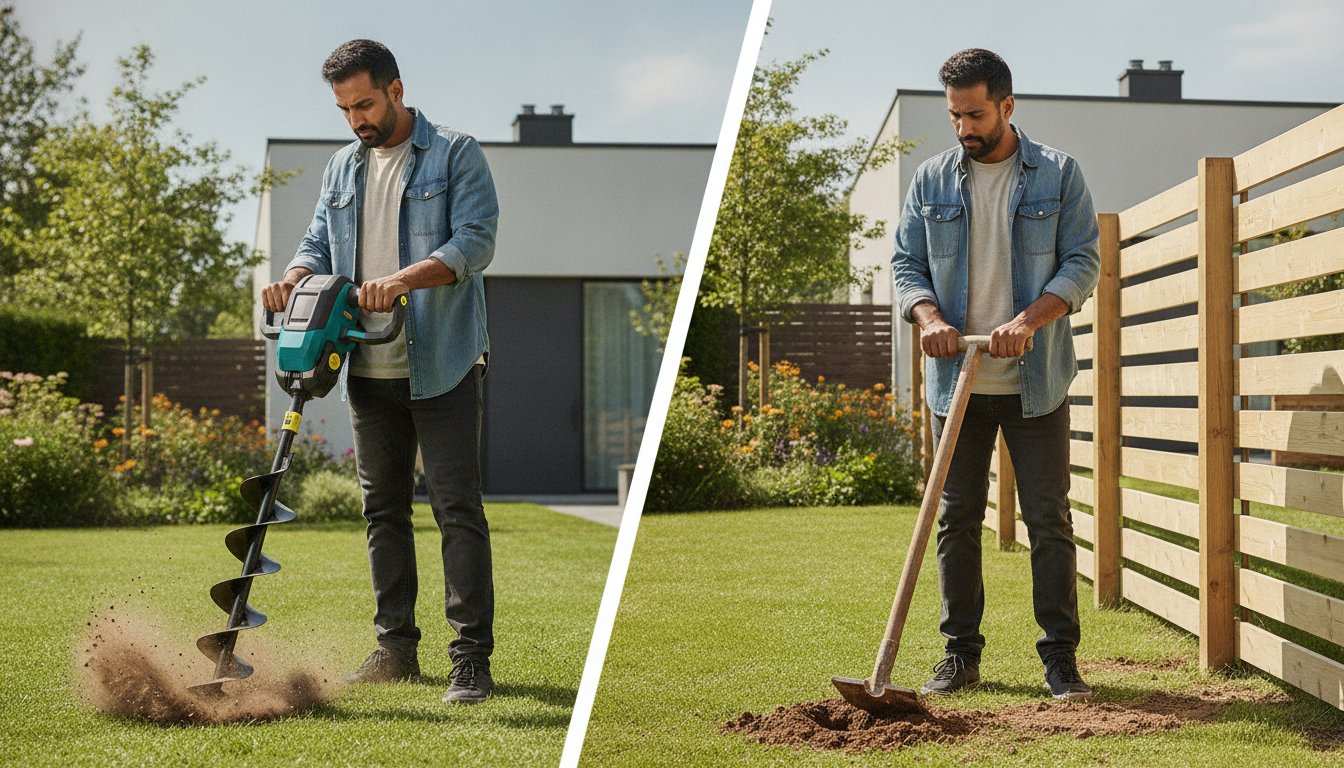
Aluguel de perfurador de buracos para postes de cerca: Manual vs. brocas motorizadas (2026)
August 7, 2026
Publicado por Life4Rent · Operado por Brohf Software OÜ
What if the most powerful machinery actually makes your backyard project more difficult? A post hole digger rental for fence installation should simplify your life, but the wrong choice can lead to exhaustion before the first post is even set. You need a tool that handles your specific soil without being a nightmare to transport.
It's common to feel overwhelmed by the choice between a simple manual tool and a gas-powered beast. You'll find out exactly which auger bit matches your posts and how to avoid the physical strain of manual digging. This guide helps you finish the job safely while keeping your equipment costs low.
We compare manual diggers against one-man and two-man power augers to see which one fits your project best. You'll also discover why picking up a tool from someone in your own neighborhood is often the most practical way to get the job done. Before you start, remember that calling 811 to mark utility lines is a required safety step for any excavation in 2026.
Why renting a post hole digger makes more sense than buying
Most homeowners only build a fence once every ten to fifteen years. This makes a permanent purchase feel like a poor investment for something that will gather dust for a decade. A post hole digger rental for fence installation gives you the power you need without the long-term commitment of ownership.
Bulky equipment like an Earth auger takes up significant garage space. You probably have better uses for that square footage, such as storing your car or organizing everyday garden tools. When the project is over, you simply return the machine instead of trying to find a permanent corner for it.
High-quality machinery is much easier to reach through a rental. If you were to buy, your budget might limit you to a flimsy, consumer-grade tool that struggles with tough soil. Renting allows you to use professional-grade equipment that handles clay or rocky ground for a small fraction of the retail price.
Repairs and general upkeep are the responsibility of the tool owner, not you. If a pull-cord snaps or a component fails on a tool you own, you're stuck with the repair bill and a wasted Saturday. With a rental from a neighbor or a local platform, you're getting a tool that's already been serviced and is ready to work immediately.
The true cost of ownership
Gas-powered engines require constant attention to stay functional. You have to deal with winterization and regular oil changes, which are easy to forget when a tool sits for years between uses. Most DIYers find that their engines won't start after a long period of neglect, leading to more frustration and cost.
Manual diggers aren't immune to the effects of time either. If they're left in a damp shed, the metal blades often rust and the hinges can seize up. You avoid these headaches entirely by only paying for the equipment during the two days you're actually out in the yard digging.
Environmental benefits of tool sharing
Shared tools help reduce the total number of machines that need to be manufactured. Fewer engines and metal frames produced means fewer items eventually end up in a landfill. It's a practical way to get your work done while being more conscious of resource consumption.
Local rentals also cut down on the carbon footprint associated with your project. You don't have to drive across the city to a massive industrial zone when you can find what you need from someone living in your own neighborhood. This keeps the transaction simple and keeps the travel distance short.
Peer-to-peer platforms support a more sustainable peer to peer equipment rental ecosystem. This community-based approach helps build local connections while ensuring that high-quality tools are used to their full potential rather than sitting idle in a basement.
Choosing the right post hole digger for your project
The right tool selection saves you hours of frustration. A post hole digger rental for fence work should match both the number of holes and the physical landscape of your yard. If you're just fixing a single loose post in soft garden soil, a manual clamshell digger is your best bet. It's lightweight, requires zero setup time, and doesn't involve the noise of a gas engine.
One-man power augers offer a professional-grade solution for most residential projects involving ten to twenty holes. These units balance power with portability, making them easy to handle for a single person. If your yard has heavy clay or scattered small rocks, you'll need the extra torque of a two-man auger. This setup requires a partner to help steady the machine, but it prevents the engine from stalling when it meets resistance.
Towable hydraulic augers provide a premium experience for large properties or projects with thirty or more holes. These machines take the weight of the engine off your arms and put it on a sturdy wheeled frame. You'll finish the day without the typical back pain associated with fencing projects. This equipment is especially useful if you're working on a property where the soil hasn't been disturbed for years.
Matching the bit size to your fence posts
Posts need a hole wider than the post itself to accommodate concrete. Standard 4x4 wooden posts usually require an 8-inch bit. This extra space allows for a solid concrete backfill that keeps the fence straight for years. If you're installing 2-inch metal fence pipes, a 6-inch bit is sufficient. You should always verify that the rental includes the specific bit size your posts require before you leave the pickup location.
How soil type dictates your tool choice
Soil conditions change how a tool performs. Sandy soil is easy to penetrate with manual tools, but you'll need to set your posts quickly. These holes tend to collapse if they stay empty too long. Clay soil is a different challenge because it sticks to manual blades, making every lift feel twice as heavy. A gas-powered auger provides the steady rotation needed to slice through sticky clay without stopping.
Rocky ground is the most difficult and potentially dangerous terrain. Large stones can cause a standard auger to kick back violently, which is why a heavy-duty hydraulic unit is often the safest choice. You should always follow crucial safety steps like inspecting the site for obstructions before you pull the starter cord. If you're unsure about your local soil, consider a local tool rental from a neighbor who has already completed a similar project and can offer firsthand advice.
Manual diggers vs. power augers: a practical comparison
The physical toll of manual labor is often the biggest surprise for DIYers. You might manage the first two holes with a clamshell digger, but back strain usually sets in by the third or fourth. A post hole digger rental for fence projects allows you to bypass this exhaustion. While a manual tool might take fifteen minutes of hard labor per hole, a power auger typically finishes the same task in less than two minutes.
Rental costs for power tools are naturally higher than for manual versions. However, the expense is usually justified when you consider the value of your own time. Manual tools have one distinct advantage: they're easy to transport in a standard car boot or even on a bike rack. Power augers are heavier and often require a van or a car with a large trunk, though local peer-to-peer rentals often solve this by being just a few streets away.
When manual is actually better
Manual tools offer precision that high-torque machines simply can't match. You should choose a clamshell digger if you're working near delicate underground garden lighting or irrigation lines. These tools are also the only option for tight corners or small spaces where a large engine frame won't fit. You'll have much more control over the exact verticality of the hole when you're removing the soil by hand. This makes them perfect for single post repairs or small decorative garden fences.
The speed advantage of gas-powered rentals
Consistency is the main reason professionals choose a post hole digger rental for fence installations. A power auger ensures every hole has the exact same width and depth across your entire property line. This makes the subsequent task of setting posts much faster because you won't have to adjust each one individually. You can finish a twenty-post fence in a single morning, leaving your physical energy for mixing concrete and leveling the rails.
Safe operation of a power auger requires your full attention, especially when the bit hits a hidden root or rock. Always maintain a firm grip and stand on stable ground to manage the machine's torque. Operating a power auger safely involves keeping bystanders at a distance and wearing the correct protective gear. By letting the engine do the heavy lifting during the morning, you preserve your stamina for the more technical parts of the build in the afternoon.
Safety and preparation before you start digging
Preparation is the difference between a successful project and an expensive mistake. Utility lines often sit just twelve to eighteen inches below the surface, which is exactly where your post needs to go. You must contact your local utility locator service several days before your post hole digger rental for fence installation begins. This simple step prevents dangerous strikes to gas or power lines that could result in heavy fines or serious injury.
You should clear the path of any loose debris, long grass, or hidden rocks before you pull the starter cord. Tall vegetation easily tangles in a rotating bit, while hidden stones can cause the machine to kick back violently. A clean work area allows you to focus on the machine's behavior rather than where you're stepping. It's much easier to spot potential problems when the ground is visible and clear of obstructions.
You'll find that many rental augers use a 2-stroke engine that requires a specific mix of petrol and oil. Using straight petrol in a 2-stroke engine will seize the motor within minutes, so always verify the fuel requirements with the owner. You should also check the forecast; digging in wet clay is incredibly messy and often results in holes that are impossible to clean out properly. If you want to ensure a smooth experience, rent a post hole digger from a neighbor who can give you a quick walkthrough of their specific machine.
Essential safety gear
Steel-toed boots are non-negotiable when you're working with heavy, rotating metal bits. They protect your feet from the weight of the machine and any accidental contact with the auger. You'll also need gloves with a textured grip to maintain control against the engine's torque. Ear protection is vital because gas-powered augers produce noise levels that can lead to permanent hearing loss during a full day of work.
Operating a power auger safely
You must maintain a wide, stable stance to avoid being thrown off balance by the machine's rotation. This position gives you the leverage needed to handle the torque if the bit meets resistance. Avoid wearing loose clothing, dangling hoodies, or jewellery that could get caught in the spinning shaft. If the bit catches on a large root or rock, release the throttle and stop the engine immediately to prevent the handles from swinging around and causing injury.
Finding a local post hole digger rental near you
Commercial rental yards often feel impersonal and inconvenient. You're usually forced to follow rigid opening hours and drive across town to an industrial estate. A post hole digger rental for fence projects is much easier when you find the equipment right in your own neighborhood. You don't have to rush your project just to return a tool before a store closes at 5:00 PM.
Big-box stores rarely consider how you'll transport a 50kg gas-powered auger in a standard sedan. You might need to hire a trailer or a van just to get the tool home and back, which adds another layer of cost and stress. Peer-to-peer marketplaces allow you to find a tool on rent from someone just a few streets away. This proximity makes the entire process faster and removes the need for heavy-duty transport vehicles.
Tool owners can offer specific advice that a store clerk simply can't provide. They've likely used that exact machine in the same local soil you're about to dig into. They'll know if the engine struggles with the local clay or if the bit handles the regional limestone with ease. This firsthand knowledge gives you a technical advantage before you even start the engine. You can ask about the machine's quirks during the pickup, ensuring you feel confident before you start your first hole.
The benefits of peer-to-peer rentals
You keep your money within the local community when you rent directly from a neighbor. This approach is often more affordable because individual owners don't have the massive overhead costs of a commercial storefront. Pricing is usually transparent, so you won't deal with unexpected damage waivers or cleaning fees at the end of the day. It's a straightforward transaction that focuses on getting the job done efficiently without the paperwork of a large corporation.
Pickup is often much more flexible than the rigid schedules of industrial rental centers. You can coordinate a time that works for both you and the owner, whether that's late on a Friday evening or early Saturday morning. This flexibility allows you to maximize your rental time and focus entirely on the fence build. You also avoid the long queues and administrative delays common at busy weekend rental depots.
How to use Life4Rent for your project
You can start by browsing the tool category to see which augers are available in your immediate area. It's important to check the descriptions carefully to ensure the bit size matches your fence post requirements. Section 2 of this guide highlighted the importance of using an 8-inch bit for standard 4x4 posts. You should also look for listings that include safety gear or extensions if your project requires deeper holes.
Once you find the right match, you can book the dates and coordinate a quick pickup that fits your weekend schedule. The platform provides a secure environment for these community-based transactions, so you can focus on the project itself. You'll finish your fence knowing you saved money, avoided logistical headaches, and used professional-grade equipment without the burden of permanent ownership.
Get your fence project moving today
You'll find that matching the right auger bit to your posts and choosing the correct power level for your soil makes the difference between a productive morning and a wasted weekend. You've seen that while manual tools offer precision for small repairs, a power auger is the standard for most residential fence lines. Safety remains the top priority, so remember to have your utility lines marked before the bit ever touches the dirt.
A post hole digger rental for fence projects doesn't have to involve the logistical stress of industrial yards or the high cost of buying equipment you'll only use once. You can access high-quality machinery right in your neighborhood across 17 different categories of tools and gear. Find a local post hole digger for rent on Life4Rent to avoid the high costs of big-box rental yards and rent from trusted locals in your community.
You'll save money, skip the storage headaches, and finish your fence with your energy still intact. Your backyard project is just a few clicks away from starting with the right equipment and the right advice. It's time to build something that lasts.
Frequently Asked Questions
How deep should a fence post hole be?
A hole should typically reach a depth of one-third to one-half of the post's height above the ground. For a standard 6-foot fence, you'll need to dig between 2 and 3 feet deep to ensure structural integrity. You should always check your local building codes and ensure you dig below the frost line to prevent the post from shifting during seasonal temperature changes.
Can one person safely operate a two-man power auger?
No, you should never attempt to handle a two-man auger by yourself under any circumstances. These machines generate significant torque that requires two sets of arms to stabilize the frame during operation. You risk serious injury to your wrists or back if the bit catches on a root and the handles spin out of your control without a partner to help.
What happens if the auger hits a large rock or root?
The engine will likely stall or the machine will kick back with a sudden jolt that can throw you off balance. You must release the throttle immediately and turn off the engine to inspect the hole for obstructions. You might need to use a manual digging bar to clear the rock or even consider shifting the entire fence line slightly if the obstruction is too large.
Should I use a 6-inch or an 8-inch bit for a 4x4 post?
An 8-inch bit is the correct choice for a standard 4x4 wooden post to allow for proper support. A 6-inch hole doesn't leave enough room for the concrete to form a protective collar around the wood. This extra space ensures the post remains stable and resists rot because the concrete can flow completely around all four sides of the timber.
Is it cheaper to rent a post hole digger from a neighbor than a store?
You'll find that local peer-to-peer options are generally more affordable than industrial rental yards or big-box stores. Neighbors don't have the same high overhead costs or hidden service fees that commercial businesses often add to your bill. A post hole digger rental for fence work through a community platform also saves you money on transport fuel and specialized cleaning charges.
Do I need to mix oil and petrol for a rental auger?
Most small power augers use 2-stroke engines that require a specific oil and petrol mixture to function correctly. You must check with the owner to see if the machine uses a 40:1 or 50:1 ratio before you fill the tank. Using pure petrol will seize the engine almost immediately, so you should consider buying pre-mixed fuel to ensure the engine runs smoothly throughout the day.
Will a power auger fit in the back of a standard car?
A one-man auger usually fits in a hatchback or an estate car if you fold the rear seats down and remove the bit. Two-man units are much bulkier and often require a van or a large SUV to accommodate the wider engine frame. You should always measure your cargo area and bring some old blankets to protect your car's interior before you pick up your post hole digger rental for fence.
How much concrete do I need for each post hole?
You'll typically need two 20kg bags of post-mix concrete for an 8-inch wide hole that is 2 feet deep. This volume provides a sturdy foundation that holds the post firmly in place against wind and weight. You should verify the exact requirements by checking the volume calculator on the concrete packaging because deeper holes or wider diameters will require significantly more material to fill.

Life4Rent
Rent it. Earn from it. Own less, access more.
Browse peer-to-peer rentals near you, or list what you own and start earning — all protected by Life4Rent Protect.
About the author
Tallinn, Estonia
Philip leads editorial at the Life4Rent Renting Academy, overseeing guides on peer-to-peer rental, platform safety, and consumer finance across 25 markets. He has spent over a decade covering the sharing economy and digital marketplaces, helping renters and owners navigate the shift from ownership to access.