Business & Assets
Your Business Is Sitting on Money: Why Unused Equipment and Inventory Could Be Your Next Revenue Stream
Every year, businesses spend money storing, maintaining and eventually disposing of valuable assets. What if some of those forgotten resources could generate revenue instead?
Fred Agbator
Businesses are constantly searching for ways to increase revenue.
They invest in advertising, expand sales teams, develop new products, enter new markets and negotiate with suppliers.
Yet there's one opportunity that many businesses rarely examine closely.
The money tied up in equipment, tools, machinery and inventory they already own but are no longer using.
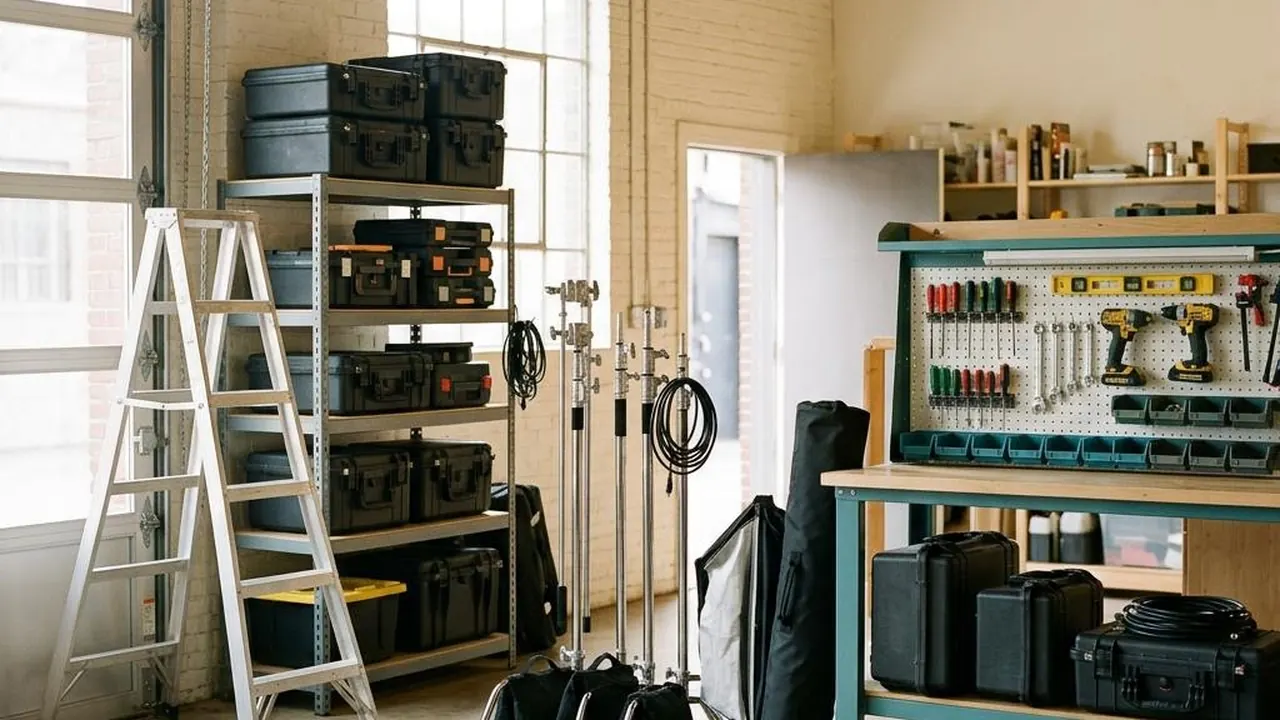
Walk through the storage facilities of a hotel, construction company, manufacturing plant, event management business or logistics operator.
You may find equipment that hasn't been touched in months.
Furniture replaced during renovations.
Machinery upgraded to newer models.
Seasonal equipment waiting for the next operating period.
Tools purchased for projects that have already ended.
Office equipment stored after a relocation.
Items that still have economic value but are no longer contributing to the company's operations.
And while these assets sit idle, the business continues paying for storage, maintenance, security, insurance and sometimes depreciation.
Here's the uncomfortable question:
Why is your business paying to store assets that could potentially be earning money?
Perhaps it's time to rethink how businesses manage their unused resources.
1. The Hidden Cost of Equipment Sitting Idle
An unused business asset isn't always a harmless asset.
Consider a company that owns equipment worth $100,000.
Some of that equipment may only be needed during certain periods of the year.
For the remaining months, it sits in storage.
The company may still incur costs for warehousing, insurance, maintenance, inspections, transportation and administration.
Even when the equipment isn't being used, its market value may continue to decline.
Now imagine that a portion of this equipment could be safely rented to other businesses during periods when it isn't required.
Instead of producing no operating revenue, those assets could contribute to the company's cash flow.
The business wouldn't necessarily need to manufacture anything new, recruit a sales team or open another branch.
It would simply be finding a productive use for resources it already owns.
Of course, rental revenue must be weighed against wear, maintenance, insurance, administration, taxes and the risk of equipment not being available when the business needs it again.
But the opportunity deserves consideration.
An asset doesn't have to be used by your company every day to remain commercially valuable.
2. Seasonal Businesses: Why Should Equipment Earn Only During One Season?
Seasonal operations provide one of the clearest examples of underutilised business assets.
Consider companies operating in tourism, hospitality, agriculture, outdoor recreation, event management or seasonal retail.
A ski resort may need certain equipment primarily during winter.
A beach resort may rely heavily on particular equipment during summer.
An event company may have substantial demand during wedding or festival seasons but experience quieter months.
An agricultural business may use specialised machinery during planting or harvesting periods.
When the season ends, much of this equipment may be placed in storage until the following year.
But does the equipment have to remain financially inactive?
Not necessarily.
A business could explore renting suitable equipment to operators in other regions, industries or markets where demand occurs at different times.
For example, an event company with surplus chairs, tables, lighting and sound equipment might rent them to smaller event organisers during quieter periods.
A landscaping company could make suitable equipment available to other contractors when its own workload is low.
A tourism operator might identify other businesses that need similar equipment outside its peak season.
The important consideration is whether the equipment can be made available without compromising the company's next operating period.
Your business may operate seasonally. That doesn't mean every asset has to generate value only during your season.
3. The Equipment You Just Upgraded May Still Be Valuable to Someone Else
Businesses regularly replace equipment.
Sometimes because newer technology is more efficient.
Sometimes because customer expectations have changed.
Sometimes because equipment no longer meets the company's operational requirements.
But replacing an asset doesn't automatically mean the old one has become worthless.
Consider a hotel replacing its televisions, furniture or appliances.
A photography company upgrading its cameras.
A construction firm purchasing newer machinery.
A restaurant replacing kitchen equipment.
An office replacing computers, desks and monitors.
The old equipment may no longer be ideal for the original business.
But it may still be perfectly suitable for another user.
A small business might welcome equipment that a larger company considers outdated.
A startup may prefer affordable second-hand furniture rather than purchasing everything new.
An independent contractor might rent older but properly maintained tools instead of financing expensive new equipment.
A student or freelancer might benefit from access to professional equipment that remains functional.
What is outdated for one business may still be valuable to another.
Rather than automatically sending replaced equipment into long-term storage or disposing of it, businesses should consider whether it can be rented, sold, refurbished, donated or responsibly recycled.
4. Before You Throw It Away, Ask Whether Someone Would Pay for It
Every business should ask a simple question before disposing of usable equipment:
Does this item still have value to someone else?
Imagine a company replacing 100 office chairs.
The old chairs are still functional, but the company wants a new design.
Disposal may involve transportation, labour and waste-management costs.
Alternatively, the company could offer the chairs for sale to employees, small businesses, local organisations or members of the public.
Suppose 80 chairs are sold for $25 each.
That would generate $2,000 in gross proceeds before selling, handling and other costs.
The company may also avoid some disposal expenses.
Now consider the same principle applied to desks, monitors, shelving, tools, machinery, appliances or commercial furniture.
Individually, these assets may not appear especially valuable.
Collectively, they can represent meaningful recoverable value.
Throwing something away should be a considered decision, not the automatic consequence of buying a replacement.
5. Your Employees Could Be Your First Customers
Businesses often overlook one of the most accessible markets for their surplus equipment: their own employees.
When a company upgrades office furniture, computers or other equipment, employees may be interested in purchasing suitable items at reasonable prices.
An employee might need a desk for a home office.
Another may need a monitor.
Someone else might be interested in a used office chair, shelving unit or household appliance.
A company could establish a transparent employee resale programme, giving staff the opportunity to purchase surplus equipment before offering it to external buyers.
This can benefit both sides.
The business recovers some value from assets it no longer needs.
Employees gain access to potentially affordable, useful items.
However, the programme should have clear pricing, eligibility and payment rules. Companies should also remove confidential data from electronic devices, check safety requirements and follow applicable employment, tax and asset-disposal policies.
An equipment upgrade doesn't have to end with a disposal invoice. It could begin with a resale opportunity.
6. Your Customers and Business Partners May Need What You're No Longer Using
Think about the relationships your business has already developed.
Suppliers.
Contractors.
Distributors.
Customers.
Partner businesses.
Independent service providers.
Some of these organisations may need equipment that your company uses only occasionally.
For example, a construction company may own specialised tools that smaller contractors cannot justify purchasing.
A hotel group may have furniture or equipment suitable for independent accommodation providers.
A manufacturing company may have surplus tools or machinery that another operator could use.
An event company may have additional lighting, staging or sound equipment available during quieter periods.
By making appropriate assets available for rental or resale, businesses can potentially create additional commercial relationships using resources they already own.
This approach may be especially attractive where the company has an existing network of trusted partners.
Rather than leaving assets unused, the business can explore whether those assets solve a problem for someone else.
7. Renting Equipment Can Create Recurring Revenue Instead of a One-Time Sale
Selling unused equipment generates a one-time payment.
Renting suitable equipment can potentially generate revenue over multiple transactions while allowing the company to retain ownership.
Consider a business that owns ten pieces of equipment that are not continuously required.
Suppose each item can be rented for $40 per day.
If each item is rented for five days in a month, the calculation would be:
10 items × $40 × 5 days = $2,000 in monthly gross rental revenue.
If similar demand continued for 12 months, that would represent $24,000 in annual gross rental revenue.
These figures are illustrative, not projected earnings. Actual demand may be lower or seasonal, and net income could be substantially reduced by maintenance, insurance, logistics, platform charges, damage, taxes and administration.
The business must also consider whether the additional usage will shorten the equipment's useful life.
Nevertheless, the example demonstrates why asset utilisation deserves management attention.
A business asset can sometimes generate value beyond the work it performs for its original owner.
8. The Real Question: Should You Rent It, Sell It or Keep It?
Not every unused asset should be rented out.
A company needs a practical decision-making framework.
Consider three situations.
Rent it: The equipment remains useful to your business, but there are predictable periods when it isn't required. There is external demand, and the rental income can justify the costs and risks.
Sell it: The equipment is no longer required, is unlikely to be used again or would cost too much to maintain and store.
Keep it: The equipment is strategically important, difficult to replace, subject to restrictions or needed at short notice.
There may also be cases where refurbishment, donation or recycling is the better choice.
A useful starting point is to review each asset's current value, storage costs, maintenance requirements, expected future use and potential rental or resale demand.
This turns equipment management into a commercial decision rather than simply a storage or disposal exercise.
9. Storage Space Is Not Free — Even When You Own the Building
Some businesses underestimate storage costs because they already own their premises.
But warehouse space, storage rooms and equipment yards have economic value.
An area occupied by unused machinery cannot simultaneously be used for another productive purpose.
And the costs of securing, cleaning, maintaining and managing stored assets may continue regardless of whether those assets are generating revenue.
Consider a company storing equipment for nine months of the year.
If the equipment is no longer required, selling it could free up space and recover capital.
If the equipment is needed again next season, carefully planned rentals might help offset part of the cost of keeping it.
The right choice depends on the equipment, the operating schedule and the economics.
But businesses should avoid treating storage as a cost-free default.
Every square metre devoted to unused inventory is space that could potentially serve another purpose.
10. How Rental Marketplaces Can Help Businesses Reach New Customers
Traditionally, businesses looking to rent or sell surplus equipment often depended on brokers, industry contacts, classified advertisements or direct negotiations.
Digital marketplaces provide another possible route.
Platforms such as Life4Rent are designed to help owners make rentable items discoverable by people seeking temporary access.
For businesses, this creates an opportunity to explore demand beyond their existing customer base.
A company might list suitable equipment, provide photographs and descriptions, establish rental conditions and make availability known to potential customers.
It may also share those listings directly with employees, suppliers, partners and business contacts.
The value of a marketplace isn't simply that an item appears online.
It's that the item becomes easier for interested people to discover.
However, businesses should verify which listing categories, transaction types and commercial arrangements are currently supported by a platform before relying on it for a particular rental or sale.
Your equipment cannot attract an external customer if nobody knows it's available.
11. Create an Internal Asset-Recovery Programme
Businesses don't necessarily need a large new department to begin exploring this opportunity.
A practical asset-recovery programme can start with a structured inventory review.
Step 1: Identify underutilised assets.
Ask department managers to identify equipment, tools, furniture and inventory that have remained unused for extended periods.
Step 2: Assess condition and ownership.
Confirm that the company owns the assets outright, that they are safe to use and that no financing, leasing, contractual or regulatory restrictions prevent rental or resale.
Step 3: Estimate financial potential.
Compare the likely rental or resale revenue with storage, maintenance, insurance, logistics and administrative costs.
Step 4: Decide what to keep, rent, sell or dispose of.
Prioritise items that are easy to manage, have identifiable demand and do not create unacceptable operational risks.
Step 5: Make suitable assets visible.
Use appropriate rental marketplaces, resale channels, internal employee communications and existing business networks.
Step 6: Measure the results.
Track enquiries, transactions, revenue, costs, equipment availability and asset condition.
A small pilot involving ten or twenty assets may be enough to determine whether the opportunity deserves expansion.
12. Turn Asset Utilisation Into a Business Performance Indicator
Most companies already measure sales, profit margins, inventory turnover and operating expenses.
But how many routinely measure how much of their equipment is sitting unused?
A business could introduce simple internal measures such as:
- Percentage of equipment actively used.
- Number of days assets remain idle.
- Annual storage and maintenance costs for unused equipment.
- Revenue generated from equipment rentals.
- Proceeds recovered from surplus asset sales.
- Net financial benefit from asset-recovery activities.
These measures can help managers identify resources that are no longer contributing enough value.
They can also improve future purchasing decisions.
If a company discovers that certain equipment is used only a few days each year, management may reconsider whether purchasing additional units makes financial sense.
Perhaps renting equipment when needed would be more economical.
Perhaps existing equipment could be shared across departments.
Or perhaps the company could rent its own equipment to external customers during idle periods.
Better asset utilisation isn't only about generating new revenue. It's also about avoiding unnecessary future spending.
13. The Circular Economy Is Also a Business Opportunity
Extending the useful life of equipment can provide benefits beyond the balance sheet.
When functional assets are rented, reused, repaired or resold, businesses may reduce unnecessary disposal and demand for newly manufactured replacements.
A company that sells usable office furniture instead of discarding it gives those items an opportunity for a second life.
A contractor that rents equipment to another business may help that customer avoid purchasing machinery for a short-term project.
An event organiser that makes spare equipment available to others can support more efficient use of existing resources.
These arrangements don't automatically guarantee environmental savings. Transportation, maintenance, energy use and other factors also matter.
But where they displace unnecessary purchases and extend useful asset life, they can contribute to more resource-efficient business practices.
The commercial and environmental objectives can sometimes reinforce each other.
Using what already exists more effectively can be good business.
14. Don't Wait Until Equipment Becomes Worthless
One of the biggest mistakes businesses make is waiting too long to act.
Equipment is purchased.
It is used.
A newer model arrives.
The old equipment is moved into storage.
Months become years.
Eventually, management decides to dispose of it.
By that point, the equipment may have lost much of its resale value, become difficult to maintain or fallen behind current technical standards.
A better approach is to consider the next life of an asset before it becomes obsolete.
When planning an upgrade, ask whether the existing equipment should be sold while it still has meaningful market value.
When purchasing seasonal equipment, consider whether it could be rented during predictable idle periods.
When completing a major project, assess whether the tools and materials purchased specifically for that project have another potential use.
When closing or relocating an office, identify furniture and equipment suitable for resale before committing to disposal.
The best time to recover value from an asset is often before everyone in the business has forgotten it exists.
15. The Next Revenue Opportunity May Already Be on Your Balance Sheet
Business growth doesn't always require a new product, another factory or an expensive marketing campaign.
Sometimes it begins with a better understanding of what the company already owns.
A construction company might find value in tools sitting between projects.
A hotel might recover money from furniture replaced during renovations.
An event organiser might rent equipment during quieter months.
An office might sell surplus monitors and desks to employees.
A seasonal business might discover customers for equipment that would otherwise remain in storage.
Not every opportunity will be profitable.
Some equipment is too specialised, risky, expensive to transport or important to daily operations.
But companies that never examine their idle assets may never discover which opportunities exist.
And in an economic environment where businesses are under pressure to control costs and improve profitability, overlooking recoverable value is worth questioning.
Final Thought: Why Keep Paying for Assets That Could Be Paying You?
Every business has to make difficult decisions about capital, operating expenses and growth.
But before investing heavily in another revenue initiative, consider conducting an inventory of the resources already available.
Walk through your warehouses.
Review your storage facilities.
Examine equipment awaiting replacement.
Look at tools purchased for completed projects.
Ask department managers about assets that haven't been used in months.
Then ask one important question:
Could any of these resources create value for someone else?
If the answer is yes, your company may have an opportunity to generate rental revenue, recover capital through resale or reduce unnecessary storage costs.
You don't have to turn every unused asset into a commercial product.
You simply have to stop assuming that unused means worthless.
Your next business opportunity might not be something you need to buy. It might be something you've already bought and stopped using.
Make Your Business Assets Work Harder
Have equipment, tools, machinery, furniture or other suitable assets sitting unused?
Explore how Life4Rent can help make rentable belongings visible to potential customers.
Whether you're a small business, contractor, seasonal operator or established company, making better use of existing assets could open new commercial opportunities.
Don't just store it. Explore its earning potential.
Life4Rent — Rent Anything. Earn Everywhere.