Cost of Living
Wondering Why You're Broke? Maybe You're Overlooking the Money Around You.
You're waiting for a bigger salary, a better job or a financial breakthrough. But what if part of the answer is already sitting in your garage, your wardrobe or your living room?
Philip Edward
Let's ask an uncomfortable question.
How many times have you said, "I'm broke," without stopping to ask yourself what you could do differently?
Perhaps you've said it this week. Maybe even today.
The bills keep coming. Groceries cost more. Rent is rising. Fuel, electricity and everyday essentials seem to consume your income before you've had a chance to enjoy it.
And yes, the economic pressure is real.
Inflation, geopolitical tensions and rising living costs have made life genuinely difficult for millions of households. Some people are working incredibly hard and still struggling to cover basic necessities.
But there's another side to the conversation that deserves attention.
While many of us are waiting for a big financial opportunity, we may be ignoring the smaller opportunities already within our reach.
We dream of earning an extra $5,000 a month but overlook the possibility of earning $50 this weekend.
We want a successful business but ignore the equipment sitting unused in our homes.
We complain about not having enough money while continuing to buy things we barely need.
Maybe it's time to rethink what being financially resourceful really means.
1. You're Waiting for Big Money. What About Small Money?
Everyone wants a financial breakthrough.
A promotion. A better-paying job. A successful business. A large contract. An unexpected opportunity.
There's nothing wrong with ambition.
But ambition becomes a problem when it makes us dismiss smaller opportunities.
Consider this.
An extra $10 a day is approximately $300 over a 30-day month.
An extra $50 every weekend could bring in around $200 over four weekends.
Neither amount will necessarily transform your life overnight.
But what could an extra $200 do for your household?
It might cover part of your grocery bill, pay a utility bill, help with school expenses or prevent you from borrowing money for a minor emergency.
Small money is still money. And money doesn't become useful only when it arrives in large amounts.
The question isn't always, "How can I become rich?"
Sometimes the more useful question is, "How can I make an extra $20 this week?"
2. Your House May Be Full of Opportunities You're Ignoring
Take a moment and look around your home.
Seriously.
What do you see?
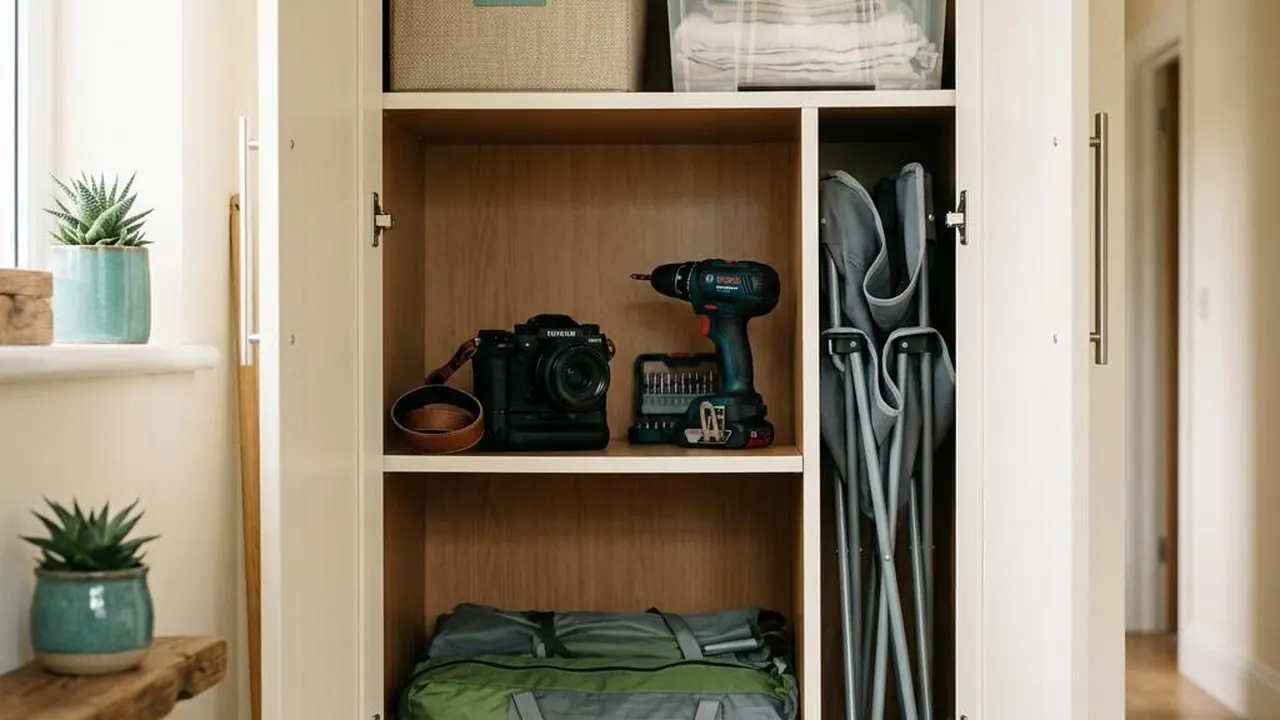
A bicycle you haven't ridden in months?
A camera you purchased for a holiday?
A power drill used for one home improvement project?
A projector gathering dust?
A spare parking space?
Camping equipment, speakers, gaming consoles, tools, furniture or other belongings you rarely use?
Now ask yourself something different.
What if some of these belongings could earn money instead of simply occupying space?
We're accustomed to thinking about our possessions as things we've bought.
But some possessions can also be productive assets.
A person who owns a camera might occasionally rent it to someone who needs it for a project.
Someone with a carpet cleaner might offer it to neighbours who need one for a weekend.
A household with camping equipment might find people who prefer renting outdoor gear instead of buying it.
The opportunity depends on local demand, the condition of the item and whether renting it is practical and permitted.
But the principle is powerful.
Just because you're not using something doesn't mean nobody else needs it.
And just because an item has already been purchased doesn't mean its economic usefulness has ended.
3. You Keep Buying Things. But Are They Making Your Life Better?
Here's another uncomfortable question.
How much money have you spent in the last year on things you didn't really need?
The latest gadget.
Another pair of shoes.
A kitchen appliance you used twice.
A new phone when the old one worked perfectly.
A piece of equipment purchased for a single occasion.
We live in a world that constantly encourages consumption.
Buy more. Upgrade. Replace. Own the latest version.
And when money gets tight, we wonder why there's so little left.
Of course, people deserve to enjoy what they earn. Life shouldn't be reduced to paying bills and denying yourself every pleasure.
But there's a difference between enjoying your income and spending without thinking.
Before your next purchase, ask yourself:
- Do I genuinely need this?
- How frequently will I use it?
- Could I rent or borrow it instead?
- Am I buying it because it's useful or because I simply want something new?
The money you don't waste is money you don't have to struggle to replace.
Sometimes improving your finances begins not with earning more, but with allowing less to escape.
4. Stop Underestimating the Power of $20, $50 and $100
Let's imagine a household that decides to make a few changes.
Instead of waiting for a major financial opportunity, its members look for manageable ways to improve their monthly cash flow.
Here's a hypothetical example:
| Small financial action | Monthly benefit |
|---|---|
| Rent out a useful household tool occasionally | $60 |
| Rent out a bicycle or other equipment | $40 |
| Earn from a weekend service or side job | $100 |
| Reduce unnecessary shopping | $75 |
| Cancel unused subscriptions | $25 |
| Total monthly improvement | $300 |
That's $300 in improved monthly cash flow, combining potential gross side income and avoided spending.
Over 12 months, it represents $3,600 if those results are consistently achieved, before any rental operating costs or applicable taxes.
These are illustrations, not guaranteed earnings. Actual opportunities vary considerably.
But consider the bigger message.
You didn't need to win the lottery.
You didn't need a six-figure salary.
You didn't need to launch a multinational company.
You simply started paying attention to smaller financial decisions.
Sometimes, financial progress doesn't arrive as one big breakthrough. It arrives as ten small improvements.
5. Your Belongings Aren't Lazy. Are You Putting Them to Work?
That expensive camera sitting in a drawer doesn't know it's expensive.
The bicycle in your garage doesn't know you paid hundreds of dollars for it.
Your tools, appliances and equipment aren't concerned about whether you have enough money for next month's bills.
They simply sit there.
Waiting.
And every day they remain unused, you may be missing an opportunity to make them useful to someone else.
Of course, not every possession should be rented out. Some items have sentimental value, safety concerns or risks that make sharing impractical.
But many ordinary belongings have useful lives far beyond their owners' occasional needs.
This is one reason peer-to-peer rental marketplaces are becoming an interesting alternative to traditional consumption.
Platforms such as Life4Rent are built around a straightforward idea: people who own useful things can make them available to people who need them temporarily.
Instead of everyone buying the same equipment, one person can own it while others pay to use it when needed.
The owner has an opportunity to generate income.
The renter may avoid an unnecessary purchase.
And existing resources can be used more efficiently.
Your belongings don't have to sit idle just because you aren't using them.
6. You Don't Need to Start a Big Business to Start Earning
Another misconception is that generating extra income requires significant capital.
People imagine renting an office, buying inventory, hiring employees, building a website and spending thousands on marketing.
But a side income doesn't always require starting from zero.
Sometimes you already have what you need.
If you're good at mathematics, you might offer tutoring.
If you know how to repair things, you might offer a local repair service.
If you have photography equipment and relevant skills, you might take on occasional photography jobs.
If you own useful equipment, you might explore renting it.
If you have a spare parking space, you might investigate whether you're allowed to rent it out.
The key is to identify something you can offer without putting your household finances at unnecessary risk.
Start with one opportunity.
Test demand.
Understand your costs.
Improve the offering.
Then consider expanding.
You don't need to build an empire this weekend. You need to identify one realistic way to improve your financial position.
7. Being Busy Doesn't Always Mean Being Financially Productive
Many people are incredibly busy.
We spend hours scrolling through social media, watching videos, discussing the economy, complaining about rising prices and waiting for conditions to improve.
And sometimes, after all that activity, nothing has changed.
Now imagine redirecting just a little of that time.
Thirty minutes identifying unused household items.
One hour photographing them and preparing listings.
An evening researching local demand for a skill or service.
A weekend completing a small paid assignment.
These actions won't guarantee income.
But they create possibilities that passive waiting does not.
There's a difference between being occupied and taking action that could improve your circumstances.
Complaining about the economy may describe your problem. Taking a practical step gives you a chance to change part of it.
8. Stop Measuring Every Opportunity Against Your Dream Income
One reason people overlook small opportunities is that they compare them with the amount they ultimately want to earn.
Someone dreaming of making $10,000 a month may dismiss a $40 opportunity as insignificant.
But that comparison misses the point.
You don't have to abandon your larger ambitions to benefit from smaller income streams.
Think of small earnings as financial support while you work toward bigger goals.
A weekend rental might pay for fuel.
A tutoring session might cover groceries.
A small freelance project might fund your savings.
A reduction in unnecessary purchases might prevent you from using your credit card.
These improvements matter because everyday life is made up of everyday expenses.
And those expenses don't wait for your dream job or business opportunity to arrive.
Don't reject the money that could help you today simply because it isn't the fortune you hope to earn tomorrow.
9. A Second Income Doesn't Have to Replace Your First Income
The purpose of a side income isn't necessarily to make you wealthy.
Sometimes it's simply to make your existing income go further.
Imagine earning a salary that covers most of your household expenses but leaves little room for unexpected costs.
An additional $100 or $200 a month might provide breathing room.
It might help you build an emergency fund, reduce debt or avoid dipping into savings.
And if you eventually develop a successful business or receive a substantial salary increase, those smaller income streams may still be useful.
Financial resilience often comes from having more than one way to support yourself.
That doesn't mean everyone should work constantly or sacrifice rest and family time.
The best additional income opportunities are those that fit realistically into your life.
And opportunities based on assets you already own may sometimes require less active work than taking on another job, although rentals still involve communication, maintenance and responsibility.
10. Start With What You Have, Not What You Wish You Had
Here's a challenge.
Forget, for a moment, about the money you wish you had.
Forget about the business you want to launch someday.
Forget about the salary you hope to earn next year.
Instead, look at what you have today.
Your belongings.
Your skills.
Your available time.
Your existing resources.
Your knowledge.
Your experience.
Ask yourself: Which of these could realistically create value for somebody else?
You might be surprised by the answer.
A neighbour may need something you own.
A small business may need a service you can provide.
A family may need equipment you rarely use.
A visitor may need temporary access to something you can make available.
You won't discover every opportunity by sitting and waiting.
Sometimes you have to make your resources visible to the people who need them.
That's where platforms like Life4Rent can play a role, helping connect people who have rentable belongings with people looking for temporary access to them.
11. Take the Seven-Day Challenge
If you've read this far, don't let this become another article that inspires you for five minutes and changes nothing.
Try this simple challenge.
Day 1: Walk through your home. Identify at least five belongings you rarely use.
Day 2: Research their potential value. Find out whether people in your area rent similar items and what they might reasonably pay.
Day 3: Review your spending. Identify one unnecessary recurring expense you can reduce or eliminate.
Day 4: Choose one income opportunity. Select a suitable item to rent, a skill to offer or a service you could provide.
Day 5: Take action. Create a listing, contact a potential customer or advertise your service.
Day 6: Improve your offer. Take better photographs, clarify your pricing and make sure your terms are reasonable.
Day 7: Review your progress. Have you received enquiries? Saved money? Identified an opportunity worth pursuing?
Even if you haven't earned anything yet, you'll have moved from wishing to testing.
And that is a meaningful first step.
12. Maybe You're Not as Far From Financial Progress as You Think
Let's be clear.
Not everyone who is struggling financially has unused assets, spare time or opportunities to generate additional income.
Low wages, unemployment, illness, high housing costs and economic instability can create serious hardship that cannot be solved by renting out a bicycle or cancelling a subscription.
But for those who do have underused resources, the possibility of making better use of them deserves attention.
You may not be able to change the global economy.
You may not be able to control inflation.
You may not be able to negotiate a salary increase tomorrow.
But you may be able to reduce one expense, earn from one unused item or offer one service that someone needs.
And those small actions can add up.
The most important shift is learning to recognise value where you previously saw only ordinary possessions and everyday skills.
Final Thought: Before You Say "I'm Broke" Again, Ask Yourself One Question
Am I making the best use of what I already have?
Not because every financial difficulty is your responsibility.
Not because hard work always guarantees wealth.
And certainly not because small side incomes can replace fair wages or economic stability.
But because overlooking an opportunity doesn't make that opportunity disappear.
You might be waiting for a large financial breakthrough while ignoring smaller ways to make life a little easier.
A camera that could earn something.
A tool somebody needs.
A skill someone would pay for.
A purchase you could avoid.
A monthly expense you could eliminate.
Small money matters.
Small savings matter.
Small beginnings matter.
Stop waiting for everything to change before you change something.
Your next financial opportunity might not arrive in the form of a new job, a big contract or an unexpected windfall.
It might already be sitting somewhere in your home.
Your Stuff Isn't Lazy. Give It Something to Do.
Have useful belongings sitting idle while everyday expenses keep rising?
Life4Rent helps you explore opportunities to rent out belongings you already own and discover items you can rent instead of buying.
You don't need to own more to begin exploring new earning opportunities.
Start with what you have. Make it work for you.