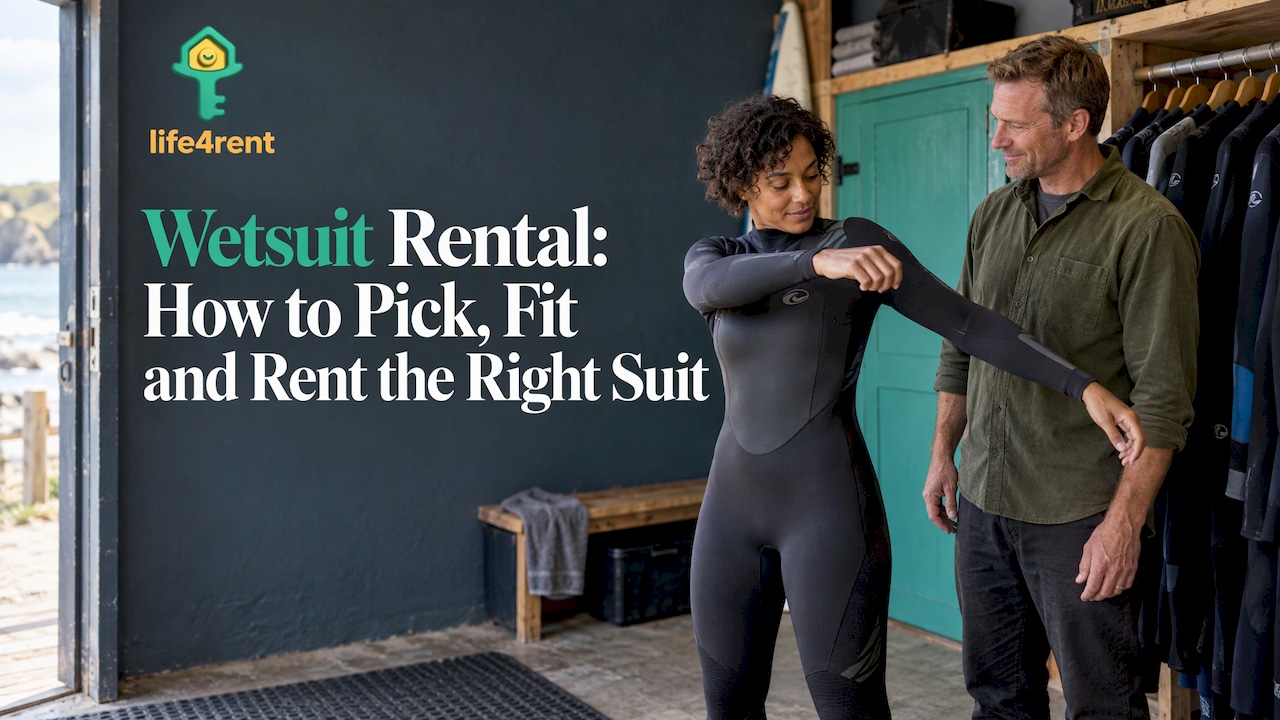
Wetsuit Rental: How to Pick, Fit and Rent the Right Suit
November 27, 2026
Published by Life4Rent · Operated by Brohf Software OÜ
Wetsuit Rental: How to Pick, Fit and Rent the Right Suit
Renting a wetsuit makes sense when you swim, surf or paddle a few times a year, or when you are traveling and don’t want to pack neoprene. The rental only works if you get three things right: the thickness for the water, a snug fit, and clear terms on pickup, return and damage. On Life4Rent you can search listings by item, location and dates and rent from someone near you, so the suit is picked up close to the water instead of shipped across the country.
This guide walks you through each decision in the order you will face it.
TL;DR
- Choose thickness by water temperature first. A 3/2 mm full suit covers roughly 55 to 64°F water, and colder water calls for 4/3 mm or thicker, often with a hood.
- A good fit is skin-tight but lets you breathe fully, raise your arms overhead, squat and kneel. Loose suits let cold water circulate.
- Before you book, confirm size, deposit, pickup or delivery, return condition and what happens if you return it late or damaged.
- Racing in a triathlon? Event rules cap thickness and set temperature limits, so check your race’s rules before you choose.
- If one listing is booked for your dates, change the dates, widen the search area or try a different suit style.
Table of Contents
- Start with the water, not the suit
- Racing? Check the rules before you rent
- Getting the fit right
- How renting a wetsuit works
- Check the suit’s condition and hygiene
- Caring for the suit during your rental
- What if nothing is available for your dates?
- Why rent from a local owner
- Find a wetsuit near you
- FAQ
- Sources
Start with the water, not the suit
The most common mistake is choosing a wetsuit by the air temperature on the beach. Wind, air temperature and how long you stay in the water all matter, but thickness is matched mainly to water temperature. Activity matters too: surfing, swimming and paddling each ask for a different design, so a suit that suits a surfer is not automatically right for a distance swimmer.
Here is a practical way to read the numbers. Wetsuit thickness is written in millimeters. A label like 3/2 means 3 mm of neoprene around the torso and 2 mm on the arms and legs. A 4/3 suit follows the same idea: thicker material around your core for warmth, thinner on the limbs so you can move.
Thickness by water temperature
Manufacturers publish their own charts, and they overlap a little. Use the ranges below as a starting point and move up a thickness if you get cold easily or plan to stay in for an hour or more.
| Water temperature | Typical suit | Source |
|---|---|---|
| About 64 to 73°F (18 to 23°C) | 1.5 to 2 mm top or spring suit | Patagonia guide, 2025 |
| About 55 to 64°F (13 to 18°C) | 3/2 mm full suit | Patagonia guide, 2025 |
| About 50 to 61°F (10 to 16°C) | 4/3 mm full suit, or hooded full suit | Patagonia guide, 2025 |
| About 45 to 55°F (7 to 13°C) | 5/4/3 mm hooded full suit | Patagonia guide, 2025 |
| About 46°F (8°C) and below | Hooded 6/5 mm | MEC guide |
If your water sits between two bands, rent the thicker suit for cold-water sessions and the thinner one for warm afternoons. Water temperature for most US beaches is posted by local lifeguards or harbor reports, and it changes through the season, so check it the week you travel, not months before.
Know the suit styles
Rental listings use a few terms that are worth knowing before you search:
- Full suit: long arms and long legs. The default for cool water.
- Hooded full suit: a full suit with an integrated hood, for the coldest conditions.
- Spring suit (shorty): short legs, with long or short sleeves. Better for warm water and breezy days.
- Top or jacket: a layer for the upper body in mild water.
These descriptions follow common wetsuit style definitions. If you are new to the sport, a full suit in the right thickness is the safest first rental, because it protects against both cold water and wind.
Racing? Check the rules before you rent
Triathletes and open-water racers face a different question: is the suit even legal that day? USA Triathlon’s competition rules say a wetsuit may not exceed 5 mm anywhere and must fit tightly to the body while swimming. For most races and waves, the same document makes wetsuits mandatory when the water is 60.6°F (15.9°C) or colder, permitted between 60.8°F and 78°F (16.0 to 25.5°C), and prohibited at 84°F (28.9°C) and above, with extra conditions for ranking in some temperature bands and categories.
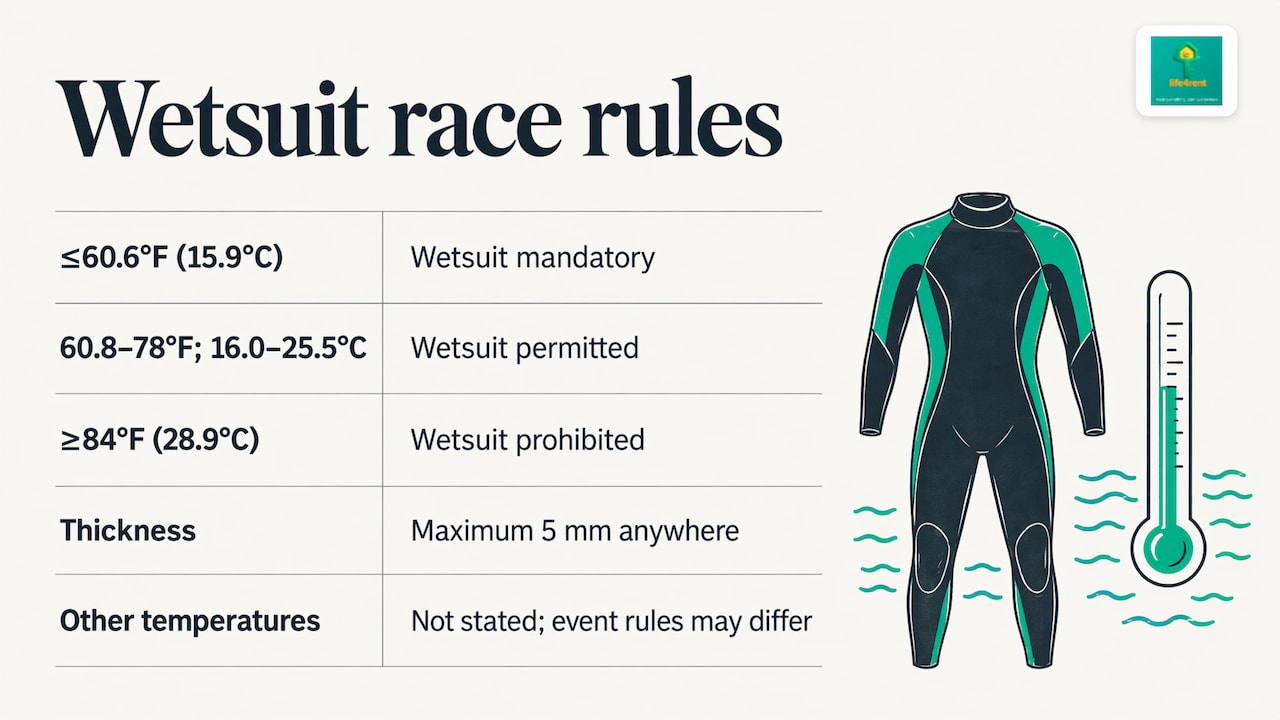
So if you are renting for a race, pick a swim-specific suit within the thickness limit, and confirm your event’s own rules and the water temperature on race week. Races outside USA Triathlon sanctioning can set their own limits, so read the event page.
Getting the fit right
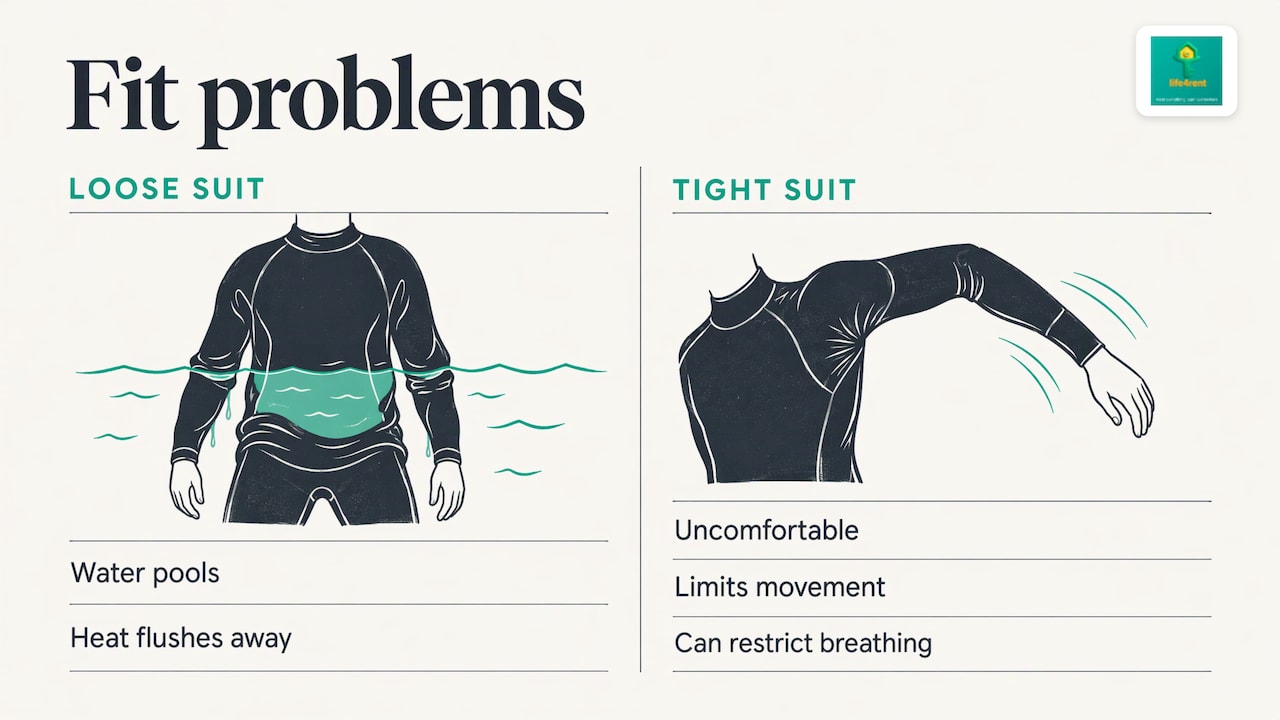
Fit is where a rental can go wrong, because you often can’t try the suit on before you reserve it. Fit matters for two reasons. A loose suit lets water pool and flush heat away, while an overly tight one is uncomfortable, limits movement and can restrict breathing.
The fit checklist
When you pick up the suit, put it on and run through these checks, taken from a wetsuit manual’s fitting guidance:
- Take a full, deep breath. Your chest should expand without a fight.
- Join your hands overhead.
- Reach to the center of your back, just below the neck.
- Touch your toes.
- Squat, then kneel.
A suit should feel skin-tight, not painful. Folds and bunching suggest too much room, while pain or an inability to move freely suggests it is too tight. Pay attention to the neck, armpits and crotch: gaps there let in the most water.
Give the owner the right measurements
When you message an owner or book a listing, send the details that decide the size: height, weight, and your usual chest, waist and hip measurements. Most suits are sized by height and weight ranges, and brands differ, so a medium in one brand is not a medium in another. If you are between sizes, say so and ask which suit the owner would hand you for your build. Ask about the suit’s thickness and style too, since a listing titled “wetsuit” may be a 2 mm shorty or a 5/4 hooded suit.
How renting a wetsuit works
With a peer-to-peer marketplace, the process looks like this:
- Search by item, location and dates. On Life4Rent, availability depends on the location and dates you pick, so enter the beach town or lake area you will be near and the exact days you need the suit. Wetsuits fit under categories such as Outdoor & Sports.
- Compare listings. Look at thickness, style, size and the listing’s photos. Message the owner if the size or condition is unclear.
- Book through the platform. Our platform handles secure payments, and identity verification tools are part of the experience for both sides. Our how it works page explains the booking flow step by step.
- Pick up the suit. Try it on using the checklist above and note any wear in your messages or photos before you leave.
- Use it, rinse it, return it. Return on time and in the condition you received it.
Costs and deposits to expect
Rental prices for wetsuits vary by place, season, thickness and the length of your rental, and owners on a peer-to-peer marketplace set their own rates. The listing shows the price for your dates before you book. Look at four things when you compare:
- The daily or multi-day rate.
- Any deposit and when it is returned.
- Whether delivery or pickup is included, and where.
- What the owner expects on return: rinsed, dried, and free of new damage.
If you will use a suit for a week or more, ask about a multi-day rate; many rentals are priced so that longer periods cost less per day. Some eligible listings on Life4Rent also support purchase or rent-to-buy, which is worth a look if a suit turns out to be one you want to keep. Homes, event spaces and licensed vehicles remain rental-only.
Check the suit’s condition and hygiene
A wetsuit is worn against bare skin, so condition matters as much as size. At pickup, look for:
- Seams and stitching: no splitting or loose threads, especially at the armpits and crotch.
- Neoprene surface: no large tears, thin patches or peeling liner.
- Zipper: it should run smoothly and stay closed. A stuck zip is a common failure.
- Smell and cleanliness: the suit should be fresh and rinsed. Ask the owner how they clean between renters.
- Cuffs and neck seal: they should hold snug without cracks.
Take a few photos of the suit at pickup. If the owner and you both have a record of its condition, there is less room for disagreement on return. If the suit isn’t what the listing described, message the owner right away through the platform, before you head into the water.
Caring for the suit during your rental
A few habits keep a rented suit in good shape, and they keep your deposit and your reputation as a renter intact:
- Rinse with fresh water after each use, inside and out, to wash away salt, sand and chlorine.
- Hang it to dry in the shade, turned inside out first, then right side out. Avoid direct sun, which can dry out the neoprene.
- Hang from the waist or fold over a wide hanger. Thin hangers stretch the shoulders.
- Put it on carefully. Remove rings and watches, keep fingernails away from the neoprene, and pull the suit up by the material of the calf and thigh instead of tugging at the edges.
- Avoid rough surfaces. Sitting on rocks, barnacles or a rough board deck is the quickest way to tear a suit.
- Never leave it wet in a bag or a hot car. Dampness breeds odor and mildew.
If something does tear or break, tell the owner promptly and honestly. The platform lets you message the owner directly, and an early heads-up is usually the easiest way to settle a repair. If you want extra peace of mind, Life4Rent offers an optional protection plan, so look at that option when you book a higher-value suit. Return the suit when agreed. A late return usually means additional rental days, so ask the owner if you need more time rather than keeping it quietly.
What if nothing is available for your dates?
Peak summer weekends and holiday weeks book up first. If your first search comes up empty:
- Shift your dates by a day or two. One open weekday can be enough.
- Widen the location. Search the next town up the coast or across the lake.
- Change the style. A 3/2 full suit may be booked, while a 4/3 is open and also works if the water is on the cool side.
- Look at neighboring categories. Cold-water swimmers may also find gear listed under Cameras & Drones or Outdoor & Sports for the rest of the trip, which keeps everything in one booking trip.
- Book early. For a vacation, reserve once your travel dates are set.
If you are renting a full kit for a trip, our guide on renting ice skates covers sizing and costs in a similar way for another cold-weather sport.
Why rent from a local owner
Surf shops are not the only source of rental suits. People who own a quality suit, whether a swimmer, a paddleboarder or a family that outgrew its gear, can list it and earn income from something that sits in a closet most of the year. For you, the benefit is a nearby pickup, a choice of sizes and styles, and the ability to compare listings by date instead of calling around. For a family with growing kids, renting a youth suit for a vacation week is far easier on a budget than buying one that will not fit next summer.
Our view: share the gear, keep the season simple
We built Life4Rent around a simple idea: most gear is used a few days a year. A wetsuit is a perfect example. It has to be the right size and the right thickness, and it is only needed when you are near the water.
That is why we offer a broad catalog of 17 categories, searchable by location and dates, with secure payments, identity verification and optional protection. For renters, that means a suit that suits the day. For owners, it means a way to earn from gear that would otherwise sit idle.
Our advice is to book early, share your measurements with the owner, and treat the suit the way you would want your own treated.
the author
Find a wetsuit near you
Life4Rent is a worldwide peer-to-peer rental marketplace with 17 categories, including outdoor and sports gear, searchable by location and dates. Enter your destination and your dates in the public listing catalog, compare what is available, and book with secure payment handling. If you own a suit you rarely wear, you can list it on Life4Rent and earn from it.

Owners can track earnings from their listings, and our rewards program recognizes participation.
FAQ
What thickness wetsuit should I rent?
Match it to the water temperature. A 3/2 mm full suit is a common choice for water around 55 to 64°F, 4/3 mm suits cooler water, and hooded 5/4 mm or thicker suits are for the coldest conditions. If you chill easily or will stay in the water a long time, go one step thicker.
How tight should a rental wetsuit feel?
Snug like a second skin, without limiting your breathing or movement. You should be able to take a full breath, raise your arms overhead and squat. Wrinkles and gaps mean it is too big, and pain or restricted movement means it is too small.
Do I need a deposit to rent a wetsuit?
It depends on the listing. Owners set their own terms, so check the listing details for any deposit, when it is returned and what condition the suit must be in. Confirm these points before you book.
What should I do if the suit gets damaged?
Tell the owner as soon as you notice, using the platform’s messaging, and describe what happened. Photos taken at pickup help show what was already worn. If you booked the optional protection plan, check what it covers in your booking details.
Can I use a rental wetsuit in a triathlon?
Often yes, as long as it meets the race rules. USA Triathlon’s rules cap thickness at 5 mm and require a tight fit, and wetsuit use depends on the water temperature on race day. Check your event’s own rules before you reserve.
Sources
- How to choose a wetsuit, MEC
- A Guide to Wetsuit Thicknesses and Temperatures, Patagonia
- USA Triathlon Multisport Competition Rules
- Wetsuits manual, SCUBAPRO
- Wetsuit Manual, BARE
- Wetsuit Buyers Guide and size charts, eBodyboarding
Recommended
Life4Rent
Rent it. Earn from it. Own less, access more.
Browse peer-to-peer rentals near you, or list what you own and start earning — all protected by Life4Rent Protect.
About the author
London, United Kingdom
Fred covers rental technology, app features, and platform mechanics for the Life4Rent Renting Academy. With a background in fintech journalism, he specialises in breaking down how digital rental platforms work — from payment protection and identity verification to smart pricing and booking management.