Hosting & Rental Care
Rent It Out. Earn From It. Protect It: A Simple Guide to Successful Short-Term Rentals
Whether you're renting out your home, a spare room, a vehicle, professional equipment or unused space, these practical steps can help you attract reliable customers, protect your belongings and build a rental business with confidence.
Joshua Price
You have something valuable that you're not using all the time.
Perhaps it's a beautiful apartment that sits empty for several weeks each year.
A spare room.
A camera.
A power tool.
A parking space.
A piece of professional equipment.
Or a holiday home you only visit occasionally.
You've considered renting it out to generate additional income.
But then the questions begin.
What if someone damages it?
What if something goes missing?
What if the guest refuses to take responsibility?
What if you don't know who you're handing your property over to?
These are reasonable concerns.
After all, you're not simply renting out an object or a space.
You're trusting another person with something you own.
And while short-term rentals can create valuable earning opportunities, successful owners understand that generating income is only half the equation.
The other half is protecting the asset that makes that income possible.
The good news is that you don't need to become a professional property manager to start developing good rental habits.
A few simple procedures can make a significant difference.
1. Start With Something You Can Manage
One of the biggest mistakes new rental owners make is trying to do too much too quickly.
You don't need five apartments, ten vehicles or a warehouse of equipment to begin.
Start with one suitable asset.
It might be a spare bedroom, a camera you rarely use, a bicycle, a storage space or a piece of equipment that spends most of its time unused.
Before listing it, ask yourself:
- Is this asset in good condition?
- Is it safe and suitable for rental?
- Am I legally permitted to rent it out?
- Can I manage its availability and handovers?
- What would happen if it were damaged or unavailable for several weeks?
- Do I have the appropriate insurance or other protection?
If you're renting out a home, check local short-term rental rules, building regulations, permits, taxes and any restrictions imposed by your lease or community.
For equipment, vehicles and specialised items, check the relevant safety, licensing and insurance requirements.
A successful rental business begins with an asset you understand and can manage responsibly.
2. Know Who You're Renting To
Imagine handing the keys to your apartment to someone you've never met.
Or giving a valuable camera to a stranger for the weekend.
Wouldn't you want to know a little about the person first?
Responsible guest screening isn't about being suspicious of everyone.
It's about establishing reasonable trust before handing over something valuable.
Where appropriate, review available identity verification information and communicate with the prospective renter.
For accommodation, ask legitimate questions about the purpose of the visit, number of guests and expected arrival time.
For equipment, confirm that the renter understands how to use the item and has any required qualifications.
For vehicles, verify the necessary driving licence, age eligibility and insurance requirements.
Keep screening consistent, relevant and compliant with privacy and anti-discrimination laws. Don't request unnecessary sensitive personal information or make decisions based on protected characteristics.
And remember that identity verification alone does not guarantee that someone will behave responsibly.
The goal is not to interrogate customers. It's to establish who is responsible for your property and whether the rental arrangement is suitable.
3. Create an Inventory Before Anyone Arrives
This is one of the simplest and most important habits a rental owner can develop.
Imagine you own a furnished holiday apartment.
Inside, you have:
A television.
Kitchen appliances.
Furniture.
Towels.
Bed linen.
Decorative items.
Remote controls.
Small electronics.
Outdoor furniture.
And perhaps a bicycle or two.
A guest checks out, and several days later you realise something is missing.
But can you prove it was there before the stay?
This is where an inventory becomes valuable.
Create a record of the important items included in the rental.
For a furnished property, organise your inventory by room.
For equipment, record the item, model, serial number where available, accessories and condition.
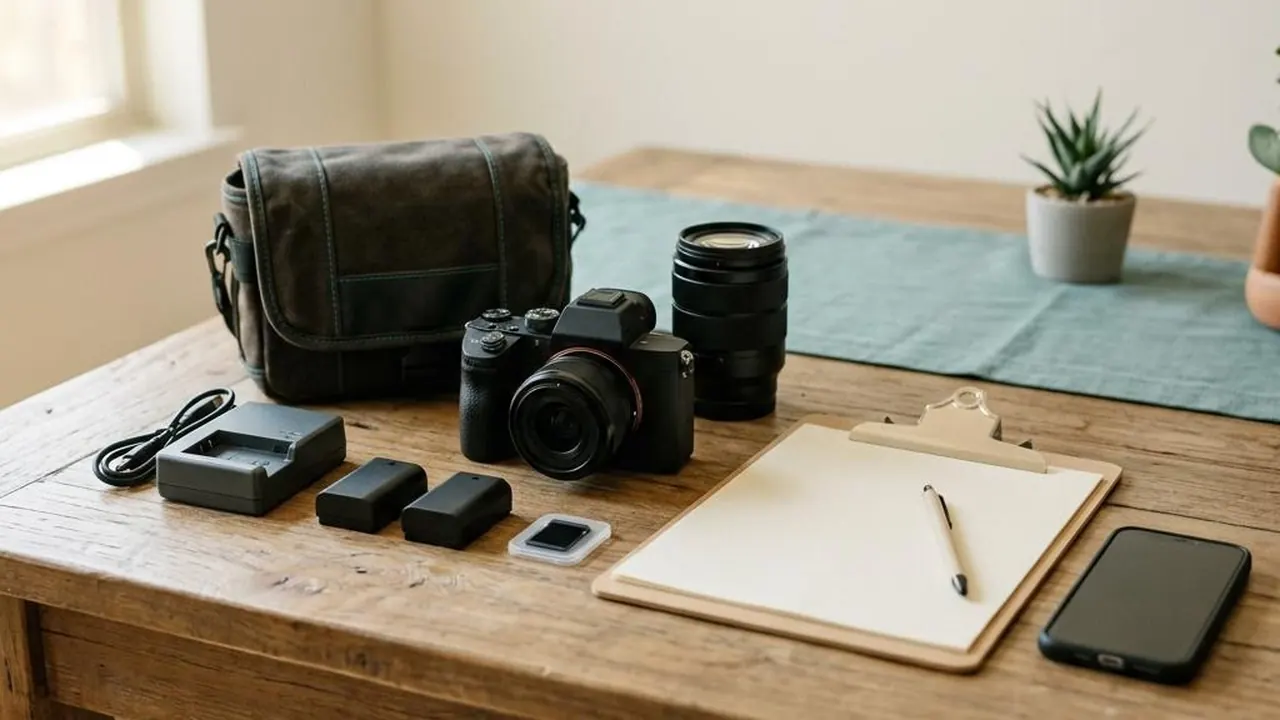
For a camera rental, for example, your inventory might include:
| Item | Quantity | Condition before rental |
|---|---|---|
| Camera body | 1 | Good |
| Lens | 2 | Good |
| Battery | 2 | Charged and functional |
| Charger | 1 | Working |
| Memory card | 1 | Included |
| Carrying case | 1 | Minor exterior wear |
For a holiday home, you might maintain a similar checklist for kitchen appliances, electronics, furniture and other significant belongings.
Don't make the inventory unnecessarily complicated.
Focus on items that are valuable, easily removed, easily damaged or important to the guest's experience.
If you don't know exactly what you're handing over, it becomes much harder to establish what's missing when it comes back.
4. Take Pictures Before Every Rental
A written inventory is useful.
But photographs can make it much more effective.
Before handing over your property, document its condition.
For accommodation, take clear photographs of the main rooms, furniture, appliances and any existing damage.
For equipment, photograph the item from several angles.
Capture scratches, dents, accessories and serial numbers where appropriate.
For vehicles, document the exterior, interior, mileage and fuel or charge level, following applicable privacy rules.
These photographs can help establish the item's condition before use.
For example, imagine a camera is returned with a damaged lens.
Without a pre-rental record, the owner and renter may disagree about whether the damage existed beforehand.
A clear, dated photograph taken during handover may help clarify the situation.
Photographs are not conclusive proof in every dispute, but they can provide valuable supporting evidence.
A few minutes spent documenting your asset before a rental could save hours of disagreement afterward.
5. Use Life4Rent's Photo and Barcode Handover Process
This is where technology can make the rental process more organised.
Life4Rent supports a photo and barcode-based handover and return process for applicable rentals, allowing the parties to document an item's condition and record handover and return checkpoints.
Instead of relying entirely on memory or informal conversations, owners and renters can use the supported process to create a more structured record.
A typical approach is straightforward.
Before handover:
Confirm the item and accessories included in the rental.
Photograph its current condition.
Complete the applicable barcode scan and handover steps.
Make sure the renter understands what's being provided and any important usage instructions.
At return:
Check that the same item and accessories have been returned.
Inspect the condition.
Take updated photographs.
Complete the applicable barcode scan and return steps.
Record any discrepancy promptly through the appropriate process.
Consider a professional camera rental.
The owner hands over a camera body, two lenses, batteries and a carrying case.
At the beginning of the rental, the condition and included accessories are documented.
When the camera comes back, the owner compares the returned equipment with the original record.
This can help identify missing accessories or newly visible damage while the transaction is still fresh in everyone's mind.
The same principle can be adapted to other suitable rental categories.
For homes and spaces, a room-by-room photographic inventory remains important, since scanning a handover barcode does not independently establish the condition of every object inside a property.
Life4Rent's handover documentation is designed to help owners and renters create a clearer record of what was provided and what was returned.
It doesn't prevent every incident or automatically prove responsibility, but it supports a more transparent rental experience.
6. Never Skip the Return Inspection
It's tempting to accept a returned item, thank the renter and move on.
But problems aren't always immediately obvious.
A power tool may have a damaged cable.
A camera lens may have a new scratch.
A vehicle may have interior damage.
A holiday apartment may have a broken appliance or missing remote control.
Create a simple return routine.
Check the asset against your inventory.
Compare its condition with your original photographs.
Confirm that accessories are present.
Test essential functions where practical.
Document discrepancies promptly.
If a problem is discovered, communicate factually and professionally.
Distinguish ordinary wear and tear from actual damage.
Don't assume that every scratch, missing item or malfunction was caused by the renter without supporting evidence.
The rental isn't fully complete from an asset-management perspective until you've checked what came back.
7. Protect Your Property Without Making Guests Feel Unwelcome
There's a difference between responsible protection and making customers feel distrusted.
Good rental management should balance security with hospitality.
For accommodation, you can protect your property through appropriate locks, access controls, clear occupancy limits and a documented inventory.
For equipment, use secure carrying cases, clear handling instructions and agreed return procedures.
For spaces, explain which areas are included and which are restricted.
Avoid unnecessary surveillance.
In particular, never install cameras in private areas such as bedrooms or bathrooms. Any permitted exterior monitoring must comply with applicable laws, platform rules and disclosure requirements.
You don't need to make guests uncomfortable to establish reasonable boundaries.
A welcoming experience and a secure rental can coexist.
Good security should protect both the owner's property and the renter's peace of mind.
8. Set Clear Rules Before the Rental Begins
Many rental disagreements begin with unclear expectations.
One person assumes something is permitted.
The other assumes it isn't.
Consider a holiday apartment.
Can guests bring pets?
Are parties allowed?
How many people can stay overnight?
Is smoking permitted?
What time is checkout?
Are bicycles or outdoor equipment included?
Now consider an equipment rental.
Can the item be used outdoors?
Can someone else operate it?
Is commercial use permitted?
Who is responsible for consumables?
When must it be returned?
What happens if the item breaks down?
These questions should be answered before the rental begins.
Keep the rules understandable, reasonable and relevant to the asset.
Don't bury essential conditions in confusing language.
Clear rules aren't about controlling customers. They're about preventing misunderstandings.
9. Consider Deposits, Insurance and Damage Protection
A refundable security deposit may provide an additional layer of protection where permitted and supported by the rental arrangement.
But deposits should be handled transparently.
Explain the amount, when it's collected, how it's held, what deductions may be allowed and when any balance will be returned.
Check the listing’s deposit and return conditions.
Insurance is equally important.
A standard homeowner's or personal equipment policy may not cover commercial or short-term rental use.
Check whether your policy covers the particular asset, rental activity, theft, accidental damage, liability and relevant exclusions.
For valuable equipment, vehicles and accommodation, appropriate coverage can be especially important.
And remember: a deposit, a verified identity or a photographic record is not a substitute for adequate insurance.
Protecting your asset means planning for what could go wrong—not assuming nothing ever will.
10. Price for Sustainability, Not Just Bookings
A low rental price may attract interest.
But if it doesn't cover your costs, you may be creating activity without generating meaningful profit.
Consider what it actually costs to offer an asset for rent.
For accommodation, expenses may include cleaning, utilities, maintenance, consumables, insurance, taxes and periods without bookings.
For equipment, costs may include servicing, depreciation, replacement parts, storage and transport.
For vehicles, expenses can include insurance, maintenance, depreciation and usage-related costs.
Imagine renting out a piece of equipment for $40 per day.
If it rents for eight days in a month, gross revenue would be $320.
But that isn't necessarily $320 in profit.
You still need to account for expenses, taxes and the cost of maintaining the equipment.
Set a price that is competitive but sustainable.
A successful rental business isn't measured only by how many bookings you receive. It's measured by what you earn after protecting and maintaining the asset.
11. Make Your Listing Accurate and Attractive
Good photographs attract attention.
Accurate descriptions build trust.
If you're renting out an apartment, show the actual rooms, sleeping arrangements, bathrooms, outdoor spaces and relevant amenities.
If a bedroom is small, don't make it look enormous through misleading photography.
If parking is limited, explain the arrangement.
If an item has visible cosmetic wear, disclose it.
For equipment, include the model, specifications, accessories and any limitations.
For spaces, explain dimensions, access arrangements, opening hours and permitted uses.
A strong listing helps the right customers understand what they're booking.
And when expectations match reality, there's less room for disappointment.
Don't promise the perfect rental. Present an accurate rental that delivers what you promise.
12. Communicate Before, During and After the Rental
Good communication is one of the simplest ways to reduce problems.
Before the rental, confirm the booking details and any necessary instructions.
For a holiday home, provide arrival information, access instructions and relevant house rules.
For equipment, explain the handover location, included accessories and return expectations.
During the rental, remain reasonably available for genuine questions or problems.
Afterward, confirm the return and address any issues promptly.
Where available, use Life4Rent's platform messaging to keep important rental communications connected to the transaction.
A written record of agreed arrangements can be useful if questions arise later.
A customer who understands what to expect is more likely to have a smooth rental experience.
13. Make Handover and Return a Routine, Not an Improvisation
Consistency is one of the best habits you can develop.
Don't create an entirely new process for every booking.
Use a simple checklist.
Before the rental
- Confirm the booking and renter details through appropriate channels.
- Check that the asset is clean, safe and ready.
- Verify the inventory and included accessories.
- Photograph its condition.
- Complete the applicable Life4Rent handover photo and barcode steps.
- Explain usage instructions, rules and return expectations.
After the rental
- Confirm the asset has been returned.
- Check the inventory.
- Inspect the condition and test key functions where practical.
- Take return photographs.
- Complete the applicable barcode and return documentation.
- Record and report any discrepancy promptly.
- Prepare the asset for its next booking.
You can adapt the checklist to a home, camera, tool, vehicle or other rentable asset.
A routine makes it easier to remember important steps, even when you're busy.
Eligible rentals can offer optional protection; it is not insurance and reimbursement is discretionary.
14. Understand the Difference Between Wear, Damage and Theft
Not every change in an asset's condition is evidence of wrongdoing.
A towel becoming worn after repeated use is different from a missing television.
Minor signs of normal equipment use are different from a broken component caused by misuse.
A mechanical failure may occur without anyone acting negligently.
That's why documentation matters.
Before deciding what happened, review the initial condition, the rental terms, the return photographs and any relevant communication.
If theft is reasonably suspected, preserve evidence and follow the applicable reporting and dispute procedures.
Avoid public accusations or attempts to recover property through unsafe confrontations.
Where necessary, contact the relevant authorities or seek professional advice.
Protecting your belongings also means handling disagreements fairly and based on evidence.
15. Good Maintenance Protects Your Future Earnings
An asset that earns income needs ongoing care.
If you neglect maintenance, today's rental revenue may lead to tomorrow's expensive repair.
For holiday accommodation, inspect plumbing, appliances, electrical systems, furniture and safety equipment regularly.
For cameras and electronics, check functionality, connectors and batteries.
For power tools, inspect safety guards, cables and moving parts.
For vehicles, follow the manufacturer's service schedule and legal inspection requirements.
Keep a maintenance log.
Remove unsafe or defective items from rental availability until they are repaired.
Good maintenance can reduce downtime, improve customer satisfaction and help preserve the asset's useful life.
Your rental asset is not just something you own. It's part of the foundation of your rental income.
16. Build Trust and Encourage Repeat Customers
A customer who has a good experience may return.
A guest who enjoys your apartment may book another stay.
A photographer who rents your equipment may need it again next month.
A local business that rents your event space may recommend it to another organisation.
Reliability matters.
Be punctual.
Deliver what you advertised.
Keep your asset in good condition.
Communicate professionally.
Handle deposits and disagreements fairly.
Respect the renter's privacy.
A good reputation can become a valuable business asset of its own.
The best long-term rental strategy is to make customers comfortable returning while keeping your property protected.
17. Don't Let Fear Stop You From Earning—Let Preparation Reduce the Risk
Some people never rent out their belongings because they worry about damage, theft or difficult customers.
Those concerns shouldn't be dismissed.
Rental activities carry real risks, and no marketplace or screening process can eliminate them entirely.
But doing nothing also means your unused asset may never have an opportunity to generate income.
The practical approach is to understand the risks and manage them.
Know what you're renting.
Know who is responsible for it.
Document its condition.
Keep an inventory.
Set clear expectations.
Use appropriate insurance.
Inspect it when it comes back.
And take advantage of the documentation tools available to you.
Confidence in short-term rentals should come from preparation, not blind trust.
Final Thought: Your Asset Should Earn for You Without Being Neglected
A holiday home can welcome visitors and generate income.
A camera can help another creator complete a project.
A tool can support someone's work.
A parking space can serve someone who needs convenient access.
A spare room can become a useful place to stay.
These opportunities make short-term rentals attractive.
But every asset deserves responsible management.
Don't rush to hand over something valuable without understanding the arrangement.
Don't skip the inventory.
Don't forget the photographs.
Don't ignore maintenance.
And don't wait until something goes missing before deciding how to document your rentals.
Use a consistent process from the first booking to the final return.
Because the goal isn't simply to rent something once.
The goal is to protect it well enough that it can continue creating value for years to come.
Rent It Out. Earn From It. Protect It.
Ready to make more use of your home, equipment or unused space?
Explore Life4Rent and create a clear, attractive listing for a suitable asset.
Use the platform's supported photo and barcode handover and return process to help document your rentals, maintain your own inventory and establish clear expectations with renters.
More than earning from what you own, it's about taking good care of what earns for you.
Life4Rent — Rent Anything. Earn Everywhere.