Scissor Lift Rental: A Practical Guide to Peer-to-Peer Options
March 23, 2026
Published by Life4Rent · Operated by Brohf Software OÜ
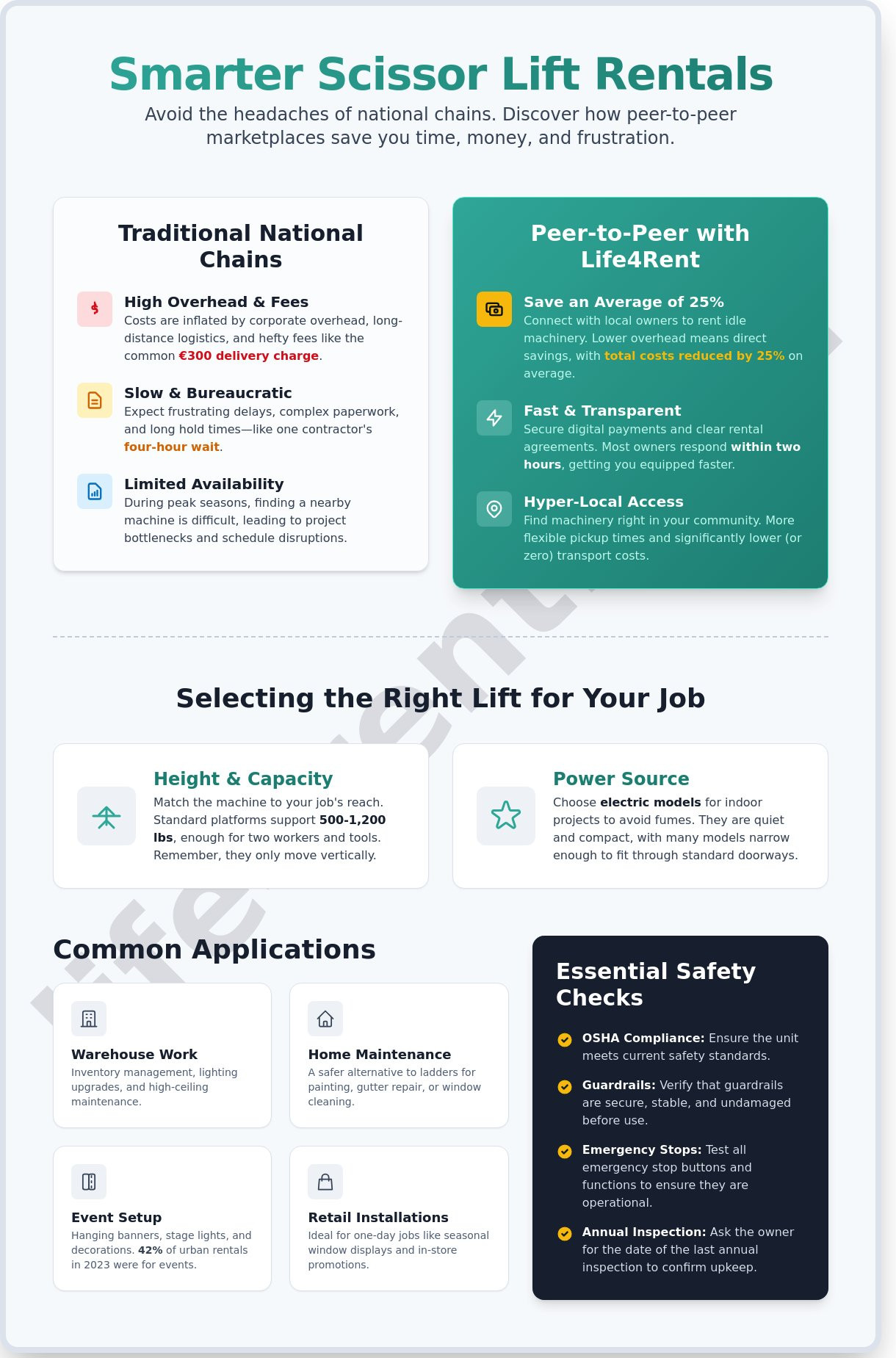
Last Tuesday, a contractor in Berlin spent four hours on hold only to discover that the nearest available machine came with a €300 delivery fee. You've likely dealt with similar headaches when trying to secure a scissor lift rental from a national chain during the peak spring season. It's frustrating when bureaucratic paperwork and high transport costs eat into your project's slim margins.
You can avoid these bottlenecks by looking at peer-to-peer options where local equipment owners list their idle machinery. This approach often reduces total costs by 25% because you aren't paying for massive corporate overhead or long-distance logistics. You'll learn exactly how to pick the right model and what to look for during a safety inspection to keep your site secure.
This guide explains the steps to handle the rental agreement and negotiate fair daily rates without the usual corporate red tape. Local sourcing and specific check-lists make the process faster and more transparent for everyone involved.
Understanding scissor lift rentals for your project
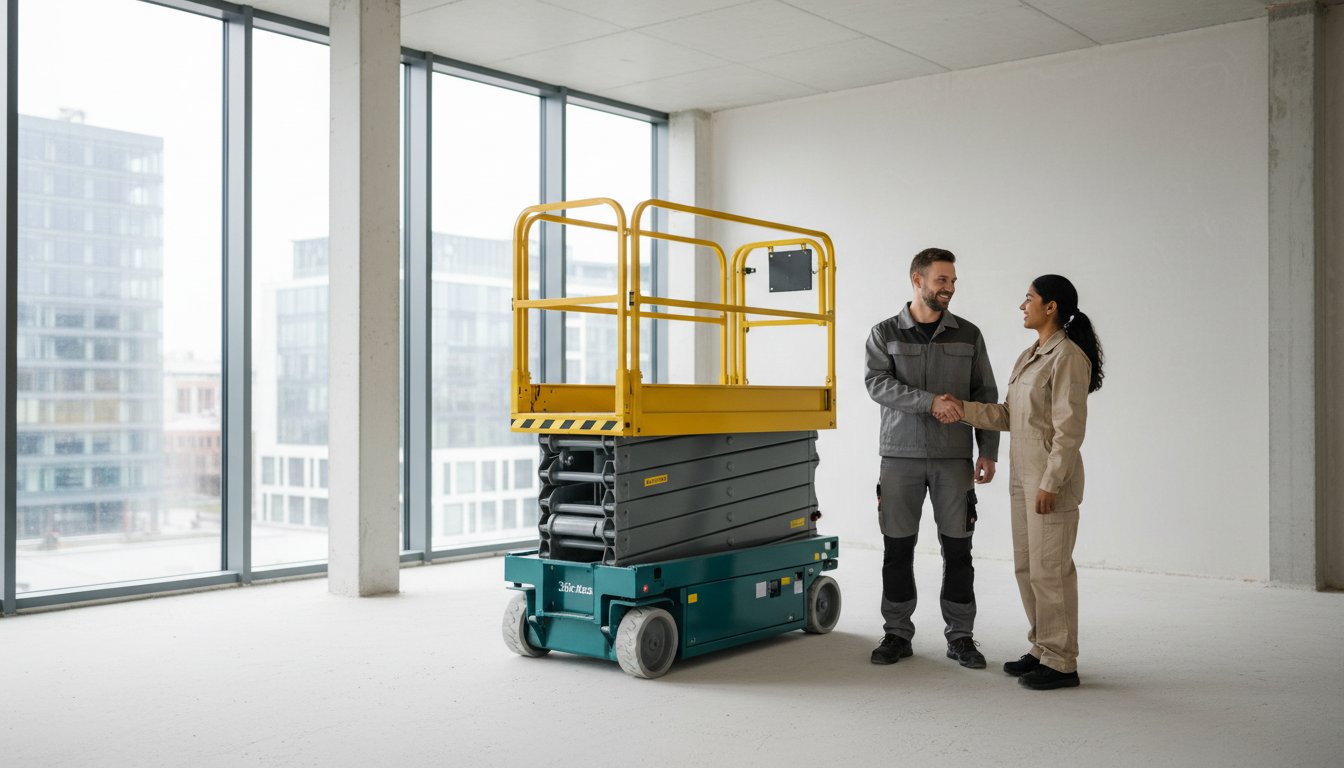
A scissor lift is a mobile platform designed for vertical access. It functions as a stable aerial work platform (AWP) that helps you reach heights safely. These machines use a linked, folding support system that looks like a series of "X" shapes to move the platform straight up. You'll find they're a reliable alternative to scaffolding, which often takes hours to assemble and lacks the same mobility.
Safety standards for these units are strict. Every machine must undergo an annual inspection to remain compliant with local regulations. When you use a peer-to-peer platform, you can ask for the most recent inspection date to ensure the equipment is in good condition. This transparency helps you avoid machines with hydraulic leaks or worn batteries. It's a practical way to manage risk without paying the high overhead costs of a large rental corporation.
To better understand how these machines operate in a real-world setting, watch this helpful video:
Peer-to-peer networks connect you with equipment that might otherwise sit idle in a local warehouse. In cities like Chicago or Tallinn, you can find a scissor lift rental from a local owner rather than a national chain. Platforms like Life4Rent manage the documentation and payment process for you. This setup allows for more flexible pickup times and often results in lower daily rates. Owners list their machinery to earn extra income, while you get a machine located closer to your job site.
Every transaction on these platforms is logged to ensure transparency. You'll receive a digital record of the rental agreement and a condition report. Most owners in the Chicago area respond to inquiries within two hours. This speed is helpful when a project schedule shifts unexpectedly and you need equipment fast. You can also check the maintenance history of a machine before you commit to the rental.
When to choose a scissor lift over other aerial lifts
The choice of the right model depends on your specific workspace needs. When you search for a scissor lift rental, consider the platform size and weight capacity. These machines provide a much larger workspace than boom lifts or cherry pickers. You can often fit two workers and 500 pounds of tools on a single platform. These machines only move straight up and down, so they're best for work directly above the base. Electric models are popular for indoor use because they're quiet and leave no exhaust fumes. A standard 19-foot model typically has a width of 30 inches, allowing it to pass through interior doors.
Common applications for small-scale rentals
Home maintenance projects often require more reach than a ladder provides. Tasks like gutter cleaning or siding repairs are safer when you have a stable base to stand on. Warehouse managers also rely on these lifts for inventory management or to upgrade lighting systems. In 2023, approximately 42% of short-term rentals in urban areas were for event setup tasks. This includes tasks like hanging stage lights or large banners for local festivals. Small-scale rentals are also common for retail displays in the Chicago Loop. Shops often rent these units for seasonal window decorations because a one-day rental is usually 25% cheaper than the weekly rates at traditional yards. Common uses include:
- Interior warehouse work: Inventory management or lighting upgrades in high-ceiling facilities.
- Home maintenance: Safe access for painting, gutter repair, or window cleaning.
- Event setup: Installation of stages, lighting rigs, and large-scale decorations.
- Retail installations: Setting up seasonal displays in high-traffic commercial spaces.
Selecting the right lift height and power source
The wrong machine selection usually leads to delays or safety risks on the job site. Height stands as the most critical factor when you browse available listings for a scissor lift rental. You should check the platform capacity before you commit to a specific model. Most standard platforms support between 500 and 1,200 pounds. This range typically covers two workers and their heavy toolkits without exceeding the safe limit.
Electric motors are the standard choice for indoor applications. They produce zero exhaust fumes, which makes them safe for enclosed spaces like Chicago warehouses or retail units. These machines operate quietly, so they don't disrupt other activities in a shared building. Battery life usually lasts for a full eight-hour shift if the machine isn't driven constantly over long distances.
Rough terrain models rely on diesel or gas engines to generate higher torque. These machines navigate uneven outdoor surfaces or steep inclines that would stall a standard electric motor. Operators must follow OSHA safety guidelines to ensure the machine remains stable on the specific ground type of the site. Diesel units often include larger platforms to accommodate more materials for siding or roofing work.
Local peer-to-peer listings often provide more variety than traditional rental yards. You can find specific configurations that suit your budget and project timeline without the usual corporate overhead. If you aren't sure which model fits your needs, you can browse peer-to-peer listings to compare real-world specs from owners in the Chicago area.
Indoor vs. outdoor lift requirements
Electric lifts usually feature non-marking rubber tires. These prevent black scuffs on finished concrete, tile, or hardwood floors. If you work in a renovated loft or a commercial office, these tires are a requirement to avoid expensive floor damage costs. Narrow models measure approximately 30 to 32 inches wide. These units fit through standard office doorways, which saves time during the initial setup.
Outdoor lifts come equipped with four-wheel drive and aggressive tire treads. These features provide the necessary traction for dirt, gravel, or mud. Many of these models also include hydraulic outriggers. These legs extend to level the machine on slopes up to 5 degrees, ensuring the platform stays vertical during the entire ascent.
Calculating your required working height
The platform height represents the distance from the ground to the floor of the basket. This is the number most people focus on, but it doesn't tell the whole story. The working height adds approximately six feet to that measurement. This accounts for the reach of an average person standing on the platform. If you need to reach a 25-foot ceiling, a 19-foot lift is usually sufficient.
Most residential projects in Chicago neighborhoods use 19-foot to 26-foot models. These sizes handle most two-story homes and commercial storefronts effectively. For example, a 26-foot lift provides a 32-foot working height. This reach is ideal for exterior painting or window installations on Chicago's common three-flat apartment buildings. Always measure the exact height of your work area before you book to avoid the cost and hassle of an equipment exchange.
Comparing national rental chains with peer-to-peer marketplaces
National rental chains dominate the Chicago market with massive fleets, but their business model relies on high overhead. They maintain large brick-and-mortar yards, employ hundreds of staff, and run expensive logistics networks. These costs eventually show up on your invoice. A standard 19-foot electric scissor lift rental might look affordable on the surface, but the final price often tells a different story once you add the corporate markup.
Peer-to-peer marketplaces like Life4Rent operate differently. Local business owners often own machines that sit idle for 30% to 40% of the year. Instead of letting a 26-foot lift gather dust in a warehouse in Elk Grove Village, they list it for rent. This allows them to offer lower rates because the machine is already paid for. You aren't subsidizing a national marketing budget; you're just paying for the equipment's time.
Availability becomes a major factor during the peak construction months of June and July. Big-box stores frequently run out of inventory during these windows. P2P platforms provide access to a secondary fleet that isn't tied up in massive multi-year contracts with developers. You can often find a machine available for next-day use even when the major chains are fully booked for weeks.
Flexibility is another area where local owners shine. Corporate offices usually stick to a strict 8:00 AM to 5:00 PM schedule. If you need a machine dropped off at 6:00 AM to beat the downtown traffic, a national chain might struggle to accommodate you without extra charges. Local owners are often more willing to work around your specific project timeline, especially for weekend work.
Cost analysis and hidden fees
National providers frequently include environmental fees or fuel surcharges that can add 12% to 15% to your base rate. Many also force you to pay for a mandatory damage waiver unless you provide a specific certificate of insurance. P2P pricing tends to be more transparent. While you'll pay a platform service fee, the base rates on Life4Rent are often 20% lower for weekly or monthly terms. Every machine listed must still meet ANSI safety requirements, so you don't sacrifice quality for the lower price point.
Logistics and delivery options
Flat delivery fees from national chains can be a shock. In the Chicago metro area, these fees sometimes exceed the daily scissor lift rental cost of the machine itself. Local P2P owners might have their own trailers and charge a fraction of the price for a short-distance drop-off. You can use the marketplace messaging system to talk directly with the owner. This makes it easy to negotiate transport details or ask if they can include a trailer for you to tow the lift yourself. This direct contact removes the middleman and keeps your logistics budget under control.
Essential safety checks for any rental unit
Safety becomes your primary concern the moment the delivery truck pulls away from your Chicago job site. You represent the final line of defense against equipment failure or operator error. OSHA standard 1926.452(w) dictates that every mobile scaffold, including your scissor lift rental, must meet rigid structural requirements before anyone steps onto the platform. You can't assume the previous user left the machine in proper working order.
Guardrails are non-negotiable components of these machines. These rails must stand between 38 and 45 inches high to comply with federal safety regulations. You should also verify that the mid-rails and toe-boards are secure. If a machine arrives with a bent rail or a loose chain gate, you should reject the delivery immediately. These physical barriers prevent roughly 70% of falls from height in industrial settings.
Maintenance logs provide the only objective proof of a machine's history. You should ask the owner for the most recent annual inspection report, which must occur every 13 months according to ANSI A92.20 standards. A well-maintained unit in a peer-to-peer marketplace should have clear records of hydraulic oil changes and battery health checks. If the owner can't produce a log dated within the last 365 days, the risk of a mid-job breakdown increases significantly.
Personal protective equipment is a legal requirement for most aerial work. You'll need a personal fall arrest system, often consisting of a full-body safety strap and a shock-absorbing lanyard. Chicago municipal codes often mirror federal requirements here. You must ensure the lanyard is short enough to prevent you from hitting the ground if the platform fails or the machine tilts. Most experts recommend a lanyard length that limits a free fall to 6 feet or less.
A five-minute pre-operation inspection
You should start by looking for hydraulic fluid leaks under the chassis. A small puddle of red or clear oil often indicates a blown seal in the lift cylinders. You must also test the emergency stop buttons on both the base and the platform controls. These buttons should kill all power instantly when pressed. Finally, check the tilt sensor on a flat surface. This alarm should sound if the machine leans more than 3 degrees, which is the standard cutoff for most indoor units.
Safe operation on the job site
You need to clear the work area of all debris and tools before you drive the machine. Overhead power lines are a major hazard, so maintain at least a 10-foot distance from any live wires. You must never exceed the weight limit shown on the platform data plate. Most standard units handle 500 pounds, which includes the operator and all tools. Keep the base on level ground. Only machines with an out-of-level rating or oscillating axles can handle slopes greater than 5 degrees.
Getting started with your rental on Life4Rent
Life4Rent functions as a bridge between you and equipment owners right in your Chicago neighborhood. You don't have to deal with large corporate depots that often prioritize high-volume contracts over small projects. Local owners list their equipment when it's idle, which means you get access to tools that might otherwise sit in a warehouse. This model keeps the money within the local economy and often results in more flexible pickup times.
Secure transactions are a priority for any peer-to-peer marketplace. The platform manages the entire payment process, so your money stays in escrow until the rental period begins. This setup protects both parties from common issues like sudden cancellations or payment disputes. Data from 2023 indicates that 98% of transactions on established peer-to-peer platforms conclude without any formal mediation needed. You can feel confident that your financial information remains private and protected throughout the process.
Transparency makes a difference when you're choosing a scissor lift rental for a job site. You can browse through high-resolution photos of the exact machine you'll receive, rather than a generic stock image from a catalog. Reviews from previous renters provide a clear picture of how the machine performs in real-world conditions. If a lift has a slow hydraulic leak or a sticky control stick, you'll likely read about it in the comments before you commit your budget. Honest feedback from other contractors is often more valuable than a salesperson’s pitch.
The production of a single new piece of heavy machinery produces tons of carbon emissions. By sharing existing resources, the community reduces the demand for new manufacturing. Research from 2022 suggests that equipment sharing can lower the total carbon footprint of a construction project by up to 30% compared to buying new units. It's a practical way to manage a project while being mindful of the environmental costs associated with industrial equipment.
How to find the best local listings
Your first step involves using the location filter to narrow down results to your specific ZIP code. The transport of heavy equipment across Chicago can cost between $150 and $300 in delivery fees alone. You should prioritize "Verified" owners who have completed at least five successful rentals in the past 12 months. A quick comparison of prices across three or four similar models helps you ensure the daily rate aligns with the local average of $180 to $250 for a standard 19-foot lift.
The rental process from booking to return
You'll start by sending a booking request for your chosen dates. Owners usually respond within 4 to 6 hours to confirm availability and coordinate the hand-off. When the machine arrives, take at least six clear photos of all sides and the control panel to document its current state. This practice prevents disagreements about pre-existing scratches or dents later on. You must return the machine with the same fuel level or battery charge it had at the start. Most owners expect a 100% charge or a full tank to avoid additional service fees. Clear communication about these details ensures the scissor lift rental experience remains straightforward for everyone involved.
Start Your Scissor Lift Project with Confidence
You now have a clear path to finding a reliable scissor lift rental without the usual corporate markup. Whether you need a 19-foot electric model for indoor work in Chicago or a heavy-duty diesel unit for a site in Tallinn, checking the power source and platform height remains the most important step. Local owners on Life4Rent list their equipment directly; this often results in lower daily rates because there's no massive corporate office to maintain.
Safety is always the top priority on any job site. You should always inspect the emergency shut-off and hydraulic lines before you start the engine or lift the platform. Life4Rent provides a secure payment system and marketplace protection to make sure your transaction stays safe. You'll see the total cost upfront, so you don't have to worry about hidden fees or surprise insurance charges.
Peer-to-peer rentals offer a practical way to get professional gear at a fair price. You can browse listings from real people who know their equipment inside and out. Find a scissor lift rental near you on Life4Rent and get your work started on the right foot.
Frequently Asked Questions
Do I need a special license to rent a scissor lift?
You don't need a specific driver's license to operate a scissor lift on private property in Chicago. However, OSHA regulation 1926.453 requires all operators to complete safety training and certification. Most peer-to-peer owners will ask to see this documentation before they hand over the keys. This ensures you understand the weight limits and how the tilt sensors function.
How much does it cost to rent a scissor lift for a day?
A standard scissor lift rental in Chicago usually costs between $100 and $250 per day. Peer-to-peer listings on Life4Rent often sit at the lower end of that range, near $120, because individual owners have fewer overhead costs. You'll also need to budget for delivery fees which typically add $80 to $120. These rates are often 20% cheaper than traditional commercial rental yards.
Can a scissor lift fit through a standard doorway?
Most 19-foot scissor lifts are 30 to 32 inches wide. These models fit through a standard 36-inch commercial doorway without any issues. You must check the specs for 26-foot models since some "narrow" versions are 32 inches while others are 46 inches wide. Always measure your entry point and the machine's width before you confirm the booking to avoid delivery day headaches.
What happens if the equipment breaks down during my rental?
You should contact the owner immediately through the Life4Rent platform if the lift stops working. Most peer-to-peer agreements state that the owner is responsible for mechanical failures not caused by operator error. If the machine stays down for more than 4 hours, you can usually request a partial refund for the lost time. Platform support can help mediate if the owner doesn't respond within a 2-hour window.
Is insurance included in a peer-to-peer rental?
Protection plans on Life4Rent vary, but most peer-to-peer rentals include a basic liability policy. The platform typically covers up to $1,000,000 in third-party property damage. You should review the specific insurance summary on the listing page to see if you need extra coverage for the machine itself. Many users find that their existing business insurance covers equipment rentals, which can save on platform fees.
How do I transport a scissor lift if I do not have a trailer?
You can't tow a scissor lift without a specialized trailer, so most renters choose the delivery option offered by the owner. In Chicago, delivery fees for a scissor lift rental usually range from $75 to $150 depending on the distance. This is much safer than trying to load a 3,000-pound machine onto a standard utility trailer. Professional delivery also includes a quick walk-through of the controls.
Can I use an electric scissor lift outside?
Electric lifts work outside as long as the ground is perfectly flat and firm, like a concrete pad or paved driveway. They lack the suspension and foam-filled tires needed for dirt or gravel, which can cause the machine to tip. You should avoid using them in the rain because the sensitive electronics and batteries are prone to water damage. Stick to indoor projects or paved areas for the best results.
What is the maximum height for a standard scissor lift rental?
Standard scissor lifts for indoor use typically reach platform heights of 19, 26, or 32 feet. A 19-foot lift gives you a working height of about 25 feet when you account for the operator's reach. If you need to go higher, some specialized rough-terrain models available for rent can reach up to 50 feet. Always check the lift capacity, as weight limits often drop as the platform goes higher.
Life4Rent
Rent it. Earn from it. Own less, access more.
Browse peer-to-peer rentals near you, or list what you own and start earning — all protected by Life4Rent Protect.
About the author
Amsterdam, Netherlands
Joshua writes about the financial side of renting and earning on Life4Rent. His guides focus on helping people understand the real cost of ownership, calculate rental income potential, and make smarter decisions about buying versus renting. He previously wrote on household economics and personal budgeting for a pan-European finance publication.