
Rent Before Buying: Try Gear, Spaces and Vehicles First
November 26, 2026
Published by Life4Rent · Operated by Brohf Software OÜ
Rent Before Buying: Try Gear, Spaces and Vehicles First
Renting something for a weekend before you buy it is the cheapest way to find out whether you will use it. You learn if the camera fits your hand, if the kayak fits your car and if the pressure washer does the job. On Life4Rent you can search by item, location, dates and category across 17 rental categories, so the trial run takes minutes to set up instead of a purchase you might regret.
This guide explains when renting first makes sense, what to try, how to compare the real costs, what to check in a listing before you pay, and what to do if you decide to keep the item. It is written for renters, event organizers and travelers, and for owners who want to know how their own items can become someone else’s trial run.
TL;DR
- Rent first when you are unsure how often you will use something. Planned usage is the main driver of whether owning makes sense, according to research from the National Bureau of Economic Research.
- Good candidates are one-off tools, seasonal sports gear, cameras and drones, instruments, and anything bulky you would need to store.
- Compare the purchase price, minus what you could resell it for, against the total of your rental fees, deposits and protection costs.
- Before you pay, read the item condition, dates, fees, deposit and damage terms in writing.
- On Life4Rent, eligible listings can also support a rent-to-buy or purchase arrangement, so a good trial can lead straight to ownership.
Table of Contents
- Why a trial rental makes better decisions
- What to rent before you buy
- How to compare the cost of renting and buying
- When a trial turns into a purchase
- Step by step: renting before you buy
- What to check in a listing and agreement
- Ready to try something first?
- If you own something, you are someone’s trial run
- FAQ
- Sources
Why a trial rental makes better decisions
Most buying regrets come from guessing. You imagine how often you will use a thing, and the guess is usually optimistic. Economists who studied the ownership question in a National Bureau of Economic Research paper found that ownership is driven by people’s forward-looking assessment of how much they plan to use a good, and that for most goods income matters far less than expected usage.
That has a practical meaning: if you are not sure about your usage, you do not yet have the information you need to buy. A rental gives you that information. After two or three days with the item, you know:
- Whether it does the job you bought it for.
- Whether you reach for it or leave it in the box.
- Whether it is the right size, weight and style for your home, car or body.
- Whether a different model or brand would suit you better, because you can rent that one next.
It also keeps you from paying for storage, maintenance and depreciation on something you used once. Most products lose value after you buy them, which is why a short rental often costs a fraction of the loss you would take on a purchase you later sell.
What to rent before you buy
Not every purchase needs a trial, but some are almost made for it. The Penny Hoarder’s list of things to rent instead of buy points to one-off power tools, pickup trucks for quick hauling jobs, seasonal sports gear such as skis and golf clubs, and musical instruments for kids learning or adults trying a new hobby. Deseret News makes a similar point, comparing renting a projector, kayak or drone to test-driving a car.
Here is how that maps onto the categories you can search on Life4Rent.
Cameras, drones and electronics
These are expensive, they change fast and the specifications on a box tell you little about handling. A weekend with a drone shows you how comfortable you are flying it and whether the footage justifies the price. If you are weighing an action camera, our guide to action camera rental covers what it costs and what to check. Students deciding between laptops can read about laptop rental for students.
Tools and equipment
A tool you use once a year is a rental, and a tool you use every weekend might be a purchase. Try a pressure washer, a tile saw or a power drill for a day. If you keep finding new jobs for it, you have your answer. Our pressure washer rental guide walks through costs, types and safety.
Outdoor and sports gear
Skis, kayaks, camping kits and bikes are bulky, seasonal and tied to a hobby you might drop. Renting a full kit for one trip tells you whether the hobby sticks before you put money into your own set.
Furniture, decor and home comfort
A sofa, a standing desk or a portable air conditioner looks different in your own room. Renting lets you test size and comfort. See our notes on rent to own furniture and portable AC rental for the cost picture.
Baby, kids and mobility gear
Children outgrow strollers, carriers and gear quickly, and a trial shows whether a product suits your family before you commit. This is where community sharing makes the most sense, because a neighbor’s well-kept stroller has already done its first year of work.
Spaces and stays
Homes, apartments and event venues are rental-only on Life4Rent, so you cannot buy them there, but trying a space still matters. Staying in a neighborhood for a short stretch tells you about noise, parking and commute in a way a listing photo never will. Our guide to short term apartment rentals explains how to find and book one. Event organizers can use the same logic: book the type of venue or sound setup for a smaller gathering before committing to a large one. Our sound equipment rental guide shows what to check.
How to compare the cost of renting and buying
The comparison is simpler than it looks. You are weighing two numbers.
- The cost of owning: the purchase price, plus maintenance, storage and accessories, minus what you could sell the item for later.
- The cost of renting: the rental fees for every day you would actually need it, plus any deposit you will not get back, delivery and protection fees.
A worked example, using round numbers to show the method. Say a power tool sells for $300 and you expect to resell it for $150, so ownership costs you $150 in lost value, before any upkeep. If renting costs $40 a day and you need it for two days a year, you pay $80 a year. Owning only wins if you use it more than about four days across the time you would otherwise be renting. If you will use it on ten days, buying is cheaper. If you will use it on two, renting is.
Three things move that math:
- How often you will use it. This is the biggest factor. Count the real occasions, not the hopeful ones.
- How fast it loses value. Most goods depreciate. A few, such as collector’s items, can hold or gain value, which favors buying.
- How much your use wears it. A tool you push hard loses more resale value than one you treat gently.
The rental itself is also part of the answer. If a one-day trial convinces you to buy, the rental fee was the price of a good decision. If it convinces you not to, you saved the whole purchase.
When a trial turns into a purchase
Some people rent, love the item and want to keep it. On Life4Rent, eligible listings can support purchasing or rent-to-buy arrangements, so the trial and the purchase can happen on the same platform with the same owner. Homes, event spaces and licensed vehicles stay rental-only.
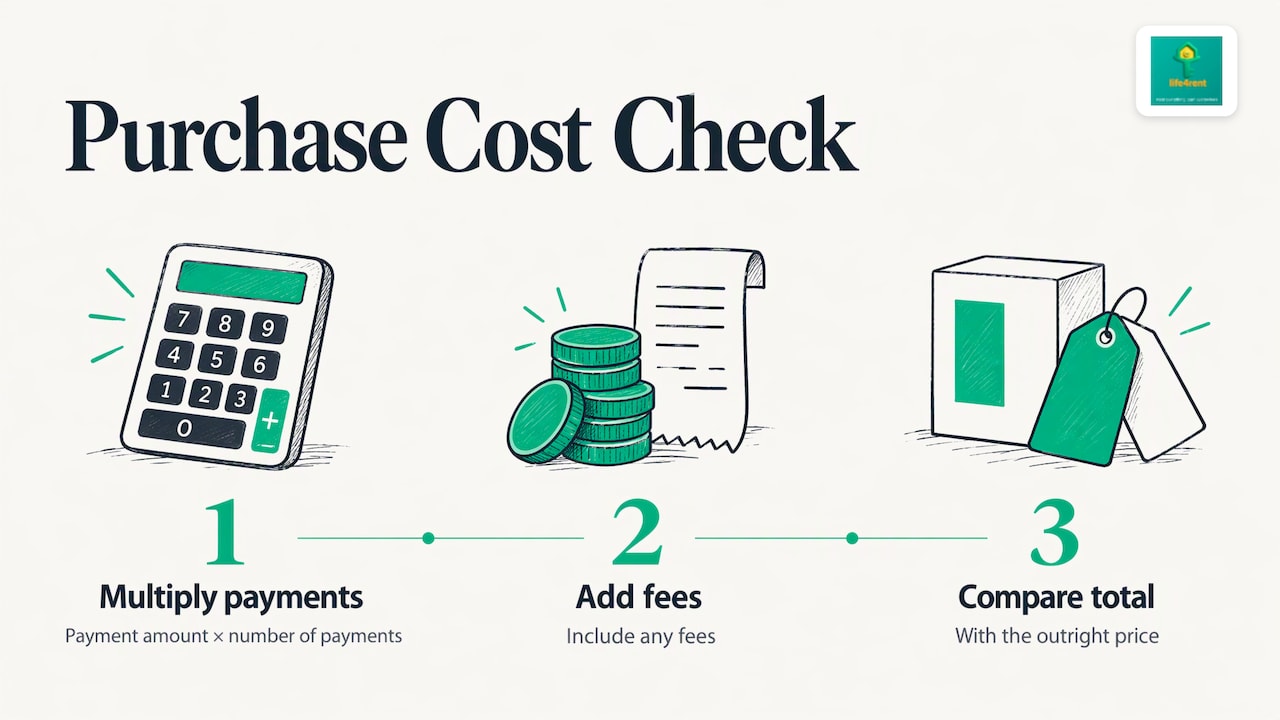
When a listing offers a purchase option, treat it as a contract and read it the way you would read any rental-purchase agreement. The Federal Reserve Bank of St. Louis teaches one habit that applies everywhere: multiply the payment by the number of payments, add fees, and compare the total with the outright price of the item. That figure tells you what the arrangement costs overall, and it lets you choose the route that suits your budget.
In California, the law spells out what a rental-purchase agreement must disclose. Civil Code section 1812.623 lists, among other items, whether the property is new or used, the minimum rental period and each payment, the total payments needed to own it, the cash price and the maximum liability for loss or damage. Rules differ by state, so use that list as a model of what a clear agreement looks like, and expect the same clarity wherever you are.
Step by step: renting before you buy
1. Define what you need to learn
Write down the one or two questions the trial must answer. Does this drone fly well enough for my trips? Does this sofa fit my living room? A clear question keeps you from renting for too long.
2. Search by item, location and dates
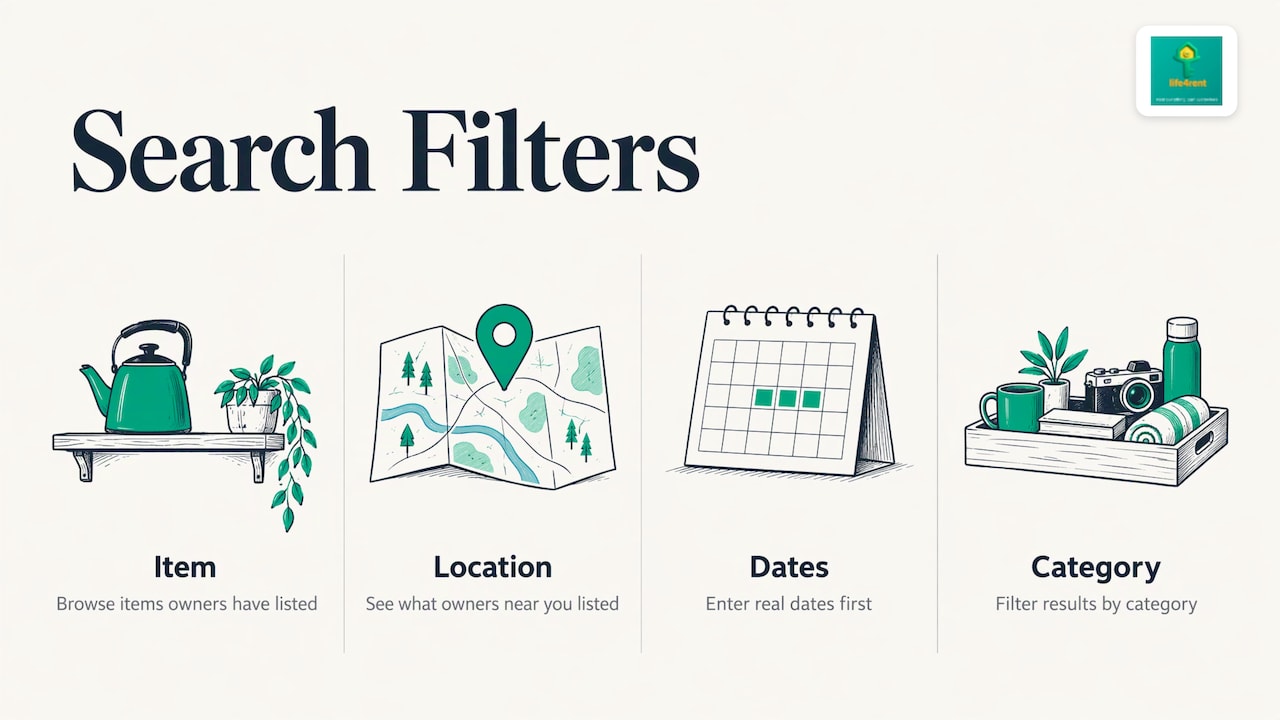
Use the search on Life4Rent to filter by item, location, dates and category. Availability depends on your location and the dates you pick, so enter your real dates first and you will see what is actually bookable. Browse the public listing catalog to see what owners near you have listed.
3. Read the listing closely
Check the item’s condition, what is included, pick-up or delivery arrangements, the owner’s availability and blackout dates, and the price per hour, day or month. Owners can offer different rates, so compare a daily and a weekly rate if your trial may run longer.
4. Confirm the money terms
Find out the total cost, any deposit, any cancellation fee and who is responsible for damage. Australia’s government money guidance tells consumers to find out the total cost of a lease, whether it is for a new or pre-used item, what fees apply if you end early and whether you are paying extra for insurance, a warranty or damage cover. Those are sound questions for any rental in any country. Our guide to rental payment methods explains how to pay safely.
5. Choose protection if it fits the item
Life4Rent offers an optional protection plan. For something fragile or costly, such as a camera or drone, it is worth considering before you book.
6. Test the item the way you will really use it
Do the actual job. Haul the real load, shoot in the real light, fit it in the real room. A trial that avoids the hard part tells you nothing.
7. Decide and write down the result
Note what you liked, what annoyed you and how many days you would use it per year. Then run the cost comparison above. If the answer is to buy, check whether the listing supports a purchase or rent-to-buy option, or look for a model that fits better and rent that next.
What to check in a listing and agreement
A good rental starts with clear terms. Before you confirm, look for these points.
- Names and contact details for both parties, so problems have an address.
- Item description and condition, ideally with recent photos.
- Dates and times for pick-up and return.
- Price, due date and any late charges.
- Deposit amount and purpose, and the conditions for getting it back.
- Damage and loss responsibility, including what protection covers.
- Cancellation terms, for both you and the owner.
The California Department of Real Estate’s tenant guide gives sound advice for home rentals that carries over to every rental: keep the agreement and receipts in writing, and do not sign anything with blanks or terms you do not understand. It also explains holding deposits, which take a unit off the market while an application is processed. If an application is not approved, the deposit must be refunded, and if it is approved it is typically applied to the first month’s rent or the security deposit. Always get the receipt in writing. If you book a stay or an event space, that guidance is worth keeping in mind.
Life4Rent also emphasizes secure payments, trust and safety, and identity verification tools, which add a layer of confidence for both renters and owners.
Ready to try something first?
Life4Rent is a worldwide peer-to-peer marketplace with 17 categories, from Cameras & Drones and Tools & Equipment to Outdoor & Sports, Baby & Kids and Event Spaces. Search by item, location and dates, book through secure payments and, where a listing allows it, move from trial to purchase.

Start on Life4Rent, or browse the public listing catalog to see what is available near you.
If you own something, you are someone’s trial run
The same idea works from the other side. Many of us own items we use a few times a year, and each one could be the thing a neighbor needs to test before buying. Owners on Life4Rent publish listings and earn from belongings they do not use all the time, and the platform includes earning tracking and rewards for participation.
When you estimate what an item will earn, think in net terms. The U.S. Bureau of Economic Analysis defines rental income of persons as income from providing property to others, and its featured measure is net of depreciation and the costs of providing the property. That is the right habit for any owner: count the wear, cleaning and upkeep against the fees you collect.
A few preparation tips:
- Clean the item and test it before every rental.
- Photograph it so the condition is clear to renters.
- Set availability and blackout dates honestly.
- State your deposit and damage terms in the listing.
- Price by the hour, day or month to match how renters use the item.
If you are thinking of renting out a home, our guide to renting out your home is a practical place to start.
Our view: try it, then decide
We built Life4Rent on a simple belief: access comes before ownership. Plenty of things in a household sit idle most of the year, and plenty of households are about to spend money on something they could first borrow from a neighbor for a weekend.
A broad catalog helps that idea work. With 17 categories and search by location and dates, a renter can try a camera on Friday, a tent on Saturday and a venue for a family gathering next month, all in one place. Secure payments, identity verification and optional protection are there so both sides can feel comfortable handing an item over.
When a trial convinces someone to keep the item, eligible listings can support a purchase or rent-to-buy arrangement. When it does not, the renter has saved the cost of a mistake and the owner has earned from something that would otherwise sit still. We think that is good for families, for budgets and for communities.
the author
FAQ
Is it a good idea to rent before buying?
Yes, whenever you are unsure how often you will use the item or whether it suits you. A short rental costs a fraction of the purchase price and gives you real experience. Items that are used rarely, change quickly or take up a lot of space are the best candidates.
How do I know if renting or buying costs less?
Subtract the resale value from the purchase price, add upkeep and storage, and compare that with the rental fees for the days you would really use the item. If your total rental cost approaches the cost of owning, buying starts to make sense. If you only need it once or twice a year, renting usually wins.
Can I buy the item I rented?
On Life4Rent, eligible listings may support purchasing or rent-to-buy arrangements. Homes, event spaces and licensed vehicles are rental-only. Check the listing for the purchase option and read the terms, including total payments and any fees, before you agree.
What should I check before I book a rental?
Check the item’s condition, the dates, the total price, the deposit, the cancellation terms and who is responsible for damage. Keep everything in writing. If the item is fragile or costly, consider the optional protection plan.
Can I rent a home or a space before deciding where to live or hold an event?
Yes. Homes and event spaces can be rented on Life4Rent, and a short stay or a smaller booking shows you things photos cannot, such as noise, parking and layout. These categories stay rental-only, so they work as a trial of the place itself.
Sources
- Owning, Using and Renting: Some Simple Economics of the Sharing Economy (NBER)
- 9 Things You Should Rent Instead of Buy (The Penny Hoarder)
- You can rent nearly anything online (Deseret News)
- Rent to Own or Not to Rent to Own (Federal Reserve Bank of St. Louis)
- California Civil Code section 1812.623
- Rent vs buy calculator (Moneysmart, Australia)
- California Tenants: A Guide to Residential Tenants’ and Landlords’ Rights (California Department of Real Estate)
- Rental Income of Persons, NIPA Handbook Chapter 12 (U.S. Bureau of Economic Analysis)
Recommended
Related guides on Life4Rent
Ready to rent instead of buy? See all vehicles available to rent on Life4Rent →
Life4Rent
Rent it. Earn from it. Own less, access more.
Browse peer-to-peer rentals near you, or list what you own and start earning — all protected by Life4Rent Protect.
About the author
Amsterdam, Netherlands
Joshua writes about the financial side of renting and earning on Life4Rent. His guides focus on helping people understand the real cost of ownership, calculate rental income potential, and make smarter decisions about buying versus renting. He previously wrote on household economics and personal budgeting for a pan-European finance publication.