Rent a Car Seat at the Airport: A Practical Guide for Traveling Parents
May 14, 2026
Published by Life4Rent · Operated by Brohf Software OÜ
Last Tuesday, Sarah discovered that trying to rent a car seat at airport desks often leads to receiving expired models with broken buckles. It's a frustrating reality for many parents who hope for the best but end up with gear that feels unsafe or dirty. Most travelers agree that lugging your own heavy seat through security is exhausting, yet the high fees from big agencies don't always guarantee quality. It's hard to feel confident when you're paying up to $14 a day for equipment that might not even meet the latest safety standards.
You can secure a reliable, sanitized seat for your trip without the stress of corporate rental counters or hidden costs. This guide explains how to use peer-to-peer marketplaces like Life4Rent to find local gear that's actually been cared for by other parents. We'll break down the current daily rates at companies like Hertz and Enterprise, explain the 2026 side-impact safety rules, and show you how to arrange a quick pickup that fits your travel schedule.
Car Seat Rental Options at the Airport
Your choice of how to rent a car seat at airport terminals depends on your budget and how much you trust the equipment provided. Most travelers default to the car rental counter because it's located inside the arrivals hall, but that convenience often comes with a steep price tag and questionable gear quality. Local rental services or marketplace platforms offer a more transparent way to ensure your child travels in a seat that isn't expired or poorly maintained.
Reliability varies significantly between these providers. A standard child safety seat from a major agency might have been through hundreds of rentals without a deep clean. If you want to see exactly what you're getting before you land, looking toward local parents or specialized businesses is usually a smarter move.
To better understand how these rental options work in practice, watch this helpful video:
Traditional Car Rental Desks
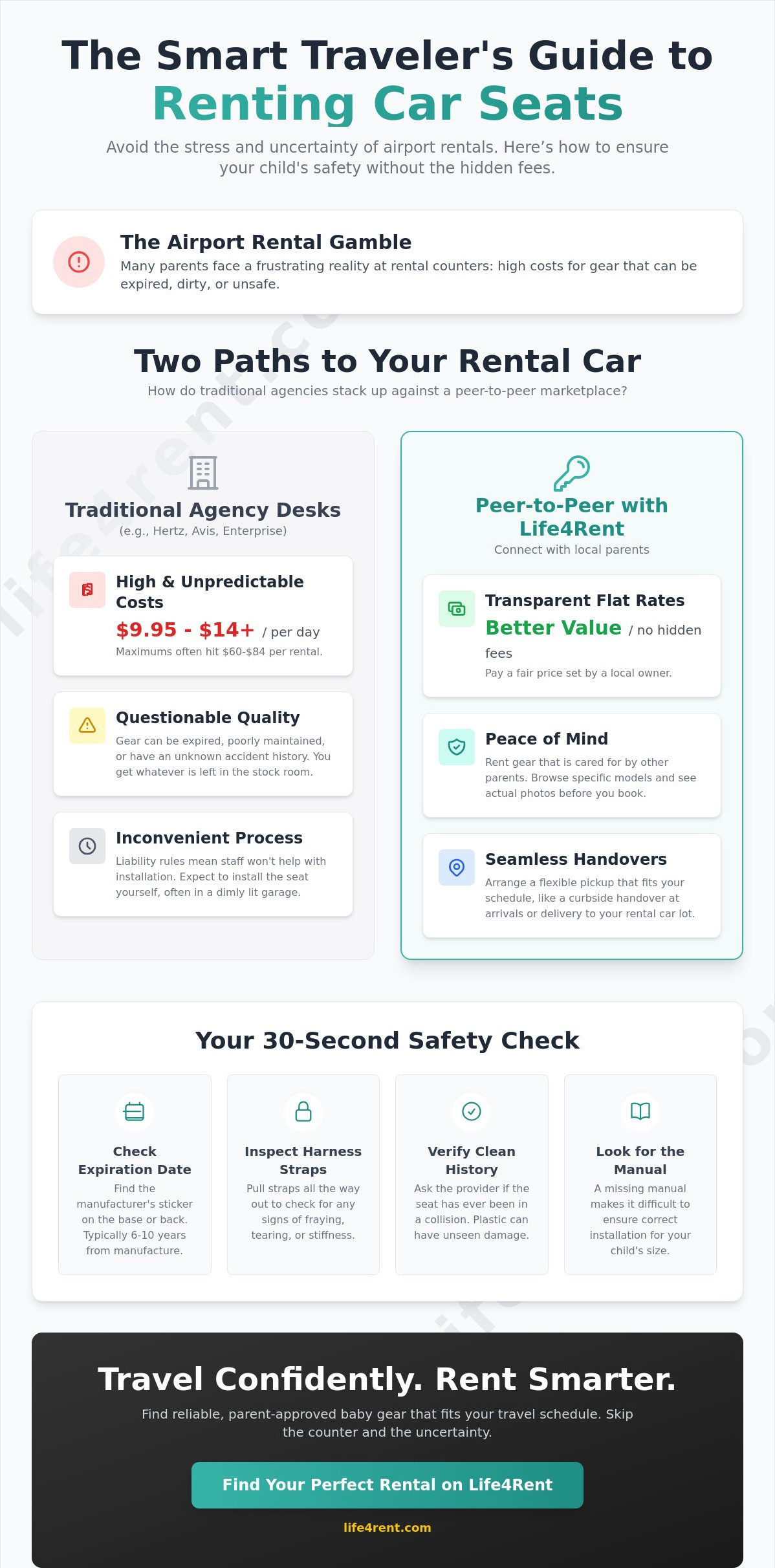
Avis, Hertz, and Enterprise are the most common names you'll see at the terminal. Prices for a daily rental vary; Avis typically charges $14 per day, while Hertz starts around $13.99. Enterprise is often the most affordable of the big names at roughly $9.95 per day. While these desks are convenient, they don't always guarantee that a seat will be waiting for you, even if you booked it weeks ago.
- High Costs: Daily fees can quickly reach a maximum of $60 to $84 per rental, which is often the price of buying a brand-new mid-range seat.
- No Installation Help: Liability rules mean desk staff won't help you install the seat. You're on your own to figure out the LATCH system or seat belt path in a dark parking garage.
- Limited Selection: You'll usually get whatever is left in the storage room, which might not be the specific convertible or booster seat you need for your child's age.
Peer-to-Peer Marketplace Alternatives
Marketplaces like Life4Rent offer a more personal approach by connecting you with local residents who list their own equipment. This setup allows you to browse specific models and see actual photos of the seat you'll use. Since these items belong to individuals, they are often better maintained and cleaned more thoroughly than corporate fleet gear. It's a practical way to rent a car seat at airport locations without the high markups of corporate agencies.
Prices on a marketplace are generally more flexible and lower than what you'll find at a corporate counter. You can often find owners who are willing to meet you at the terminal for a quick handover. This peer-to-peer model works across many categories, from baby gear to electronics, making it a reliable resource for travelers who want to avoid the hidden fees of airport-based businesses.
Safety and Cleanliness Standards for Rental Seats
Safety is the biggest worry for parents when they rent a car seat at airport desks. You don't always know where that seat has been or how many spills it has survived. Big corporations often claim their gear meets standards, but they rarely show you the maintenance logs. You need to be your own inspector before you strap your child in and drive away.
Verification of Expiration and History
Every car seat has a limited lifespan, usually between six and ten years. Manufacturers print this date on a white or silver sticker tucked under the base or behind the backrest. If you can't find this label, don't use the seat. You should also check for the instruction manual; a missing manual makes it much harder to verify the correct installation for your child's weight and height. Use reliable Car Seat Safety Information to double-check that the model provided is appropriate for your specific needs.
Plastic can develop hairline cracks after a collision that aren't visible to the naked eye. Ask the provider directly if the seat has a clean history. You should also pull the harness straps all the way out to check for fraying. Deep-set stains or a stiff texture on the straps can indicate that the webbing has been soaked in harsh chemicals, which can actually weaken the fibers and compromise safety during a crash.
Hygiene and Sanitization Protocols
Cleanliness is about more than just a quick wipe down. Professional services often use high-pressure steam to kill bacteria without using toxic residues. When you browse listings on peer-to-peer marketplaces, look for owners who describe their specific sanitization process. Many parents who list their gear use the same baby-safe detergents they use for their own families. This level of care is a major reason why many choose to rent a car seat at airport hubs through local owners rather than corporate fleets.
Plastic parts should be cleaned with mild soap and water, never harsh bleach or abrasive scrubs. Ask the owner or the rental desk what they use. If the seat smells strongly of artificial perfume or chemicals, it might be masking mold or just be irritating to your child's skin. A 2012 poll revealed that 16% of British consumers who rented gear found it to be dirty or tatty, proving that hygiene isn't always a priority for high-volume agencies.
Check the buckle for any debris like cereal or sand that could prevent a secure click. Small obstructions can stop the mechanism from locking correctly even if it looks fine from the outside. It's a quick check that ensures your child is actually secured for the duration of your trip.
Cost Analysis: Agency Desks vs. Local Marketplaces
You should examine the final bill before you commit to a rental car add-on. Agency fees for a car seat typically fall between $10 and $16 per day. While $14 a day might seem small for a weekend trip, a 10-day vacation can cost you $140 just for a booster seat. You can often find better value through local marketplaces where parents set their own prices based on the local market.
When you rent a car seat at airport desks, these small daily differences add up to a significant portion of your travel budget. Hertz charges $13.99 per day, while Enterprise is closer to $9.95. If you're a AAA member, you can get one free car seat per reservation with Hertz, which is a significant saving. Always calculate the total cost for your specific dates instead of looking only at the daily rate.
Hidden Fees and Surcharges
Many corporate agencies add extra costs that aren't visible in the initial quote. You might encounter a "drop-off at a different location" fee if you don't return the seat to the exact same terminal. Some providers also charge a cleaning fee if you return the gear with minor crumbs or stains. Insurance for the seat itself is rarely included, so you're often liable for the full replacement value if it's damaged. This makes it easier to rent a car seat at airport terminals without paying for services you don't need if you choose a transparent local owner instead.
Long-Term Rental Discounts
- Weekly Caps: Corporate agencies like Avis and Enterprise cap their fees around $60 to $84, but this only helps if your trip is longer than six days.
- Direct Negotiation: Owners on Life4Rent are often willing to negotiate prices for rentals exceeding two weeks.
- Custom Rates: You can send a direct message to an owner to ask for a custom price if you plan to stay for an extended period.
You must factor in the delivery fee if you choose a local owner. Some owners charge $20 to $50 to bring the seat directly to the arrivals gate. Even with this fee, the total cost for a week-long trip is often lower than the agency's maximum cap. You also get the benefit of knowing exactly which model you're getting, which avoids the risk of receiving a basic, uncomfortable seat at the last minute.
Practical Logistics for Airport Gear Pickup
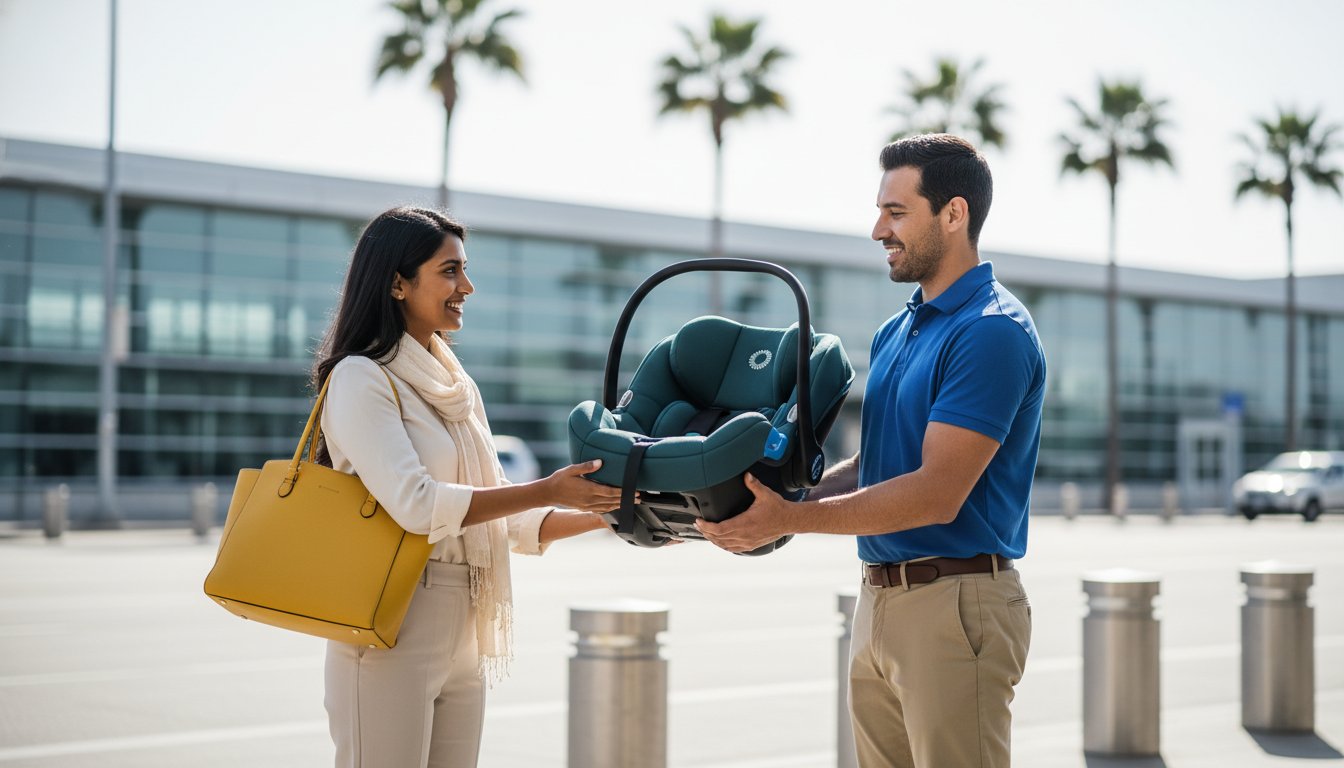
You need a solid plan for the handover once your flight touches down. Airports are busy places, and security staff will move you along if you linger too long at the curb. When you choose to rent a car seat at airport locations through a peer-to-peer service, you'll need to decide between a curbside meeting or a terminal pickup. Clear communication with the owner is the best way to avoid wandering around a massive arrivals hall with your luggage.
Give the owner your mobile number and flight details well in advance. Most owners track flights using apps, but a quick text when you land helps them time their arrival perfectly. You should also consider asking for delivery to the car rental parking lot. This allows you to secure your vehicle first and then have the seat brought directly to the car, which is much easier than dragging a heavy seat through the terminal.
Curbside vs. Terminal Delivery
Curbside pickup is efficient but requires you to be at the designated door exactly when the owner arrives. It's a great choice if you want to leave the airport quickly and avoid parking fees. Terminal delivery is a more relaxed option where the owner meets you near the baggage claim. You should check the airport's official website for regulations, as some major hubs restrict where people can exchange rental items or gear.
Installation and Compatibility Checks
You are the one responsible for the final installation of the seat. Rental desk employees and private owners generally won't assist with this due to liability concerns. It's a good idea to download the digital manual for the specific seat model before you land. You must also verify that the seat is compatible with your rental vehicle's LATCH or ISOFIX system, especially if you're driving a smaller European model with limited cabin space.
Add fifteen minutes to your schedule for a quick safety walkthrough with the owner. You'll want to check the safety straps for twists and ensure the buckle clicks firmly into place. This short window allows you to ask the owner any questions about the seat's history. You can find local parents listing car seats who are often happy to share tips on the best installation spots for different car models.
Locate Reliable Baby Gear Through Life4Rent
You can find a suitable model for your child by browsing the baby category on Life4Rent. Simply select your destination city and look for listings that specifically mention airport handovers. This method is often more reliable than hoping for the best at a corporate desk because you interact directly with the person who owns and maintains the gear. It's a practical way to rent a car seat at airport terminals while ensuring the equipment meets your specific safety expectations.
Filter tools are your best friend when you need to save time. You can narrow down your search to show only owners who offer delivery services to the arrivals gate or the rental car lot. Reading reviews from other parents is another essential step. These testimonials provide honest feedback on the seat's condition and the owner's punctuality, which helps you avoid the stress of a late pickup after a long flight.
Communication with Local Owners
Direct messaging allows you to ask the questions that matter most. You should ask for current photos of the seat to verify its condition before you finalize the booking. This is also the best time to share your flight number so the owner can track any delays. If you need specific accessories like infant inserts or sun shades, most owners are happy to include them if you ask in advance.
Confirm the exact pickup location within the terminal. Some airports have specific zones for peer-to-peer exchanges, so having a clear plan prevents confusion. You can also ask about the cleaning products they use to ensure they don't use anything that might irritate your child's skin. This direct line of communication is something you'll never get with a high-volume rental agency.
The Benefits of Peer-to-Peer Sharing
Choosing a local marketplace helps you support families in your destination city instead of sending your money to a massive corporation. You also get access to a much wider variety of brands and models than a rental desk typically stocks. Many parents list seats they no longer use, allowing you to secure a better model for a lower daily rate. You can learn more about the logistics of peer to peer equipment rental to see how this model works for other travel essentials too.
This approach gives you more control over your travel budget and your child's safety. You'll avoid the surprise fees that often appear at the rental counter when you rent a car seat at airport locations. By planning ahead and using the tools available on the platform, you can secure a clean, safe seat that fits your car and your schedule perfectly. It's a straightforward solution that simplifies family travel without compromising on quality.
Prepare for Your Next Family Adventure
You now have the tools to avoid the common pitfalls of airport car seat rentals. Most parents find that a quick inspection of the manufacture date and safety strap condition is enough to ensure a safe journey. You can skip the high daily fees and uncertain availability of corporate counters by looking at what local residents have to offer.
Direct communication with owners allows you to verify the history and cleanliness of the gear before you even leave home. This transparency is a major advantage when you decide to rent a car seat at airport locations through a peer-to-peer platform. You can find local listings in major travel hubs and check user-reviewed safety ratings to give you peace of mind.
A little preparation for your logistics makes the terminal handover a quick and painless part of your trip. Find an affordable car seat for your next trip on Life4Rent and enjoy the flexibility of renting from someone who understands your needs as a parent. Your next family vacation should be about making memories, not worrying about the gear you'll find at the rental desk.
Frequently Asked Questions
Is it safe to rent a car seat from a stranger?
It's safe as long as you perform a thorough inspection of the equipment. Owners on peer-to-peer platforms often maintain their gear better than high-volume rental agencies because they use it for their own families. You should always check the expiration date and look for any signs of stress on the plastic or fraying on the harness straps before you leave.
How much does it cost to rent a car seat at the airport?
Daily rates depend on the provider you choose. Avis typically charges $14 per day, while Hertz starts at $13.99. Enterprise is often more affordable at approximately $9.95 per day. If you use a peer-to-peer marketplace, you can often negotiate a flat rate for longer stays, which helps you avoid the daily price hikes common at corporate desks.
Do car rental companies guarantee a car seat will be available?
Most agencies don't offer a 100% guarantee that a seat will be available when you land. If you rent a car seat at airport terminals through a large fleet, you might find they've run out during peak travel seasons. Booking through a local owner on Life4Rent gives you more security because you're reserving a specific item that belongs to an individual.
Can I rent a car seat without renting a car?
You can definitely rent a car seat as a standalone item. This is a practical choice if you're taking a taxi, using a ride-share service, or meeting a relative who already has a vehicle. Many local owners are happy to meet you at the terminal for a quick handover, regardless of how you plan to travel from the airport.
What happens if the rental car seat is dirty or expired?
You should refuse the seat immediately and ask for a replacement or a full refund. An expired seat is no longer guaranteed to perform correctly in a crash, and a dirty seat can be a health concern. It's your right to receive equipment that is safe and sanitized, so don't feel pressured to accept a seat that doesn't meet basic standards.
Are car seat rentals at the airport legal in all countries?
It's legal in most countries, but the specific safety standards will vary. US models follow FMVSS 213 rules, while European seats must meet ECE R44 or R129 standards. You should check the local laws of your destination to ensure the seat you're renting is compliant with regional safety regulations to avoid fines or safety issues.
How do I know if a rental car seat fits my child?
You must check the manufacturer’s label for specific weight and height limits. Every seat is designed for a certain stage of growth, from rear-facing infants to older children in boosters. When you rent a car seat at airport hubs from a private owner, you can ask for the exact model name in advance to ensure it fits your child’s current size.
Who is responsible for installing the rental car seat?
You are solely responsible for the installation of the seat in your vehicle. Rental agency staff and private owners are generally not allowed to help with installation due to insurance and liability rules. It's a good idea to watch a manufacturer’s installation video or download the manual to your phone before you arrive at the airport pickup point.
Related guides on Life4Rent
Ready to rent instead of buy? See all vehicles available to rent on Life4Rent →
Life4Rent
Rent it. Earn from it. Own less, access more.
Browse peer-to-peer rentals near you, or list what you own and start earning — all protected by Life4Rent Protect.
About the author
Stockholm, Sweden
Stella researches and writes about sustainable consumption and the circular economy for the Life4Rent Renting Academy. She previously worked at a Nordic sustainability research institute studying how access-over-ownership models reduce household CO₂ emissions, and translates that research into practical guides for everyday renters.