
Practical Tips for Managing Your Rental Inventory in 2026
Fred Agbator
April 28, 2026
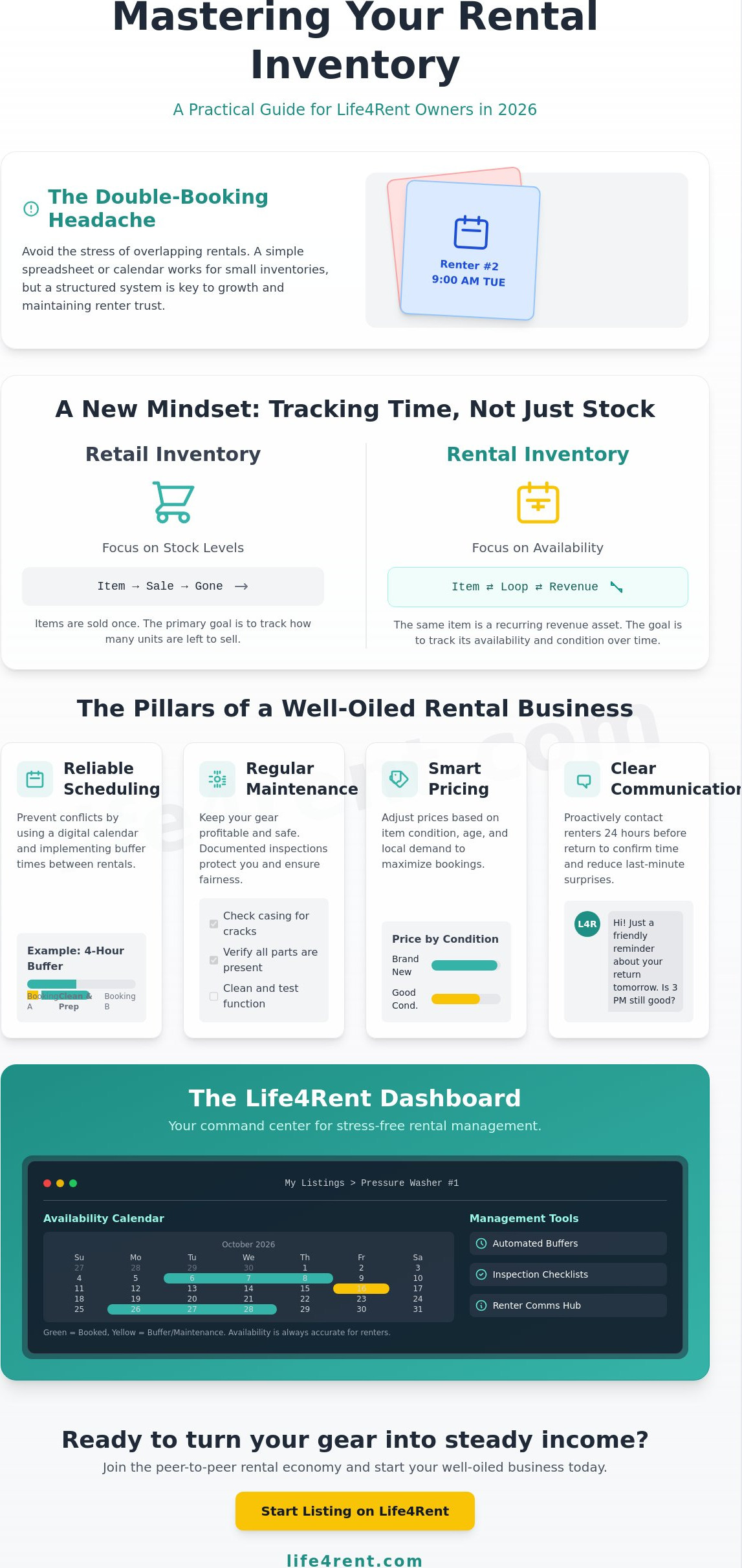
Last Tuesday, Lukas discovered the stress of a double-booking when two different neighbors showed up at his door in Munich to collect the same professional pressure washer at 9:00 AM. You've likely felt that same knot in your stomach when you realize your calendar isn't as organized as you thought. It's tough balancing the desire for extra income with the fear of a tool coming back with a cracked casing or a missing part. Most people start with a simple spreadsheet, but as you grow, managing your rental inventory requires a bit more structure to avoid these common headaches.
You'll learn how to set up a reliable tracking system, prevent the frustration of overbooking, and maintain your gear so it stays profitable for years. We'll cover practical ways to price your older items versus brand new ones and how to talk to renters so they respect your property. This guide provides a clear framework for anyone using the Life4Rent peer-to-peer marketplace who wants to turn their storage space into a small, well-oiled business in 2026. For those interested in expanding their entrepreneurial efforts into digital marketplaces, you can learn more about Living the Hustle. This approach focuses on steady profit and clear communication rather than constant stress or confusion over logistics.
Peer-to-peer inventory tracking involves more than just a list of items
Successful rental owners know that a simple list of gear isn't enough to run a business. Effective inventory management is the first step toward successfully managing your rental inventory in a competitive market. You aren't just counting boxes in a warehouse. You're tracking the availability of an asset over a specific calendar period to ensure it's ready for the next user.
When you're managing your rental inventory, you have to account for maintenance windows and buffer times between bookings. Most people starting out with fewer than twenty listings can manage this with a shared calendar or a basic spreadsheet. You don't need expensive software suites if you're only renting out a few high-value items on weekends. Simple systems often work best because they're easier to update on the fly after a long day of meetups.
To see how these concepts look in a practical software setting, this video explains menu customization for rental sites:
The difference between retail and rental assets
Retail systems focus on stock levels because an item is usually sold once and never seen again. Rental systems focus on time because you're selling access to the same item repeatedly. This means your data must show not just how many cameras you own, but how many are available next Tuesday.
You'll need to track the condition of each piece of gear after every single transaction to ensure it remains rentable.
Rental inventory is a time-based asset that requires constant upkeep.
Owners should view each item as a recurring revenue asset rather than a one-time sale. This mindset shift helps you prioritize maintenance and longevity over quick profits. If an item breaks, your revenue stream for that asset stops immediately until it's repaired.
Why peer-to-peer equipment rental is unique
Peer-to-peer models differ from industrial rentals because the items often have sentimental value to the owner. You're the one responsible for the physical hand-off and the return inspection, which adds a layer of personal involvement. This isn't just a business transaction; it's someone using your personal property.
You'll need a clear checklist for these inspections to avoid disputes later. This model prioritizes access over ownership, allowing you to monetize gear that might otherwise sit idle in your garage. For more context on how this works in 2026, you can read about peer to peer equipment rental.
Practical tracking helps you stay organized when you have multiple pick-ups scheduled on the same morning. It ensures you never hand over a dirty or damaged item to a paying customer. Clear records protect both your reputation and your property.
Reliable scheduling keeps your rental business running smoothly
A reliable schedule keeps your business from falling apart. If you double-book an item, you'll lose the trust of your neighbors immediately. Trust is the primary currency of peer-to-peer platforms, and it's much harder to rebuild than it is to maintain. Digital calendars are the best tool for this because they let you see exactly when an item is busy at a glance. You can't succeed at managing your rental inventory if you're guessing about availability or relying on paper notes that get lost.
Direct communication with the renter should happen twenty-four hours before the scheduled return. This proactive check helps you confirm the drop-off time and identify potential delays before they affect the next booking. You don't want to rely on memory when you're balancing Smart pricing strategies and availability windows simultaneously. Proactive owners often send a quick text to ensure everything is on track, which reduces the chance of a last-minute surprise.
How to use buffer times effectively
Buffer times between rentals allow for cleaning and unexpected delays. A four-hour window usually works well for simple tools or small electronics. This gap gives you enough time to check for damage and wipe down the item before the next person arrives. Larger equipment like trailers or heavy machinery might need a full day for safety checks and maintenance. Owners should account for local traffic patterns or common late returns when they set these gaps. If you live in an area where congestion is frequent, a longer buffer prevents one late renter from ruining the next person's experience.
Handling late returns without stress
Clear terms in your listing prevent confusion about return times. You can offer a grace period of thirty minutes to keep things friendly and low-stress for both parties. This proactive approach helps identify potential delays before they become logistical problems for your next client. Clear communication is better than strict penalties for building a neiybor community. When you're managing your rental inventory, your goal is to create a reliable reputation that keeps people coming back. If you want to see how a professional schedule looks in action, you can browse active listings to see how others manage their windows.
Regular maintenance ensures your equipment stays in good condition
Wear and tear is a normal part of the rental process for any item. You can't avoid it, but you can control how it impacts your bottom line. Effective strategies for managing your rental inventory mean you expect minor scuffs and scratches as part of the business. A 2024 report by the European Rental Association indicates that proactive maintenance reduces long-term repair costs by roughly 25%. You'll save a lot of money if you catch a loose screw before it causes a motor to seize.
Documented inspections protect both the owner and the renter from disputes. If you find a new dent after a rental, you need clear proof of the item's previous state to justify a claim. Small repairs should happen immediately to prevent larger, expensive failures. A tiny crack in a plastic housing can quickly become a total break if you ignore it.
Regular maintenance isn't just about appearance; it's about reliability. If a renter's day is ruined because a tool failed due to poor upkeep, they won't return to your listing. Professional owners often set aside 10% of their rental income to cover these recurring maintenance costs. This small investment prevents the need for a total replacement of expensive machinery.
Safety gear needs even more attention than standard tools. You must check helmets, harnesses, or protective clothing with extra care before every new agreement. Check for expiration dates on items like climbing ropes or car seats, as these materials degrade over time even without visible damage. If an item has been involved in a high-impact event, it should be retired immediately regardless of how it looks.
The pre-rental inspection checklist
Photos taken on the day of the rental provide the best evidence. You should capture high-resolution images of all sides and any existing marks. Check for frayed cords on electronics and sharp blades on garden tools. Functional tests prove the item worked when it left your hands. Ask the renter to sign a simple form that acknowledges the current condition to prevent later disputes.
Long-term care for specialized gear
A deep clean every five rentals keeps items looking new for longer. Dust and grime can clog internal components, leading to mechanical jams. Software updates are necessary for cameras and high-tech electronics to fix known bugs. The process of managing your rental inventory also involves keeping a simple log of when each item was last serviced. A spreadsheet helps you track the history of every asset you own.
Smart pricing strategies help you attract the right renters
Success in managing your rental inventory depends on a realistic look at equipment value. You shouldn't charge the same for a three-year-old drill as you would for a brand-new model. Check local listings in your city once a week to see what others are asking for similar equipment. 2024 market data from peer-to-peer platforms suggests that listings updated monthly have a 25% higher booking rate than static ones.
Demand often drops between Tuesday and Thursday in most European markets. You can keep your equipment moving by offering a 15% discount for mid-week bookings. If someone needs a tool for a seven-day renovation project, a weekly rate that equals five days of rental usually makes your listing the most attractive choice. These long-term discounts encourage professionals to choose your gear over a traditional rental shop.
- Compare your rates with at least three other owners in your neighborhood.
- Adjust for the age of the tool, reducing prices by 10% for every two years of use.
- Look for seasonal trends, such as higher prices for garden tillers in April.
Dynamic pricing for weekends and holidays
Saturdays are the busiest days for DIY projects across the continent. While some owners spike their prices during peak demand, you can gain more visibility by keeping your rates stable. This strategy often leads to more reviews and repeat customers. Reliable pricing makes you a go-to person for weekend warriors who plan their budgets in advance.
Older models need careful pricing too. Even if a tool functions well, cosmetic wear reduces its perceived value. You'll find more success by pricing these items 10% to 20% lower than the latest versions. Renters who just need to get a job done often prefer the lower price of a used but reliable tool.
Adjusting prices for high-wear items
Certain machines, like floor sanders or heavy-duty drills, require new parts more often. Factor the cost of sandpaper or specialized bits into your base price when managing your rental inventory. A 2023 study on equipment maintenance showed that high-wear items lose 30% of their efficiency without regular part replacements. Clear communication about what's included in the price prevents disputes and builds a professional reputation.
Honest pricing builds a group of regular users who trust your equipment. People appreciate knowing the total cost upfront without hidden charges. You can start listing your equipment today to see how these strategies work in practice. Trust and consistency turn one-time renters into long-term partners.
The Life4Rent dashboard provides tools to manage your listings
The task of managing your rental inventory becomes much simpler with a centralized system that handles the heavy lifting. You don't need to manually track every hour of a rental because the platform automates the scheduling process. Technical aspects of booking, such as time-slot overlap and buffer periods between rentals, are managed by the software. This allows you to focus on the physical condition of your items rather than the logistics of a calendar.
Real-time updates ensure your availability is always accurate for people searching the marketplace. If a renter confirms a booking for a specific weekend, that time slot disappears from the public view immediately. This prevents the frustration of double bookings and saves you from having to send apology messages to disappointed customers. Accuracy in your listings helps maintain a high ranking within the platform's search results, as reliable owners are prioritized.
Owners can manage seventeen different categories from a single interface. You might list a cargo van for local moves and a convertible for weekend trips at the same time. The dashboard organizes these diverse assets into one view, so you don't have to switch between different accounts or apps. Whether you're renting out camping gear or high-end vehicles, the management process remains consistent and easy to follow.
The messaging system keeps all your rental history in one secure place. You'll find every conversation, from initial inquiries to post-rental feedback, stored within the dashboard. This log serves as a helpful reference if you need to confirm specific pickup instructions or verify details about an item's condition. It also provides a layer of security, as all communication stays on the platform where it can be reviewed if a dispute ever occurs.
How to update your availability instantly
You can change your item's status in just a few seconds to reflect your current needs. First, log into your account and select the specific item you wish to block out. The calendar view provides a clear visual of your current bookings. You can click on specific days to mark them as unavailable for maintenance or personal use. This feature is vital for keeping your gear in top shape. You can also sync your personal digital schedule with the platform to avoid conflicts with your work or family life.
Using stats to improve your rental performance
Data within the dashboard helps you make informed decisions about managing your rental inventory for better returns. You can review which items are rented most often to guide your future purchases. If a specific model of trailer is always booked, it might be worth adding another one to your fleet. Check your response time regularly to ensure you aren't missing out on requests from potential renters. The dashboard also shows your total earnings, which helps you track your profit against costs like insurance and routine maintenance.
Take Control of Your Rental Business for 2026
Success in the peer-to-peer market comes down to how you handle the daily details. You'll find that regular maintenance and a clear schedule prevent most common disputes with renters. Effective strategies for managing your rental inventory rely on using tools that track items across different locations without adding extra work, and utilizing GPS technology from Letstrack can help you monitor high-value assets in real-time.
Smart pricing based on local demand helps you stay competitive throughout the year. Life4Rent supports 17 categories of items, which makes it easier to list everything from tools to vehicles on one platform. You can talk to users through secure messaging to ensure every detail is clear before a rental starts.
This global community of owners and renters provides a steady stream of activity if you keep your listings updated. Start listing your items on Life4Rent today. It's a practical way to earn from things you already own while helping others find what they need.
Frequently Asked Questions
How do I track multiple items across different categories?
You can use a dedicated inventory app or a simple database to group items by type or maintenance schedule. Most successful hosts on Life4Rent find that 4 or 5 distinct categories keep things clear without getting too complex. It's better to keep your system simple so you actually use it every day. This approach prevents you from losing track of small accessories during busy weekends.
What should I do if an item is returned with minor damage?
Take photos of the damage immediately and compare them to your pre-rental records. You should contact the renter within 24 hours to discuss the situation and determine if the security deposit covers the repair. Clear communication usually prevents small issues from becoming long disputes. It's helpful to have a list of local repair shops that can provide a quote within 2 days.
Is it necessary to use a spreadsheet for my rental inventory?
You don't need a spreadsheet if you only have 2 or 3 items, but it becomes vital for managing your rental inventory once you scale up. A digital log helps you track maintenance dates and income without relying on your memory. Many people eventually switch to specialized software for better automation. It's a practical way to see which items are actually making a profit over a 12 month period.
How much buffer time do I really need between rentals?
A 24-hour buffer is standard for most gear, as it gives you enough time to clean and check for faults. You might want to extend this to 48 hours for vehicles or complex electronics that require deeper inspections. This gap protects you from back-to-back booking stress if a return is late. It also gives you a chance to rest between meetings with different renters.
Can I change my rental prices based on the season?
Dynamic pricing is a common practice that helps you match your rates with local demand. Data from European rental markets shows that prices often rise by 10 to 20 percent during peak holiday seasons. You should review your rates every 3 months to stay competitive with other local listings. This flexibility ensures you don't lose money when your own costs for maintenance or storage go up.
What happens if a renter wants to extend their booking?
You must verify that no one else has booked the item for those dates before you say yes. If the schedule is clear, update the booking through the platform to ensure your insurance remains active. It's risky to accept cash for extensions outside of the official system. Most platforms require you to finalize these changes at least 6 hours before the original rental period ends.
How do I keep my rental items organized in my own home?
You should set aside a specific area in your garage or a dedicated closet for your rental stock. Plastic bins with clear labels work well for keeping accessories together. This habit cuts down the time you spend looking for parts to less than 2 minutes per rental. Keeping your personal items in a separate room prevents accidental damage to things you don't intend to rent out.
Should I take photos of my gear before every rental?
You should take at least 5 high-resolution photos of your equipment right before the renter picks it up. Focus on high-wear areas and any existing marks to avoid confusion later. These images serve as your primary evidence if you need to file a claim for damages. It's a good idea to store these photos in a cloud folder for at least 30 days after the return.
Life4Rent
Rent it. Earn from it. Own less, access more.
Browse peer-to-peer rentals near you, or list what you own and start earning — all protected by Life4Rent Protect.
About the author
Fred Agbator
London, United Kingdom
Fred covers rental technology, app features, and platform mechanics for the Life4Rent Renting Academy. With a background in fintech journalism, he specialises in breaking down how digital rental platforms work — from payment protection and identity verification to smart pricing and booking management.