
Peer to Peer Clothing Rental: A Practical Guide to Sharing Your Wardrobe in 2026
August 22, 2026
Published by Life4Rent · Operated by Brohf Software OÜ
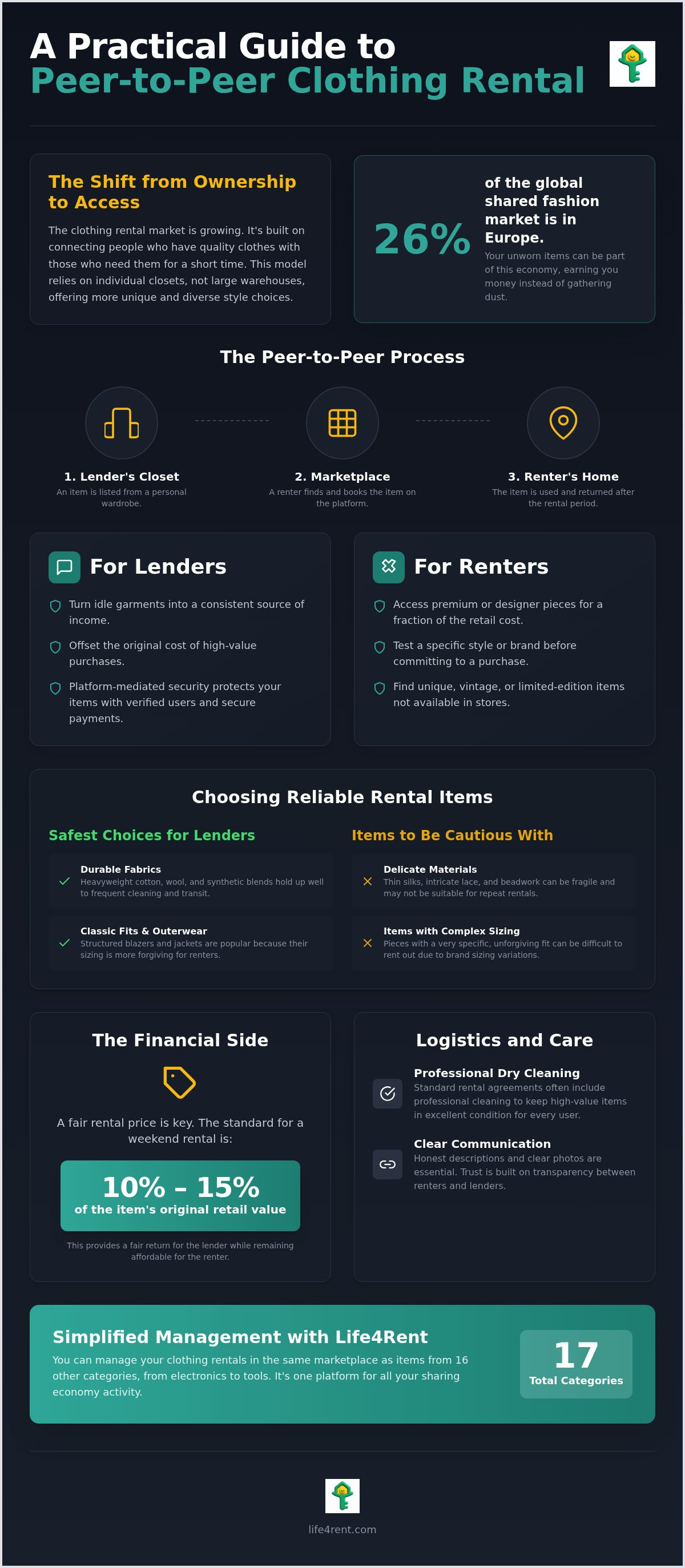
Europe currently accounts for 26% of the global market for shared fashion. You likely have a designer dress or a high-end blazer sitting in your closet that hasn't been worn in months. This growth in peer to peer clothing rental means your idle items can finally pay for themselves. You get to wear quality pieces without paying full retail prices.
It's natural to feel uneasy about a permanent stain on an expensive item or the hassle of managing dry cleaning and shipping labels. You may also worry that a rental won't fit quite right because sizing varies so much between different brands. These practical concerns often make the idea of sharing your wardrobe feel like a logistical burden rather than a smart choice.
You can overcome these obstacles with a clear system that protects your property and makes the exchange process straightforward. This guide provides a practical approach to using the Life4Rent marketplace to earn extra money or access a wider range of styles. You'll find advice on setting prices, handling logistics, and ensuring every transaction is safe for both parties.
The Reality of Peer to Peer Clothing Rental in 2026
Peer to peer clothing rental works by connecting people who have quality clothes with those who need them for a specific occasion. This model is a core part of the modern sharing economy, where access replaces the need for full ownership. Unlike traditional rental services that ship items from a massive central warehouse, these garments come directly from someone's personal closet. It's a more authentic way to find unique pieces that might no longer be available in retail stores. You'll often discover vintage finds or limited-edition collaborations that companies simply don't stock. This direct exchange from one person's home to another's creates a diverse inventory that updates as quickly as the seasons change.
The system relies on a foundation of mutual trust, backed by platform-mediated security to protect both parties. You get the chance to test a specific style or brand before you decide to make a permanent purchase. It acts as a safety net for your wallet while expanding your fashion choices. You don't have to worry about the high upfront costs of a designer item just to see if it fits your personal aesthetic. Most platforms now use verified IDs and secure payment gateways to ensure that lenders get paid and renters receive what they expected. This mediation gives you the confidence to list high-value items without the fear of losing them to a stranger.
To see how this works in practice, watch this helpful video:
Understand the Shift from Ownership to Access
Modern consumers increasingly view their wardrobes as a collection of assets that can generate value. You don't need to own every single item you wear to enjoy a high-quality lifestyle. This approach significantly reduces the demand for fast fashion, which helps lower the overall environmental impact of the industry. You'll also find that your home feels less cluttered when you only store the essentials and rent the rest.
Identify the Benefits for Lenders and Renters
Lenders benefit by turning their idle garments into a consistent source of income. It's a practical way to offset the cost of high-value purchases that you might only wear once or twice a year. Renters, on the other hand, can wear premium pieces for a small fraction of what they'd cost at a boutique. This community-driven model of peer to peer clothing rental connects you with others who prioritize sustainability and smart financial choices.
How to Choose Reliable Peer to Peer Clothing Rental Items
The choice of reliable items for a peer to peer clothing rental transaction requires a shift in how you look at your wardrobe. You aren't just looking for style; you're looking for resilience. Items that handle frequent cleaning and transit well are the backbone of a successful rental closet. You should prioritize durable fabrics that maintain their shape over several cycles. Delicate materials like thin silk or intricate beadwork might look stunning, but they're often too fragile for your first few listings.
Lender feedback history is another critical factor to verify before you commit. You can see if previous renters felt the item matched the description or if there were issues with cleanliness. These transparency measures are a key part of the new economic models for the fashion industry that prioritize trust and shared value. You'll find it much easier to rent out items that have a proven track record of being exactly as advertised.
Evaluate Fabric and Construction for Longevity
Synthetic blends often hold their shape better than 100% natural fibers when they're cleaned frequently. You might prefer pure silk for personal use, but a silk-blend is usually more practical for a rental piece. Heavyweight cotton and wool are also resilient choices that can withstand the rigours of shipping and multiple wears. You should always inspect photos for pilling or loose threads before you agree to a rental. High-resolution images help you spot wear and tear that a written description might overlook.
Select Styles with Broad Appeal
Outerwear and structured blazers are popular choices because their sizing is more forgiving. You won't have to worry as much about a perfect fit when the garment has a bit of natural structure or an oversized cut. Occasion wear remains the most common category for weddings and formal events, making up a significant portion of the rental market. Basic items like premium denim and high-end knitwear are now staples in the sharing economy too. These pieces offer high utility for the renter and a steady return for the lender. You can browse the clothing category on Life4Rent to see which styles are currently in high demand.
Logistics of Peer to Peer Clothing Rental: Cleaning and Fit
The management of high-value garment exchanges within a peer to peer clothing rental system requires a disciplined approach to hygiene and sizing. Professional dry cleaning is the standard expectation for most high-value rental agreements across the continent. You don't want to receive a garment that shows signs of previous wear or carries a lingering scent from a stranger's wardrobe. Lenders should include clear instructions on how they want the item handled in the listing description. This level of detail prevents disputes and ensures the garment stays in its original condition for years. Clear communication about these logistics is the core of a reliable peer to peer clothing rental experience.
Handle Hygiene and Cleaning Standards
You should clarify who pays for the cleaning in the rental description before the transaction is finalized. Some lenders include a flat cleaning fee in the price, while others expect the renter to handle it at a specific, approved dry cleaner. Many platforms require items to be cleaned immediately before and after the rental period to maintain the highest hygiene levels. Use eco-friendly cleaning services to stay consistent with the sustainability goals of the marketplace. This practice protects the delicate fibers of high-end garments and aligns with the values of the community. Always keep your cleaning receipts to prove that the standard was met.
Ensure a Proper Fit Without a Fitting Room
Renters must provide accurate measurements rather than just relying on standard size labels that vary wildly between brands. A size 10 in one boutique might fit like a size 12 in another, especially with vintage or international brands. Ask for specific measurements like chest width, waist circumference, and total length to avoid a poor fit. You can compare these figures to a similar garment you already own and love. Many lenders offer a "fit guarantee" or a reduced fee if the item doesn't suit you upon arrival. This policy reduces the financial risk for the renter and encourages more frequent use of the platform.
Local pick-up options reduce the risk of transit damage and lower the carbon footprint of your fashion choices. This approach is particularly effective in European cities where public transport makes a quick exchange easy and efficient. You can inspect the item in person and confirm the fit before the rental period officially begins. It's a practical solution for last-minute events where shipping times are too risky. A personal meeting with the lender also builds a sense of community trust that a courier service cannot replicate. You also avoid the excess plastic packaging and cardboard boxes that come with long-distance shipping.
Financial Side of Peer to Peer Clothing Rental: Earnings and Protection
Price your items at roughly 10% to 15% of their original retail value for a weekend rental. This benchmark ensures your listing remains competitive while providing a fair return on your investment. You must also factor in the platform fee and the time you spend on coordination when you set the final price. These operational costs can eat into your profits if you don't account for them from the start.
Item protection plans are essential to cover accidental damage or significant stains. You should keep original receipts and take timestamped photos of the item before every handover. These records serve as your primary evidence if a dispute arises regarding the condition of the garment. It's a simple step that provides immense peace of mind in the peer to peer clothing rental market.
Calculate Your Rental ROI
Determine how many rentals you need to cover the initial purchase cost of the garment. It helps to track your expenses, including cleaning supplies, packaging, and platform commissions, to see your actual net profit. Focus on items that have a high resale value as they usually perform better and attract more reliable renters. High-demand brands often pay for themselves within five to ten successful transactions.
- Analyze the demand for specific brands in the secondary market before you buy for rental purposes.
- Subtract the cost of professional dry cleaning from your gross earnings to find the true return.
- Compare your total rental income against the natural depreciation of the item over a twelve-month period.
Protect Your Assets from Damage
Security deposits act as a deterrent for careless handling of your clothes. They provide an immediate source of funds for minor repairs without the need to involve complex insurance claims. Platform-based insurance provides a safety net for major issues like theft or total loss. This layer of protection is vital when you're lending high-value pieces to people you haven't met before.
Clear communication with the renter about what constitutes "wear and tear" helps avoid disputes later. You should define whether small loose threads or minor zipper stiffness are acceptable or if they require a repair fee. You can list your first item on Life4Rent to start testing these financial strategies in a secure, community-focused environment.
Why Life4Rent Simplifies Peer to Peer Clothing Rental
Life4Rent offers a practical solution by hosting 17 different rental categories on one platform. Most fashion-specific apps limit you to just one area of your life, which often feels restrictive. On this marketplace, you can manage your wardrobe listings right next to your peer to peer equipment rental items. This centralized approach makes it much easier to track your total earnings and manage communications with various renters. You don't need to jump between multiple accounts to monetize the different assets in your home.
The platform focuses on building local connections within your own neighborhood. This focus makes it just as easy to rent tools from neighbors as it is to share a designer dress for a special event. Local exchanges remove the need for expensive shipping and reduce the risk of items getting damaged during long transit times. You'll find that meeting someone nearby for a quick handover is often the most efficient way to handle peer to peer clothing rental logistics. It also allows you to build a network of trusted lenders and renters in your immediate area.
List Your First Item on Life4Rent
Take clear photos in natural light to show the true colour and current condition of the garment. You should include shots from several angles, including the labels and any specific details like embroidery or textures. Write an honest description that includes the brand, the exact size, and a mention of any minor flaws. This transparency builds trust and prevents complaints after the item arrives. You must also set your availability calendar carefully so you don't receive requests when you plan to wear the item yourself. Accurate scheduling ensures a smooth experience for both you and your renters.
Join a Global Community of Sharers
Life4Rent operates worldwide, which gives you access to a massive network of people who value the sharing economy. This global reach means you can find niche items from international brands or list your own goods for a diverse audience. The platform encourages a lifestyle where you choose to own less but experience much more through temporary access. Your participation in peer to peer clothing rental helps build a more efficient economy that produces less waste. It's a practical way to contribute to a sustainable future while you earn a steady side income from your existing wardrobe. You become part of a community that prioritizes utility and shared resources over constant new purchases.
Build Your Sustainable Wardrobe with Confidence
Peer to peer clothing rental has become a reliable way to manage your personal assets while keeping your style fresh. You now have the tools to handle logistics like professional cleaning and precise sizing with total confidence. These practical steps ensure that every exchange is safe for both your clothes and your wallet.
Life4Rent supports this transition with a secure peer-to-peer transaction system that spans over 17 categories of daily goods. You'll be part of a global community of sustainable sharers who understand the value of high-quality items. It's a straightforward process that turns your idle garments into a functional income stream.
Start listing your wardrobe on Life4Rent today to experience the benefits of a more resourceful lifestyle. You'll enjoy the freedom of a rotating closet while contributing to a more efficient and less wasteful economy. It's a smart choice for your home and the environment.
Frequently Asked Questions
Is peer to peer clothing rental hygienic?
Professional dry cleaning is the standard requirement for most peer to peer clothing rental exchanges. Lenders typically provide proof of cleaning, and you should inspect the item upon arrival. Most platforms have clear hygiene standards that users must follow to stay in the community. You don't want to receive an item that feels less than fresh. This practice ensures every garment arrives in a wearable condition.
What happens if a renter ruins my clothes?
Protection plans and security deposits are the primary tools used to handle damaged items. You should always take timestamped photos of your garment before handing it over to a renter. If significant stains or tears occur, the platform's insurance policy usually covers the repair or replacement cost. Clear communication about what constitutes wear and tear helps prevent most disagreements. This system protects your property while allowing you to earn income safely through peer to peer clothing rental.
How do I know if a rented item will fit me?
You should ask the lender for specific measurements like chest width and total length instead of relying on size labels. Sizes vary significantly between different European brands and vintage pieces. Compare these numbers to a similar item you already own to see how it might sit on your frame. Many lenders also offer a reduced fee if the garment doesn't fit you correctly upon arrival. This approach reduces the risk of paying for something you can't wear.
Who pays for the shipping of rented clothes?
The renter usually pays for the shipping costs, which are added to the total rental fee at checkout. You can choose between standard courier services or local pick-up if you live in the same city. You'll find that local handovers are common in major European hubs because they save money and reduce the carbon footprint. Always use a tracked service if you decide to ship an item to ensure it arrives safely at its destination.
Can I rent out everyday clothes or only designer labels?
You can list a wide range of items, including high-end knitwear, premium denim, and structured blazers. While designer gowns for weddings are the most common category, there is a growing market for quality everyday pieces. Durable items from mid-range sustainable brands often perform well because they are easier to style for various occasions. The goal is to provide value through items that are built to last and handle frequent use.
How much money can I really make renting my closet?
Most lenders set their prices at roughly 10% to 15% of the original retail value for a weekend rental. If you rent out a blazer that cost 300 Euros for 35 Euros, you could cover the initial cost in about nine successful transactions. You must subtract platform fees and cleaning costs to find your actual net profit. High-demand items often pay for themselves within a single season if you don't mismanage your availability calendar.
Do I need to pay taxes on my rental income?
You must report any income you earn from these transactions to your local tax authority in most cases. Most European countries treat this as taxable side income once you cross a certain annual threshold. It's a good idea to keep a simple spreadsheet of your earnings and expenses to make your year-end filing easier. You should check the specific regulations in your country to ensure you stay compliant with all local laws.
Related guides on Life4Rent
Ready to rent instead of buy? See all fashion & wearables available to rent on Life4Rent →
Life4Rent
Rent it. Earn from it. Own less, access more.
Browse peer-to-peer rentals near you, or list what you own and start earning — all protected by Life4Rent Protect.
About the author
Amsterdam, Netherlands
Joshua writes about the financial side of renting and earning on Life4Rent. His guides focus on helping people understand the real cost of ownership, calculate rental income potential, and make smarter decisions about buying versus renting. He previously wrote on household economics and personal budgeting for a pan-European finance publication.