
Is Renting Out My Stuff Profitable? A Realistic Guide for 2026
March 22, 2026
Published by Life4Rent · Operated by Brohf Software OÜ
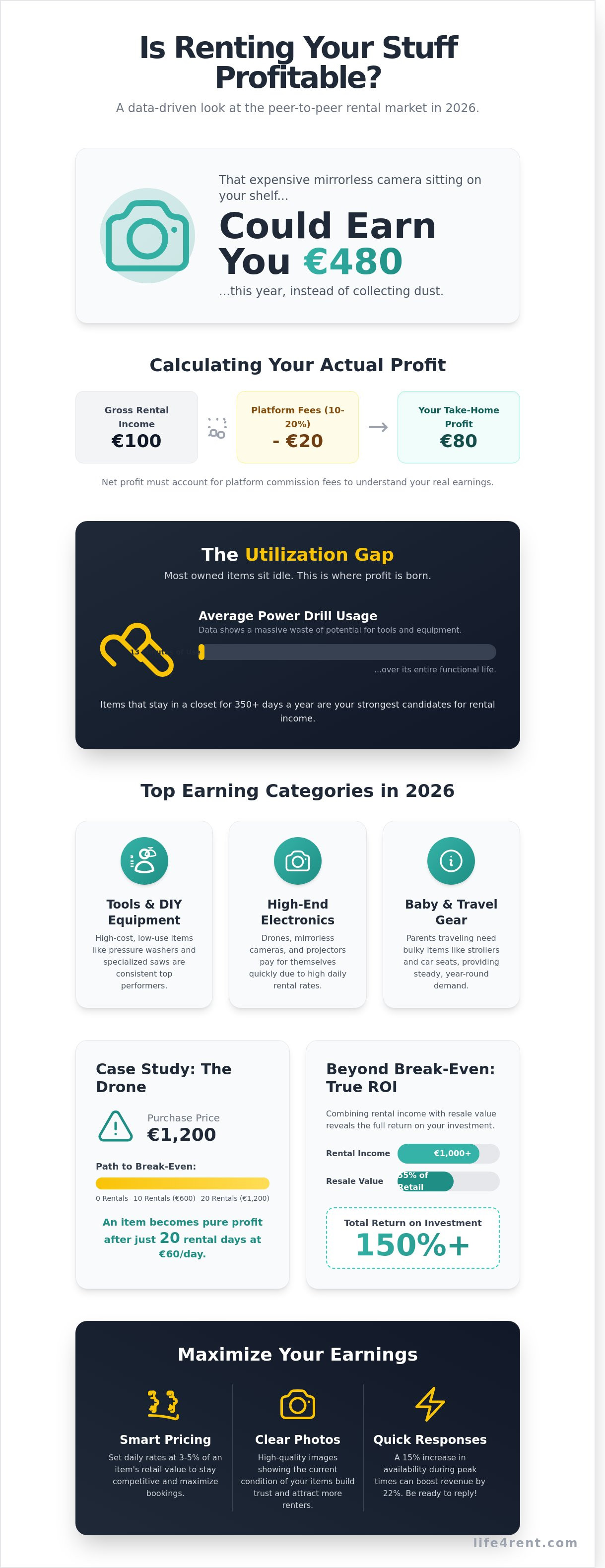
The expensive mirrorless camera sitting on your shelf could earn you 480 Euros this year, yet many owners let their gear collect dust instead of cash. You might wonder is renting out my stuff profitable when you factor in the risk of a cracked lens or the 20% commission fees common on European platforms. It's normal to feel cautious about strangers using your property, especially when platform insurance policies often have complex fine print.
You'll learn how to calculate the actual profit margins of renting out your belongings and which items offer the best return on investment. We'll use data from the 2024 rental market to show you which categories put money in your pocket after accounting for depreciation and local taxes. This approach ensures you don't waste time listing items that won't move.
This guide covers a simple formula for net profit and identifies five high-demand items for the 2026 season. You'll also find three practical ways to protect your equipment while it's in a stranger's hands. Our goal is to give you a clear view of the trade-offs involved in the Life4Rent marketplace so you can decide if the extra income justifies the effort.
The reality of peer-to-peer rental profitability
Most owners start with a simple question: is renting out my stuff profitable enough to justify the effort? The answer isn't a simple yes or no, as it depends on your specific city and the quality of the items you list. This model, widely known as the sharing economy, works best when you treat your belongings as small business assets rather than personal clutter.
You won't find yourself retiring on the income from a single ladder or a spare projector. However, you can effectively turn "dead" assets into tools that generate consistent cash flow. Success in 2026 requires you to look at your inventory through the lens of local demand and seasonal trends. You need to identify what your neighbors need but don't want to buy themselves.
To better understand how these small-scale rentals add up, watch this helpful video:
The Utilization Gap explained
Data from the hardware industry indicates that the average power drill is used for only 13 minutes across its entire functional life. The rest of its existence is spent taking up space in a garage or a toolbox. This represents a massive waste of the money you spent at the store. Most of your household goods are likely suffering from the same lack of use.
You've already paid the full retail price for these items, so every Euro you collect from a renter is essentially a refund on your initial purchase. Items that stay hidden in a closet for 350 days a year are the strongest candidates for generating a profit. You aren't losing anything by letting someone else use them while they would otherwise be idle. This is the core of the peer-to-peer model.
Effective owners track their utilization rates to see which items are worth keeping in their rental fleet. A 15% increase in your item's availability during holiday weekends can boost your monthly revenue by 22%. You have to be ready to respond to inquiries quickly to capture this demand. If you're slow to reply, the renter will simply move to the next listing.
Recouping your investment
Financial planning for your rental hobby starts with a clear break-even analysis. If you buy a high-quality drone for €1,200 and rent it out for €60 per day, you only need 20 rental days to pay off the device. An item becomes pure profit once its initial cost is covered by rental fees. This calculation helps you decide if a new purchase is a smart business move or just an expensive hobby.
You must also consider the long-term value of the equipment. A professional-grade camera might retain 55% of its original value after three years of careful use. When you combine the rental income with the eventual resale price, the total return on investment often exceeds 150% of the original cost. This makes the true cost of owning high-end gear much lower than it appears at first.
Competitive pricing is the final piece of the puzzle. You don't want to be the cheapest option on the platform, but you can't be the most expensive without offering extra value. Most successful lenders in Europe set their prices at roughly 3% to 5% of the item's retail value per day. When you look at the annual numbers, the answer to the question "is renting out my stuff profitable" usually depends on your commitment to the process.
Which items generate the most profit in 2026?
High-purchase-price items that sit idle for 300 days a year offer the best returns for owners. You'll find that specialized equipment often pays for itself within 10 to 15 rentals. This math is why many people ask is renting out my stuff profitable before they list their first piece of gear. Data from early 2026 shows that items costing over €500 with a daily rental rate of at least €30 provide the fastest path to a full return on investment.
Baby gear and travel items are surprisingly consistent earners. Parents visiting relatives don't want to fly with a bulky crib or a high-end stroller. You can earn a steady income by providing these essentials to travelers who only need them for a week. High-quality car seats and portable playpens are usually in demand year-round; they don't suffer from the same lulls as hobby-specific equipment.
Tools and DIY equipment
Pressure washers, stump grinders, and specialized saws are top performers in the current market. These tools take up significant garage space, so most homeowners prefer to pay €40 for a Saturday rather than spend €600 on a machine they'll use once. Local listings in cities like Tallinn or Chicago often reveal exactly what's missing from the market. You can maximize your earnings by filling these gaps with professional-grade hardware that neighbors can't justify buying themselves.
People often struggle with storing bulky items like floor sanders or industrial ladders. If you have the space to keep them, these items become reliable assets. Most DIYers prioritize convenience and proximity over price. If you live in a residential area with many older homes, your toolkit could be a gold mine. Check out the Life4Rent marketplace to see what others are charging in your neighborhood.
Electronics and event gear
Projectors and high-end speakers are the backbone of private event rentals. People don't want to own a professional sound system for one birthday party or wedding reception. Mirrorless cameras and drones also see high demand, though these require a bit more trust in your renters. A Sony A7 IV might rent for €70 per day in 2026, while a VR headset like the Quest 3 works well for those who want a "try before you buy" experience.
Gaming consoles and high-end laptops are popular for short-term needs. A student might need a powerful machine for a two-week design project, or a family might want a PlayStation 5 for a holiday break. These items have a high turnover rate. You'll need to stay on top of software updates and cleaning to keep the equipment in top condition for the next user. When considering is renting out my stuff profitable, remember that electronics depreciate faster than tools, so you must price them to recover costs quickly.
Seasonal items and outdoor gear
Roof boxes and bike racks see a surge in demand during summer and winter holidays. A Thule roof box that costs €800 can easily command €15 per day during peak travel weeks. You should identify your seasonal "dead" items and list them at least 14 days before the weather changes. This strategy ensures you capture the early planners who are organizing their ski trips or coastal getaways.
- Paddleboards and kayaks are excellent earners from June through August.
- Heavy-duty snow blowers can pay for their entire annual maintenance in a single weekend of heavy snowfall.
- Camping gear bundles, including tents and sleeping pads, are popular for summer festivals.
Outdoor gear requires regular inspections to ensure safety and functionality. A quick check of your paddleboard's fins or your bike rack's straps takes five minutes but prevents major issues. If you maintain your gear well, you'll see repeat customers who trust your equipment for their most important trips of the year.
Calculating your net profit after expenses
Gross income often looks impressive on a digital dashboard, but it rarely reflects the actual cash you keep in your pocket. If you're asking is renting out my stuff profitable, you have to look at the numbers after every outgoing expense. Most owners see their initial earnings drop by 25% or more once they factor in the reality of running a small rental operation. You'll find that success depends on your ability to track small costs that others usually ignore.
Platform fees are your first major deduction. Services like Life4Rent provide the infrastructure you need to reach customers safely and efficiently. These companies typically charge between 10% and 20% of the total booking value. This fee isn't just a tax on your earnings; it covers payment processing, basic marketing, and the insurance policies that protect your assets from damage. You don't have to worry about chasing payments or finding leads yourself because the platform handles those logistics.
Recent data on sharing economy growth statistics shows that the sector has expanded by over 25% annually in specific European regions. This growth brings more competition to the market. You must stay sharp with your pricing while you account for rising operational costs. If you ignore these market shifts, your margins will shrink without you noticing.
Maintenance is where most new hosts lose their momentum. A high-performance car or a piece of heavy equipment needs more than just a quick wash between bookings. You should budget for professional detailing, fluid top-ups, and regular mechanical inspections to ensure the item stays in peak condition. These costs are predictable, so you can build them into your daily rate to avoid surprises.
Tax laws for peer-to-peer rentals vary across European borders. In many jurisdictions, you're required to report any income over a specific threshold, such as €2,000 per year. Keep a detailed spreadsheet of every receipt for parts, cleaning supplies, and platform fees. These records allow you to reduce your taxable income and keep more of what you earn. Accuracy is your best defense against unexpected tax bills at the end of the year.
The hidden costs of renting
Wear and tear happens every time an item leaves your sight. You should set aside 5% to 10% of every rental fee for long-term repairs like tire replacements or upholstery fixes. Consumables like fuel, specialized cleaning fluids, or sandpaper for tools must be clearly mentioned in your listing so the renter knows who pays for them. A $50 rental might result in $35 net profit after fees and maintenance. This realistic view helps you decide if is renting out my stuff profitable for your specific inventory.
Valuing your time
Your time has a specific financial value that you can't ignore. Owners often spend 30 to 60 minutes per booking on messages, coordination, and the physical hand-off. Platforms like Life4Rent offer automated booking systems that cut this labor down significantly by managing calendars and notifications. You must decide if the resulting hourly rate for managing these tasks fits your current lifestyle. If a rental takes three hours of your time for a small return, it might not be the right choice for you.
How to maximize your earnings on a rental marketplace
Optimization of your listing is the most effective way to increase your booking rate. You'll find that small adjustments to your profile can double your monthly income without requiring extra inventory. Many owners ask, "is renting out my stuff profitable in the long run?" The answer usually lies in how much effort you put into the presentation. High-quality images and fast communication are the basics of any successful rental business.
Clear photos show the item in its current condition. Use natural light to capture every angle. If there's a small scratch on your camera lens or a scuff on a roof box, show it. Honesty builds trust and prevents disputes later. You should also aim to respond to inquiries within 60 minutes. Internal data from European rental platforms suggests that owners who reply within an hour have a 44% higher conversion rate than those who wait half a day.
Creating a high-converting listing
Focus on the specific use case for your item. Instead of just listing the weight of a drone, explain that it captures stable footage in 15 mph winds. You'll attract more interest if you list every included accessory. Mention the extra batteries, the 128GB SD card, or the weather-proof carrying case. Use a friendly tone with contractions like "don't" and "you'll" to make your description feel approachable. This helps potential renters feel like they're borrowing from a person, not a faceless corporation.
Pricing strategies for success
Research what local competitors charge for similar items. If a neighbor lists a professional pressure washer for $45 per day, you shouldn't ask for $60 unless you offer something extra. You can also adjust your rates based on weekend demand or local events. For example, demand for camping gear often sees a 285% increase in search volume during the first week of July. Offer a discount for longer rentals to encourage multi-day bookings. A "3 days for the price of 2" deal often secures a week-long rental that might have otherwise gone to a competitor.
Your profile's reputation serves as your currency in the peer-to-peer economy. New lenders often struggle to get their first few bookings because they lack reviews. You should keep your price 18% below the market average for the first month. Once you have five or six positive ratings, you can raise your rates to match the local standard. This strategy builds the social proof necessary for long-term success. You might wonder, is renting out my stuff profitable when accounting for wear and tear? By building a strong review base early, you can eventually charge a premium that covers all maintenance costs.
Local events provide a massive opportunity for increased earnings. If a major music festival happens in your city on August 12th, 2026, your portable power stations and tents should see a price increase. You'll maximize your return by tracking these dates on a calendar. Most successful lenders update their availability at least once a week to stay relevant in search results. Accuracy in your description prevents negative reviews. If you rent out a car, specify the exact fuel type and mileage limits. Clear expectations mean fewer headaches for both parties. You'll find that being helpful pays off in repeat customers. People often return to the same lender if the first experience was straightforward and honest.
Ready to turn your idle gear into a steady stream of income? You can list your items on the Life4Rent marketplace and start connecting with local renters today.
Is Life4Rent the right platform for your items?
Life4Rent operates with 17 distinct categories, which makes it a versatile choice for anyone with a garage full of gear. You can list items ranging from professional power tools to specialized party equipment and high-end electronics. This variety allows you to diversify your listings to see which niche performs best in your local area. Many users wonder if is renting out my stuff profitable when they only have a few household items. The platform's structure supports both small-scale hobbyists and professional rental businesses equally, providing the same tools for growth to everyone.
The platform focuses on building connections within local communities while maintaining a presence in international markets like Estonia and the United States. This geographical reach means the software is robust enough to handle different legal and logistical requirements. You can reach a neighbor three streets away or a traveler visiting your city for a week. This flexibility is essential because demand for certain items, such as camping gear or heavy machinery, often fluctuates with the seasons. The listing process is straightforward, allowing you to test the market with a single item before committing to a larger inventory.
Security and item protection
Trust between peers is the core of this marketplace. Life4Rent uses verified profiles and historical data to help you vet potential renters before you hand over your property. You can see ratings from other owners to determine if a person is reliable. Every transaction creates a clear paper trail through digital rental agreements that define the terms of the deal. You should review the protection plans available for high-value items to ensure you have coverage against accidental damage. These plans provide a safety net when you list equipment that costs more than $500 to replace.
Starting your rental side hustle
You should start with one high-demand item to learn the basic workflow of the platform. Items like pressure washers, carpet cleaners, or specialized tools usually see consistent interest. This initial phase helps you understand how to manage pickup times and how to perform a thorough inspection when an item returns. You'll find that clear communication is the most important factor in receiving five-star reviews. To see what people in your specific neighborhood are looking for, Register as an owner on Life4Rent. This step allows you to view local market data and decide if is renting out my stuff profitable for your specific inventory.
Most successful owners on the platform treat their listings like a small business. They take clear photos, write honest descriptions, and respond to messages quickly. Statistics from early 2025 indicated that owners who updated their availability calendars weekly received 25% more inquiries than those with outdated schedules. Data from the same period showed that owners who responded to inquiries within two hours had a 40% higher booking rate than those who waited until the next day. These small habits significantly impact your overall success and help you build a reputable profile.
You don't need to be a tech expert to navigate the interface. The dashboard provides a simple overview of your active rentals, pending requests, and total earnings. You can set your own prices and deposit requirements based on the value of your items. This level of control ensures that you remain the boss of your own schedule. If an item isn't getting enough traction, you can adjust the price or change the main photo to attract more attention. Testing different price points is a practical way to find the sweet spot for your local market.
Putting Your Idle Assets to Work
Whether is renting out my stuff profitable depends on your local market demand and how well you manage maintenance costs. You'll likely see the best results with high-demand gear like professional cameras, e-bikes, or power tools. Most users in cities like Tallinn and Chicago find that consistency is more important than setting high prices in 2026. You should track your expenses carefully to ensure your net earnings stay positive after insurance and platform fees.
Life4Rent offers a secure marketplace with 17 different rental categories to help you reach local renters. It's a practical way to offset the cost of ownership while your gear sits idle. You don't need a massive inventory to see a return; even a few well-maintained items can generate a steady stream of extra cash. The platform handles the logistics so you can focus on keeping your items ready for the next booking.
Success in the peer-to-peer market comes down to being a reliable host and choosing the right platform. You'll find that clear photos and honest descriptions lead to better reviews and more frequent rentals. Start earning from your idle items on Life4Rent today. It's a straightforward process that turns your storage space into a source of income.
Frequently Asked Questions
How much can I realistically earn by renting out my stuff?
Earnings depend on the specific category and quality of your gear. High-end cameras might net €50 to €100 per day, while power tools usually bring in €15 to €30. If you list a €2,000 Sony Alpha camera and it rents 4 times a month, you'll see €300 monthly after platform fees. These figures help you determine if is renting out my stuff profitable based on your specific inventory.
What happens if a renter damages my equipment?
Life4Rent provides a basic protection guarantee for verified users that covers repair costs up to €5,000 for most mechanical failures or accidental damage. You should take 5 to 10 high-resolution photos with a timestamp before every hand-off. If damage occurs, you must report it within 24 hours of the return to start the claim process. This documentation is vital for a successful reimbursement.
Do I have to pay taxes on my rental income in Europe?
Yes, you must report this income once it exceeds specific local thresholds, such as the €2,000 limit set by the DAC7 directive in the EU. Platforms like Life4Rent are now required to share seller data with tax authorities automatically. You should keep 20% to 30% of your earnings aside for potential tax liabilities. Consult a local accountant to see if you can deduct depreciation on your equipment.
Is it worth renting out cheap items like hand tools?
Small items only make sense if you bundle them or live in a high-density area where pick-ups are easy. A €40 drill that rents for €10 requires four trips just to break even on the purchase price. You'll spend more on coordination time than the actual cash value unless you have a high volume of local requests. Focus on items worth at least €150 to make the effort worthwhile.
How do I decide on the right rental price for my items?
The price you choose is the main factor in deciding if is renting out my stuff profitable over the long term. Set your daily rate at 1% to 3% of the item's current retail value to stay competitive. A €1,000 e-bike should rent for roughly €25 per day. Check local listings on Life4Rent to see what others charge, then price yours 5% lower to build up your initial reviews quickly.
Can I rent out items I'm still paying off on credit?
You can technically list these items, but your credit agreement might have clauses that prohibit commercial use of the asset. Check your contract for terms regarding sub-leasing or third-party use before you post. If the item is stolen, your personal insurance won't cover it because it was being used for profit. This risk often outweighs the €20 or €30 you might earn per day.
What are the most requested rental items on Life4Rent?
High-demand categories include professional photography gear, party equipment like JBL PartyBox speakers, and specialized DIY tools. Data from 2025 shows that pressure washers and heavy-duty trailers have the highest utilization rates in suburban areas. These items often pay for themselves within 12 to 15 individual rental days. You'll likely see the most traction during weekends when local projects peak.
How do I handle pick-up and drop-off safely?
Meet in a well-lit, public location or use a building with a 24/7 concierge for the hand-over. You should always verify the renter's ID through the Life4Rent app before you hand over the keys or equipment. Most successful hosts use a simple checklist to confirm the item's condition together during the 5 minute exchange. This prevents disputes and ensures both parties agree on the state of the gear.
Life4Rent
Rent it. Earn from it. Own less, access more.
Browse peer-to-peer rentals near you, or list what you own and start earning — all protected by Life4Rent Protect.
About the author
Dublin, Ireland
Michael covers consumer rights, rental law, and EU platform regulation for the Life4Rent Renting Academy. He has reported on digital market policy and renter protections across Europe, and brings a clear, practical perspective to topics like deposit disputes, insurance, and the legal rights of renters and owners.