How to Travel Light With a Baby: A Practical Guide to Carry-Less Trips in 2026
May 18, 2026
Published by Life4Rent · Operated by Brohf Software OÜ
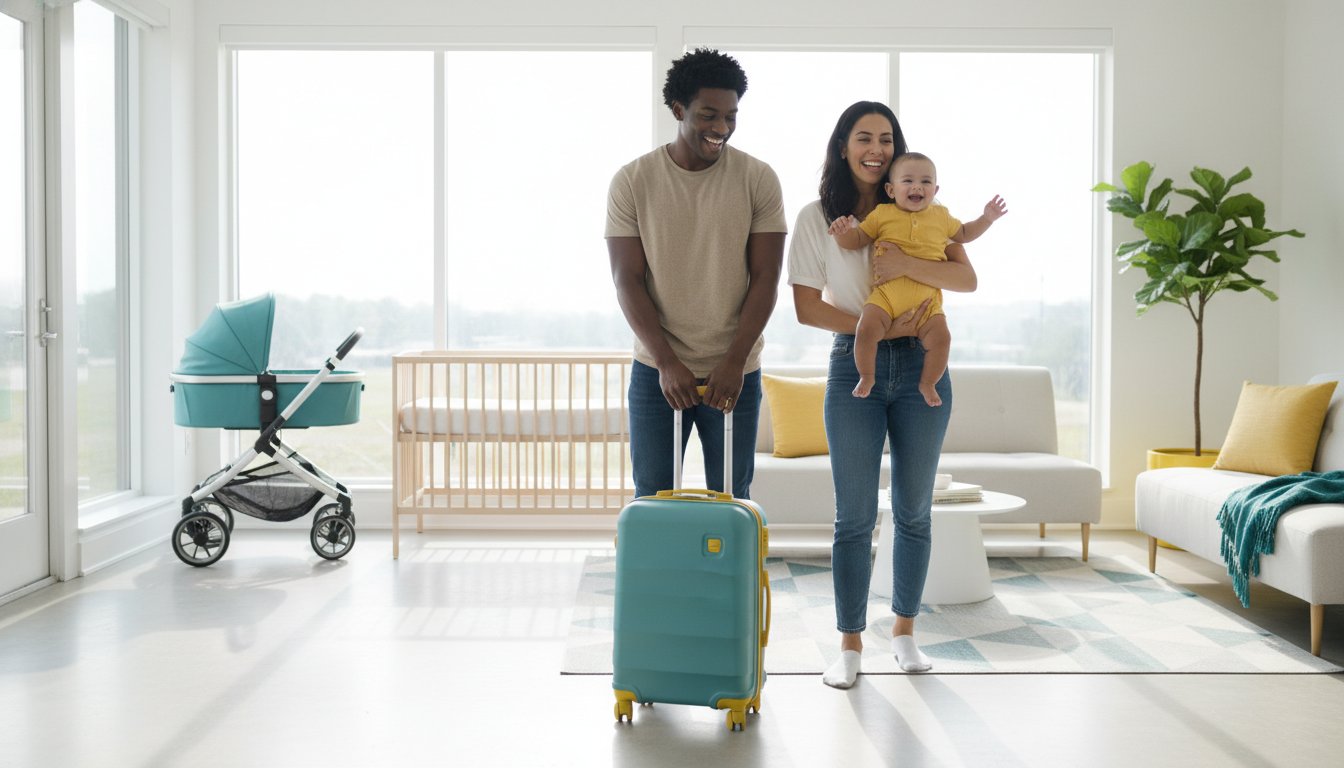
The secret to mastering how to travel light with a baby isn't about finding a smaller stroller or folding clothes tighter; it's about not bringing the heavy gear at all. You probably already know the physical strain of hauling a car seat through a crowded terminal while balancing a diaper bag. It's a tiring experience that often costs more than it should, especially with major U.S. airlines now charging $45 to $55 for a first checked bag as of April 2026. Most parents accept this bulk as a necessary part of travel, but the logistics of moving a mini-household across borders can quickly drain the joy from your trip.
You can actually reclaim your physical freedom and move through the city with ease by arriving at the gate with just a single carry-on. This guide shows you how to use peer-to-peer marketplaces like Life4Rent to have high-quality cribs and strollers waiting at your destination. You'll learn how to navigate the latest 2026 TSA liquid regulations for formula and milk while using local rentals to eliminate travel anxiety. We'll look at how to cut your luggage down to the essentials and avoid those rising airline fees for a much smoother experience.
The practical reality of travelling light with a baby
Parents often feel like they're coordinating a complex military operation when they prepare for a trip with an infant. The sheer volume of gear required for a simple week away can be overwhelming. You might feel the urge to pack every familiar item from your nursery, but this usually leads to unnecessary physical strain.
A fundamental shift in mindset is required if you want to travel light with a baby. You need to move away from the idea of "possession" and embrace "access" instead. This means looking at your destination as a place that already has the resources you need.
A carry-less approach prioritizes your mobility above all else. It's about recognizing that you don't need to own every piece of equipment you use on a short holiday. When you reduce your luggage, you also reduce the mental load of tracking multiple bags through busy terminals.
This physical freedom allows you to focus on the experience rather than the logistics of moving heavy objects. It changes the way you interact with your environment from the moment you leave your front door.
To better understand this concept, watch this helpful video:
Why mobility is your best travel asset
European cities are famous for their charm, but they aren't always designed for modern parenting gear. Public transport in older metropolitan areas like Paris or Rome is often difficult to navigate if you're pushing a heavy double stroller. You'll frequently encounter small lifts and narrow, winding stairs in boutique hotels that make oversized luggage a liability. If you're planning a trip to the Baltics, sites like parastatallinnassa.com offer great tips for exploring child-friendly spots in the region.
It's helpful to research different types of baby transport to see which options fit a minimalist lifestyle. Quick transitions between flights or trains become much simpler when your hands are free to attend to your child's needs. You don't want to be the person blocked at a narrow turnstile because of a wide stroller frame.
The true cost of checking baby gear
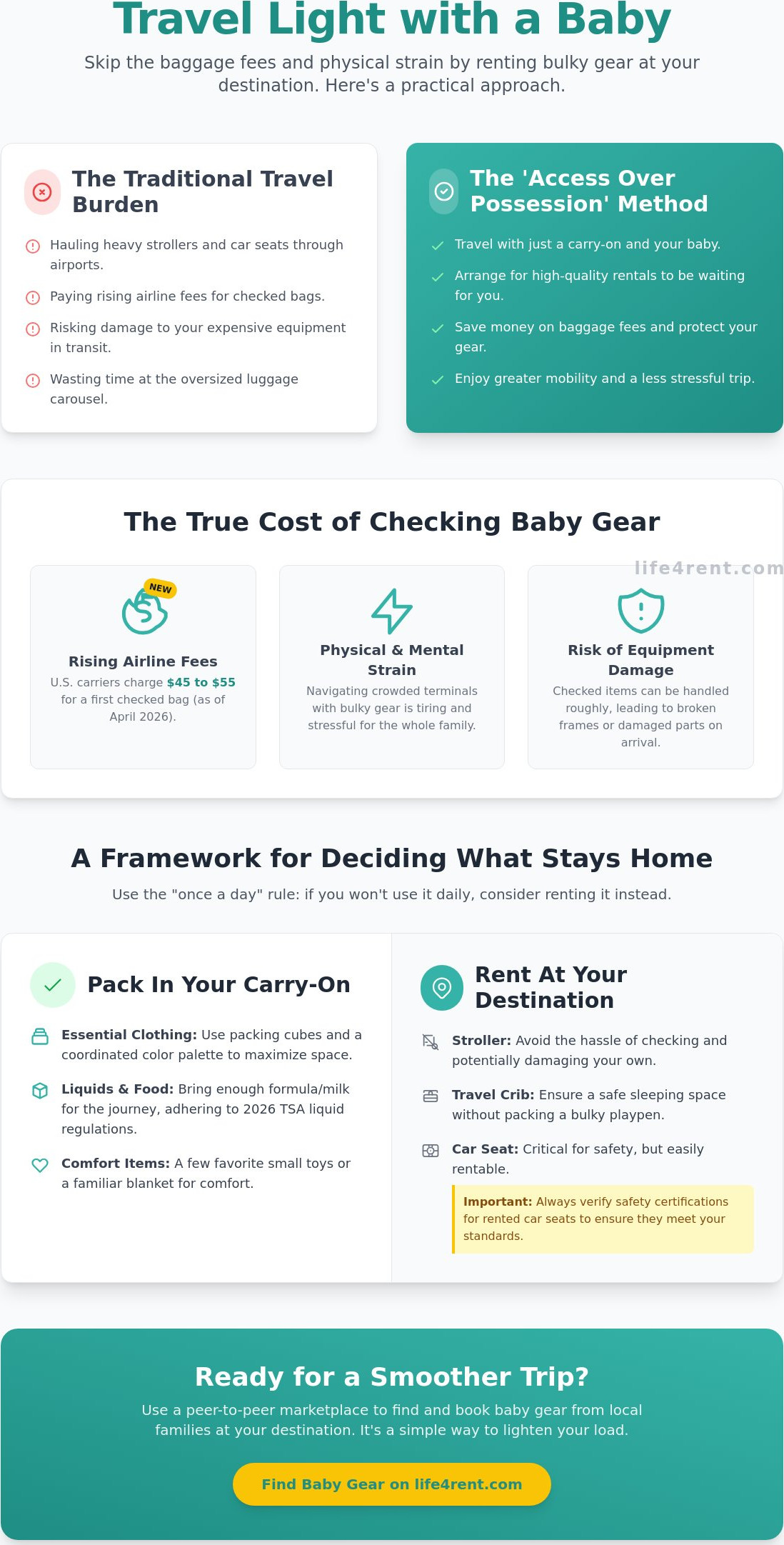
Airlines might offer a free allowance for one or two items, but the hidden costs of extra baggage are significant. Major U.S. carriers like Delta and United now charge approximately $45 to $55 for a first checked bag as of April 2026. These fees can quickly eat into your holiday budget before you even land.
Beyond the financial cost, the risk of equipment damage in the cargo hold is a constant headache. Strollers and car seats are often handled roughly during the loading process, and a broken frame can ruin the start of your trip. You can skip the long wait at the oversized luggage carousel and the stress of potential damage by renting gear at your destination through a marketplace like Life4Rent.
This strategy is a cornerstone of how to travel light with a baby while keeping your expensive items safe at home. It ensures you have high-quality equipment waiting for you without the burden of transporting it yourself across several time zones.
A framework for deciding what stays home
Decisions about what to leave behind are often the hardest part of trip preparation. Most parents pack for "worst-case scenarios," which usually results in multiple heavy suitcases for a single infant. A better strategy for how to travel light with a baby involves a cold assessment of utility versus weight. You have to be honest about which items actually improve your day and which ones just provide a false sense of security.
Frequency of use should be your primary metric for every object. If an item doesn't serve a purpose every single day, it probably doesn't belong in your bag. Bulk and weight are the main enemies of the light traveler, especially when you consider the physical toll of navigating airports and train stations. You'll find that local availability of consumables like diapers, wipes, and basic baby food is almost guaranteed in any European or North American city.
Safety items like car seats require a different set of rules than toys or clothes. You should stay informed on current TSA guidelines for traveling with children to understand exactly what you can carry through security in 2026. This allows you to bring necessary liquids like formula or breast milk without packing a month's supply in your checked luggage. Knowing these rules helps you filter out the "just in case" items that add unnecessary volume.
The "Once a Day" rule
Items used less than once a day are luxury items you can't afford to carry when traveling light. Specialized gadgets like electric bottle warmers are often redundant if your hotel has a kettle or access to hot water. You'll find that multi-purpose items, like a large muslin cloth that works as a blanket, a sunshade, and a nursing cover, save the most space. Priority should always go to things that serve at least two distinct functions during your trip.
Evaluating gear by volume and weight
Travel cots are prime candidates for removal because of their awkward dimensions and heavy metal frames. High chairs are also rarely necessary if you use a simple fabric seat that attaches to a standard dining chair. You'll save significant room by choosing a soft-structured carrier over a framed hiking carrier, which can take up half a suitcase on its own. If you find that certain bulky items are still necessary for your comfort, you can check the available gear on a rental marketplace to see what local families can provide near your accommodation.
Bulky items that are better to rent at your destination
Strollers often take up the most volume in your travel inventory. They're also prone to significant damage during flights, as baggage handlers may not treat them with the same care you do. You can avoid this risk by leaving your primary stroller at home and sourcing one at your destination instead.
Travel cots and playpens are similarly difficult to manage across borders. These items are heavy and take up valuable space in your car or luggage allowance. Peer-to-peer platforms connect you with local families who have high-quality gear ready for use, which is a core part of mastering how to travel light with a baby.
Car seats are essential for safety, but they're notoriously difficult to carry through terminals. You'll find that hauling a bulky seat while managing a child and a diaper bag is physically exhausting. Sourcing a certified seat from a local parent allows you to move through the airport with just a simple backpack.
The stroller dilemma: pack or rent?
Full-sized strollers provide excellent comfort for your child, but they're a logistical nightmare for air travel. Many travelers spend hundreds of dollars on specialized "travel strollers" that still require storage and gate-checking. You might find it more practical to rent a high-end jogging stroller locally if you plan on long walks through city parks.
Local rentals ensure the gear is appropriate for the specific terrain you'll encounter. A stroller built for smooth suburban sidewalks might struggle on the cobblestones of an old European town. You get the right tool for the job without the hassle of transporting it yourself.
Sleeping arrangements and nursery gear
Electronics are another area where renting makes sense. You won't have to worry about voltage adapters or plug converters for monitors and bottle warmers when you use local equipment. You'll find that choosing to rent neiybor gear means you arrive at your accommodation with everything already set up and compatible with local power outlets.
Packing strategies for the remaining essentials
You can focus on the small items that actually need to go in your bag once you've arranged for the bulky gear to be waiting at your destination. Fabric packing cubes are the most effective way to organize tiny socks, onesies, and bibs. These zippered containers act like drawers within your suitcase and prevent you from digging through a pile of clothes in a dark hotel room. This level of organization is a key part of how to travel light with a baby because it creates a physical limit for each category of clothing.
You should select a simple, mix-and-match color palette for every clothing item you pack. When every top works with every bottom, you need fewer individual pieces to get through the week. You'll find that laundry facilities at your destination are your best friend. If you can wash a load of clothes every three days, you only need to pack four days' worth of outfits for the entire trip.
Most airlines permit one diaper bag per child in addition to your own carry-on limit as of 2026. You should use this space wisely by packing only what's necessary for the duration of the flight and a 24-hour buffer. This approach keeps your primary bag light and ensures you have easy access to essentials during transit without overfilling your personal space.
The minimalist baby wardrobe
Natural fibers like merino wool or cotton are excellent choices for a travel wardrobe. These materials are breathable and compress down much further than heavy synthetic fabrics or bulky fleece. You'll find that thin layers are more practical than large individual sweaters when you're moving between different climates. You should also pack one "emergency" shirt for yourself in the carry-on to handle the inevitable spills or messes that happen in transit.
Consumables: The "Buy There" strategy
Diapers are bulky and take up a surprising amount of room in a standard suitcase. You can easily avoid this by adopting a "buy there" strategy for all your consumables. Most supermarkets in European and North American cities carry familiar brands or high-quality local alternatives that are often cheaper. You only need to pack enough for the flight and the first night to save a massive amount of space in your luggage.
You can rent out your own gear to other travelers to help offset your own holiday costs when you aren't using it.
How to use peer-to-peer rentals for a smoother trip
Peer-to-peer marketplaces are the final piece of the puzzle when you're figuring out how to travel light with a baby. These platforms connect you with local families who have high-quality gear sitting in their homes ready for use. You'll find that renting from another parent often feels more personal and reliable than using a large commercial agency. It's a practical way to access premium equipment without the burden of ownership or the stress of transport.
Safety standards must be your primary focus when you browse these listings. You should look for detailed descriptions and clear photos that show the current state of the equipment. Reviews from previous renters are a great resource for checking if an owner is reliable and if the gear is well-maintained. You can move through the airport with a single backpack when you know a trusted local family has your bulky essentials covered.
Direct communication with the owner is a major advantage of the peer-to-peer model. You can ask specific questions about the gear's history or request a particular delivery time that matches your flight. This coordination ensures that your stroller or crib is ready the moment you reach your accommodation. It eliminates the need to search for a rental desk or wait in long queues after a tiring journey.
Vetting a listing for safety and hygiene
You should always ask the owner for the manufacture date and model of any car seat you intend to rent. This helps you verify that the seat meets the latest 2026 safety regulations and hasn't been involved in any recalls. It's also smart to request recent photos of the actual item to avoid relying on stock images. You should check the platform's specific cleaning policy to confirm that items are sanitized with baby-safe products between each use. Most owners on Life4Rent are happy to provide these details to ensure your peace of mind.
Managing the rental process abroad
You can consult the peer to peer equipment rental guide to understand the specifics of insurance and damage protection. Most users prefer to schedule a delivery directly to their hotel or Airbnb to avoid a trip across an unfamiliar city. This service saves you time and allows you to start your holiday immediately. You'll often find that local owners are happy to share tips on the best baby-friendly cafes or quiet parks in their neighborhood. This local knowledge is a valuable bonus that you won't get from a standard rental desk at the airport.
Master your next family trip with ease
You can find high-quality items through a marketplace that prioritize safety and transparency. Life4Rent offers a secure payment system and verified user reviews so you can book with confidence. This approach also helps lower your overall travel costs by eliminating the need for oversized baggage fees at the airport. With access to 17 different rental categories, you'll have everything you need waiting for you. Browse baby gear for rent on Life4Rent to simplify your 2026 travel plans. Your next trip can be much smoother when you carry less and experience more.
Frequently Asked Questions
Is it safe to rent a car seat from a stranger on a rental platform?
It's safe if you follow a few verification steps before you book. You should always ask the owner for the manufacture date and proof that the seat hasn't been in an accident. Verified reviews from other parents on marketplaces like Life4Rent provide an honest look at the item's history and maintenance level.
How much baby clothing should I pack for a ten-day trip?
You only need to pack about four days of outfits if you have access to a washing machine at your destination. This is a core strategy for how to travel light with a baby without running out of essentials. Use packing cubes to keep small items like socks and bibs organized within a single carry-on bag.
Can I rent a stroller directly at the airport?
Some major hubs have rental kiosks, but these often have limited stock and higher prices. It's usually more efficient to coordinate a delivery with a local owner who can meet you at the arrivals hall or your hotel. This ensures you get the specific model you need for the local terrain rather than a generic airport model.
What happens if the baby gear I rent is dirty or damaged?
You should inspect every item immediately upon delivery and take photos for your records. Most reputable platforms have a cleaning policy that requires owners to sanitize gear between uses. If the item doesn't match the description or looks unsafe, you should contact the platform's support team before you use it.
Should I pack a portable high chair or just rent one?
A proper high chair rental is best for longer stays where you'll be eating in your accommodation frequently. If you're moving between cities, a lightweight fabric harness that attaches to any dining chair is a better choice for your suitcase. It provides the utility you need without adding the weight of a heavy metal frame.
How do I know if a rented travel cot meets safety standards?
Ask the owner for the specific model name and manufacture year to check against current safety databases. You can also request photos of the safety labels on the frame to verify certifications. A well-maintained cot should have a firm mattress and no loose parts or torn mesh.
Is it cheaper to rent baby gear or pay for extra checked bags?
Rentals are almost always more cost-effective when you consider that major airlines charge $45 to $55 for a first checked bag in 2026. These fees apply in both directions, which can add over $100 to your total trip cost. You'll find that renting high-quality gear locally often costs less than these airline baggage fees while saving you the physical effort.
What are the most commonly rented baby items for travellers?
Strollers, car seats, and travel cots are the items parents rent most frequently to save space. These bulky pieces are the biggest obstacles when learning how to travel light with a baby. You'll also find a high demand for electronics like bottle sterilizers and high-end baby monitors that are already compatible with local power outlets.
Related guides on Life4Rent
Ready to rent instead of buy? See all baby & kids gear available to rent on Life4Rent →
Life4Rent
Rent it. Earn from it. Own less, access more.
Browse peer-to-peer rentals near you, or list what you own and start earning — all protected by Life4Rent Protect.
About the author
Tallinn, Estonia
Philip leads editorial at the Life4Rent Renting Academy, overseeing guides on peer-to-peer rental, platform safety, and consumer finance across 25 markets. He has spent over a decade covering the sharing economy and digital marketplaces, helping renters and owners navigate the shift from ownership to access.