
How to Rent Out Your Camera for Cash: A Practical 2026 Guide
March 24, 2026
Published by Life4Rent · Operated by Brohf Software OÜ
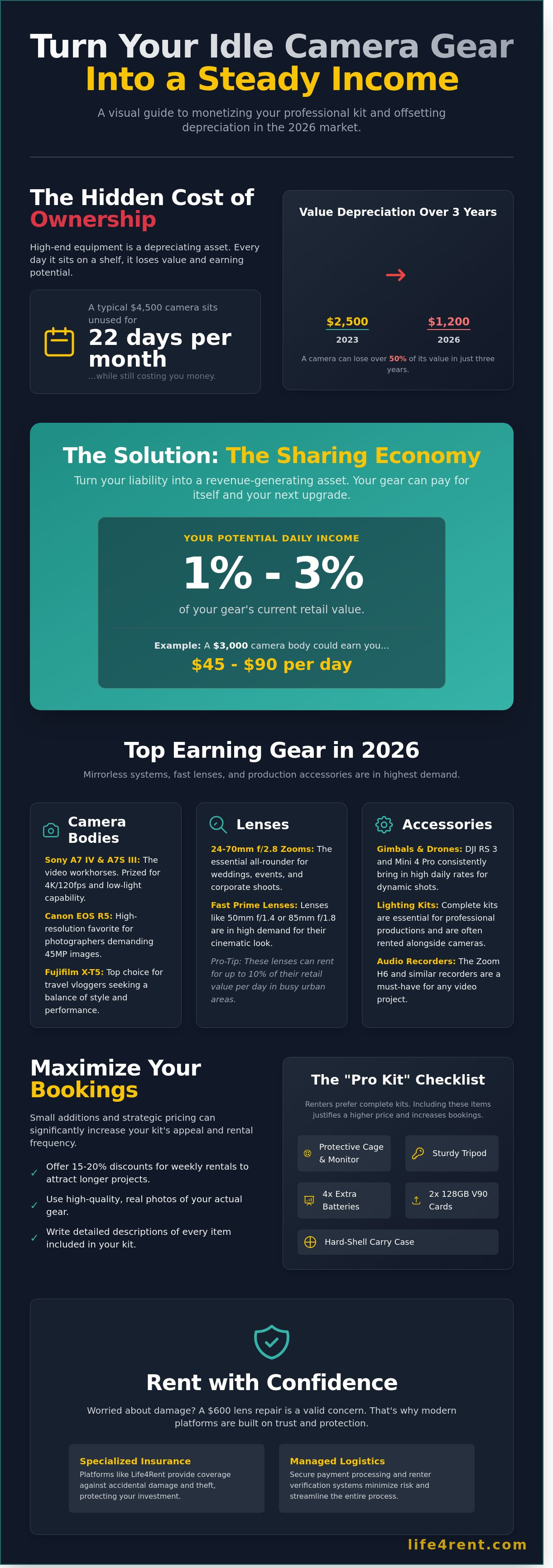
Last Tuesday, a freelance filmmaker in Berlin realized his $4,500 Sony A7S III had spent 22 days of the month sitting in a padded bag. Most of us buy high-end gear thinking we'll use it every day, but the reality is that professional kits often gather dust between gigs. It's frustrating to watch a monthly payment leave your bank account while your equipment sits idle on a shelf.
You've probably thought about how to rent out my camera for cash but felt held back by the risk of a stranger dropping your lens. It's a valid concern, especially when a single repair for a 24-70mm f/2.8 can cost over $600. However, modern peer-to-peer marketplaces now offer specialized insurance that covers theft and accidental damage for owners across Europe.
You'll learn how to turn that dormant gear into a steady income stream that can actually pay for your next upgrade. This guide breaks down how to set your daily rates based on current 2026 market data and how to handle the local tax paperwork. We cover the specific steps to protect your investment while building a local creative network through shared equipment.
Why your camera gear should not sit on a shelf
Camera gear is an asset that loses value over time. A high-end mirrorless body like the Sony A7IV loses roughly 15% of its market value every year it spends in a storage bag. You can use the sharing economy to turn this idle tech into a consistent revenue stream. The decision to rent out my camera for cash is a practical way to manage the high costs of a photography hobby or professional career.
Digital sensors age quickly as new models enter the market. A camera purchased in 2023 for $2,500 might only fetch $1,200 on the used market by 2026. Rental income acts as a hedge against this inevitable loss of value, allowing the equipment to pay for its own eventual replacement.
To better understand how this concept works in practice, watch this helpful video:
Local videographers often search for specific glass, such as a 24-70mm f/2.8, for a single weekend wedding or music video shoot. This demand is particularly high in 2026 as video content production for social commerce continues to expand. You provide a service that helps others while protecting your own investment from sitting idle.
Market data from early 2026 shows that independent content creators now account for 45% of short-term gear rentals. These users often look for high-quality audio equipment and lighting kits to complement a camera body. If you own a complete kit, your earning potential increases because renters prefer a single pickup location for all their project needs.
Calculating your potential rental income
Owners typically set daily rates between 1% and 3% of the item's current retail price. If your camera body costs $3,000, you might charge $45 to $90 per day depending on the local market. When I rent out my camera for cash, I check local listings on European platforms to ensure my rates stay competitive against other local owners. Most successful lenders offer 15% to 20% discounts for weekly rentals to attract long-term film projects.
The shift toward a circular creative economy
Professionals often avoid the $5,000 upfront cost of a specialty macro lens or a cinema rig by renting it for a one-day product shoot. This shift toward resource sharing reduces the total environmental impact of the industry since it requires less new manufacturing. Modern peer-to-peer platforms include verification systems and insurance options that weren't available in 2019. You can now list gear with more confidence in the safety of your hardware than in previous years.
The most profitable camera equipment to list right now
You can turn a high-end camera into a steady income stream if you own the right gear. Mirrorless systems are currently the most requested items on European rental platforms. Sony, Canon, and Fujifilm dominate the market because they offer professional video and photo features in compact bodies. If you decide to list your gear on Life4Rent, these brands will likely get the most attention from renters.
Top camera bodies for consistent bookings
The Sony A7 IV and A7S III are the current standards for videographers. The A7S III remains popular for its low-light performance and 4K recording at 120 frames per second. Photographers often search specifically for the Canon EOS R5 because of its 45-megapixel sensor. Fujifilm X-series cameras, like the X-T5, attract travel vloggers who want a specific aesthetic without carrying heavy equipment.
Fast prime lenses and 24-70mm f/2.8 zooms are essential for almost every shoot. These lenses often rent for 10% of their retail value per day in busy urban markets. Gimbals like the DJI RS 3 and compact drones like the Mini 4 Pro also bring in high daily rates. You shouldn't ignore lighting kits or audio recorders like the Zoom H6, as these items are required for every professional production.
Essential accessories that increase your kit value
You'll find that small additions increase your booking frequency. Renters prefer kits that include four extra batteries and two 128GB high-speed V90 memory cards. Protective cages and external monitors make your setup look more professional to potential clients. These additions help justify a higher price point while keeping your equipment safe during use.
Sturdy tripods and hard-shell carry cases are vital for long-term gear health. You need to consider protecting your investment since standard personal insurance rarely covers rental activities. Most experienced owners use rugged cases from brands like Pelican to prevent damage during transport. This approach ensures your equipment returns in the same condition it left.
If you want to rent out my camera for cash, focusing on these specific models is the best starting point. Reliability is what brings repeat customers in the sharing economy. When you think about how to rent out my camera for cash, remember that a complete, well-protected kit is always more attractive than a bare camera body.
Safety and insurance: protecting your investment
Trust is the foundation of every successful peer-to-peer rental. You aren't just lending a tool; you're handing over a high-value asset to a stranger. Life4Rent and similar marketplaces focus on building this trust through verified profiles and historical data. You should always verify that the platform offers comprehensive damage coverage before you list your gear.
Identity verification for renters is a non-negotiable safety feature. Data from 2023 shows that platforms using ID scanning reduce equipment theft by 65% compared to those that don't. Internal review systems also help you filter out users who have a history of late returns or poor communication. These ratings act as a digital resume for every person on the site.
Understanding platform protection plans
Most marketplaces take a 15% to 25% fee from each transaction. This money pays for insurance and secure payment processing. You need to read the fine print regarding "voluntary parting" or theft. Some policies only cover accidental damage, so you must know exactly what happens if a renter disappears with your kit.
Payouts for damages usually require a detailed inspection report. You'll need to provide clear photos taken within 24 hours of the rental start and end dates. Keep in mind that taxable rental income must be reported to the authorities, so keep your repair receipts for potential deductions. This documentation is vital if you want to rent out my camera for cash without losing money on maintenance.
How to vet potential renters yourself
You have the right to ask about their experience with specific gear. If a renter wants a high-end cinema camera but has only used a smartphone, you might suggest a simpler model. This conversation helps prevent accidental damage caused by improper handling or incorrect settings.
Social media links or professional portfolios provide extra peace of mind. Professional photographers usually don't mind sharing their work. This gives you proof that they know how to handle a delicate sensor or a heavy telephoto lens. It's a simple way to verify their identity and skill level simultaneously.
Communication through the platform keeps a record of all agreements. Stick to the internal chat system for every detail of the hand-off. If a dispute happens, the support team needs that history to help you. It's a practical way to stay protected while you rent out my camera for cash to people in your local community.
Preparation tips for a successful rental experience
Your listing's visual appeal directly impacts how often you'll rent out my camera for cash. Take photos of your actual equipment rather than using stock images from the manufacturer. Potential renters want to see the specific lens or body they'll hold, including any minor wear or unique markings. Clear, well-lit shots from multiple angles build immediate trust with the community.
Detailed descriptions must include every single item in the bundle. You should list the camera body, specific lens focal lengths, the number of batteries, and the capacity of the SD cards. If you include a camera bag or a tripod, mention the brand and model. This precision prevents disputes and ensures the renter has everything they need for their shoot.
Maintenance schedules keep your gear in top working order and protect your reputation. You should clean the sensor every 10 to 12 rentals to ensure no dust spots ruin a client's footage. A professional sensor cleaning usually costs between $50 and $90, but it's a necessary expense to avoid negative feedback. Always check the shutter count and battery health levels twice a year to monitor the lifespan of your assets.
The gear hand-off checklist
You should show the renter that the unit powers on and records to a card before they leave with it. Record a 5-second video of the sensor at f/22 against a white wall to prove it's clean and free of damage. Both parties must sign a simple document that notes any existing cosmetic scratches. These steps take 10 minutes but provide essential evidence if an insurance claim becomes necessary.
Pricing your gear for the local market
Set your initial rates 15% lower than the local average to secure your first three reviews. Most successful owners on peer-to-peer platforms offer a 20% discount for rentals that last seven days or more. Prices in cities like Berlin or London often spike by 25% during the summer wedding season or major festivals in August. Keep an eye on local events to adjust your rates and maximize your earnings throughout the year.
Ready to turn your unused equipment into a steady stream of income?
List your gear on Life4Rent todayChoosing Life4Rent for your photography side hustle
You need a platform that handles the technical parts of a side hustle so you can focus on your gear. Life4Rent connects owners with a verified community of local photographers and creators. It manages the payment processing and security deposits, which reduces the risk of non-payment or equipment damage. If your goal is to rent out my camera for cash, you'll appreciate how the system handles the paperwork for you.
Support isn't just an automated bot on this platform. You'll find local teams in cities like Tallinn and Chicago who understand the local market conditions. They can help if a dispute arises or if you have questions about regional rental laws. This human element makes the process feel more like a community and less like a cold transaction.
Benefits of a multi-category marketplace
Niche photography sites often have limited traffic compared to broader marketplaces. On Life4Rent, you can list your drone, your mirrorless camera, and even your studio space under one account. This variety attracts a wider range of users, from hobbyists to professional production crews. You'll find it easier to manage your income when all your rental data appears on a single, unified dashboard.
Getting your first listing live
You keep full control over your gear at all times. The platform lets you set specific availability and blackout dates so you can still use your camera for personal projects. You won't have to stay glued to a desktop computer either. The mobile app sends instant notifications, so you can answer questions or approve requests while you're out on a shoot.
Performance tracking helps you treat this like a real business. Detailed stats show you which items get the most clicks and which ones stay on the shelf. You might find that your backup lens earns more than your primary body. Use these insights to adjust your prices or update your photos. List your camera on Life4Rent today and start earning to see what your idle gear is worth in the current market.
Turn Your Idle Gear Into a Working Asset
High-end mirrorless bodies often sit unused for 250 days a year. If you own a Sony A7R V or a Canon R5, you can realistically expect to earn between €70 and €110 for a single day's hire in major European hubs. It's a practical way to offset the high cost of new lenses or body upgrades without selling your kit.
Safety is usually the main hurdle when I decide to rent out my camera for cash. Life4Rent manages this risk through a verified user community and secure payment processing so you aren't left chasing invoices. Their team provides 24/7 support for owners, which is helpful if a renter has a specific question about your gear's settings at odd hours.
You can list your equipment and set your own availability in about ten minutes. Just ensure your sensor is clean and your firmware is updated to the latest 2026 versions before your first booking. Start earning cash from your camera gear on Life4Rent and keep your equipment working for you. It's a simple process that turns unused shelves into a reliable revenue stream.
Frequently Asked Questions
How much can I realistically earn by renting out my camera?
You can expect to earn between €40 and €70 per day for a modern mirrorless body like a Sony A7IV. Owners who list their gear for 4 days a month often see a return of €200 or more. High-end lenses usually add another €25 to the daily total.
Prices vary based on your city and the age of your equipment. A brand new Canon R5 will command a higher price than an older DSLR model. You should check local listings to see what others are charging for similar setups.
What happens if a renter breaks my lens or camera body?
Nine out of ten platforms provide an insurance policy that covers accidental damage or theft during the rental period. You must document the condition of your equipment with timestamped photos before every hand-off.
This evidence is vital if you need to file a claim for repairs through the site's protection plan. Most claims are processed within 14 days once you provide the necessary repair quotes from an authorized service center.
Do I need to pay taxes on the money I earn from rentals?
You are responsible for reporting this income to your local tax authority. In countries like Germany, there is a small threshold for side income before you owe tax, such as the €256 limit.
You should consult a tax professional to understand how to deduct gear depreciation and maintenance costs. Keep all your purchase invoices and repair receipts to ensure you're only paying tax on your actual profits.
Is it better to rent out a full kit or individual items?
Individual items attract 40% more interest because professionals often just need one specific lens. You can reach more people when you rent out my camera for cash by listing the body and lenses separately.
This approach allows users to build a custom setup that fits their specific project needs. You'll find that a 24-70mm f/2.8 lens is often more in demand than the actual camera body itself.
How do I handle the hand-off if I have a full-time job?
Most owners coordinate pickups at a central location during their lunch hour or after 17:30. You can also leave the gear with a trusted local business or use a smart locker system if your schedule is tight.
Clear expectations in your profile help avoid last-minute stress with the renter. Over 85% of users are happy to work around your schedule if you're upfront about your availability from the start.
What if the renter does not return the equipment on time?
Late returns usually trigger an automatic fee that is calculated based on the hourly rate of the item. If the equipment is more than 12 hours overdue, you should contact the platform support team immediately to start the recovery process.
Standard rental agreements include a clause that allows the site to charge the renter's card for the extra time. You'll receive this compensation directly through the app once the dispute is settled.
Does the platform verify the identity of every person who rents?
Identity verification is a standard requirement that involves checking a government ID and a valid payment method. Around 95% of platforms also use a rating system where you can see feedback from other owners before you agree to the rental.
You have the right to decline any request if the person's profile doesn't meet your standards. This layer of security helps ensure that your gear stays in the hands of responsible professionals.
Can I still use my camera for my own projects?
You decide exactly when your equipment is available by managing the built-in calendar. If you need your gear for a personal shoot on a specific weekend, you just block those dates in the app.
This control makes it easy to rent out my camera for cash without interfering with your own creative work or professional assignments. You don't have to accept every request that comes your way.
Related guides on Life4Rent
Ready to rent instead of buy? See all cameras & drones available to rent on Life4Rent →
Not sure how much your cameras & drones could earn? Try the Cameras & Drones income calculator →
Life4Rent
Rent it. Earn from it. Own less, access more.
Browse peer-to-peer rentals near you, or list what you own and start earning — all protected by Life4Rent Protect.
About the author
London, United Kingdom
Fred covers rental technology, app features, and platform mechanics for the Life4Rent Renting Academy. With a background in fintech journalism, he specialises in breaking down how digital rental platforms work — from payment protection and identity verification to smart pricing and booking management.