How to Avoid Buying Expensive Baby Items: A Practical 2026 Checklist
May 4, 2026
Published by Life4Rent · Operated by Brohf Software OÜ
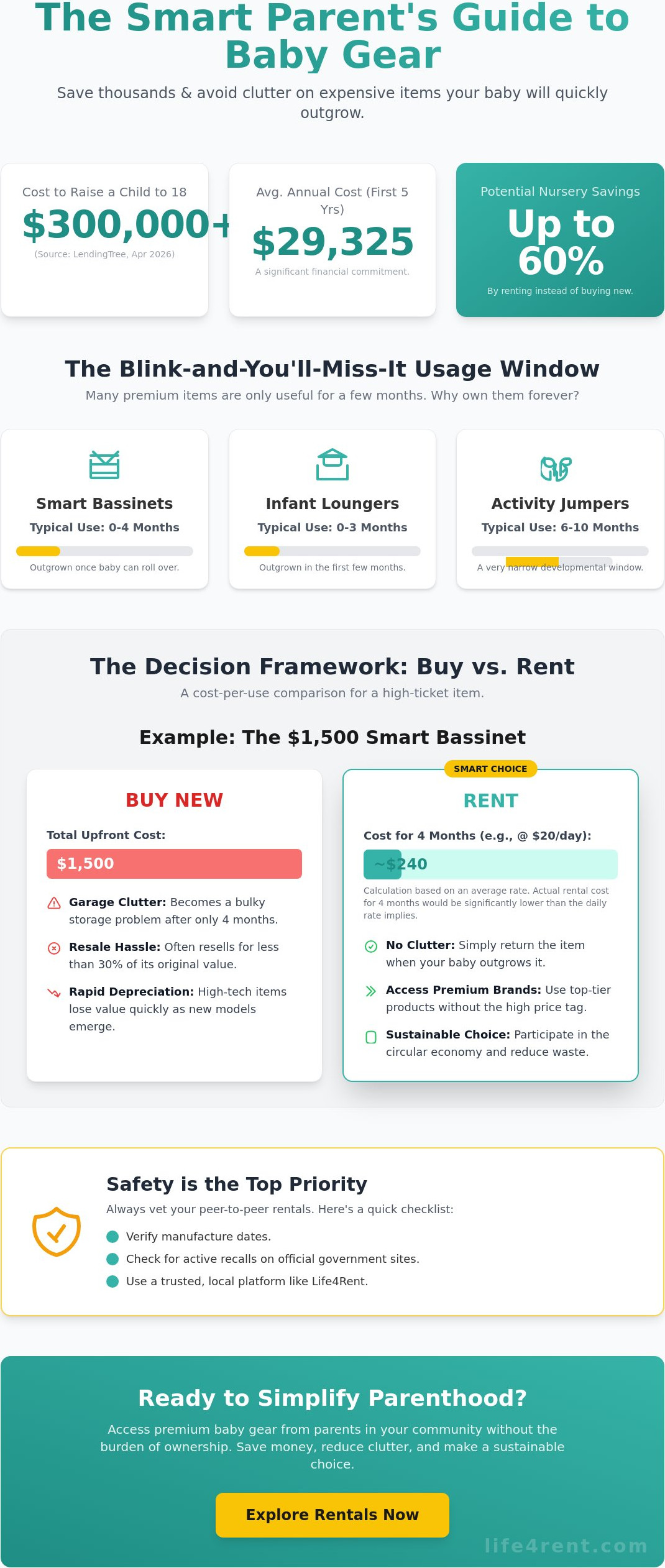
Did you know that the cost of raising a child to age 18 in the U.S. surpassed $300,000 for the first time in April 2026? According to LendingTree, parents now face an average annual cost of $29,325 during those first five years. Most of us want the best for our kids, but you don't need to own every premium gadget to provide a great start. You can avoid buying expensive baby items that your child will only use for a few months and still have a fully equipped nursery.
It's frustrating to spend $1,500 on a high-end stroller system only to have it take up space in the garage three months later. Many parents feel a sense of guilt when they realize they've spent thousands on gear that their baby didn't even like. We've all seen nurseries cluttered with outgrown swings and bassinets that cost a fortune but provided very little long-term value.
You'll find a practical way to manage these costs by identifying which items are worth the investment and which ones are better suited for peer-to-peer rentals. This checklist shows you how to use platforms like Life4Rent to access premium brands for as little as $5 to $26 per day. You'll get a clear breakdown of what to buy, what to rent, and how to keep your home free of unnecessary clutter while saving thousands on your setup.
The financial reality of newborn preparation
Ad campaigns often convince us that every new gadget is a safety requirement. You might feel pressured to purchase the latest high-tech monitor or a $1,200 bassinet before the baby even arrives. However, The Financial Realities of a Newborn are becoming more intense, with the average cost of raising a child to age 18 in the U.S. hitting $303,418 as of April 2026. You can significantly lower your initial nursery budget by up to 60% if you adopt a rental strategy instead of buying everything brand new.
Parents who want to avoid buying expensive baby items often find that the most marketed products have the shortest utility. These items are designed to solve temporary problems, but they come with permanent price tags. You don't need to own a $200 wipe warmer or a $400 designer diaper bag to be a successful parent. A focus on what your baby actually needs for their current developmental stage will save you a lot of stress and money.
To better understand which items are truly essential and which are just expensive additions, watch this helpful video:
The short lifespan of infant products
Most newborn sleepers and bassinets are only useful until the baby starts to roll over. This milestone usually happens around four months of age, leaving you with a bulky item that's no longer safe to use. You should view this gear as a temporary tool rather than a permanent piece of furniture. Many products lose their utility faster than you'd expect:
- Infant loungers: These are often outgrown by month three or four.
- Activity jumpers: Babies typically only use these for a narrow window between six and ten months.
- Bassinets: Most manufacturers recommend stopping use as soon as the baby can push up on their hands.
It makes little sense to own a high-end swing that your baby might only tolerate for a few hours each week before they outgrow it entirely. Developmental toys also lose their appeal within weeks as your child's cognitive skills advance. You'll find that swapping gear out as your baby grows keeps the nursery functional without wasting money on items that have a three-month lifespan.
Hidden costs of ownership and storage
Large items like strollers and playpens take up significant square footage in small apartments or suburban homes. You might find your living room overtaken by bulky gear that's no longer in use, creating a cluttered environment that's hard to clean. You'll spend hours trying to resell used gear, and it usually yields less than 30% of the original price you paid. You have to deal with low-ball offers and the hassle of shipping large boxes or meeting strangers for pickups.
It's often cheaper to rent a premium item for its specific period of use than to buy and store it indefinitely. You avoid the depreciation and the physical space burden at the same time. This is the most practical way to avoid buying expensive baby items that only serve a short-term purpose while still enjoying the quality of top-tier brands.
A checklist of baby items to avoid buying new
You don't need a basement full of gear to be prepared for your first child. It's better to focus on a few high-quality basics and look for alternatives for the rest. If you want to avoid buying expensive baby items, start by looking at products that serve a single developmental stage. Many of these items are marketed as essentials, but they often become clutter before the first year is over.
Infant-only sleepers and bassinets
Smart bassinets are a clear example of high-cost, low-utility items. They offer features like motion and sound sensors, but babies outgrow them by month four. You can save hundreds of dollars by renting these units for the first 12 to 16 weeks. It's much simpler to return the unit when your baby moves to a full-sized crib than to try and sell a used $1,500 sleeper for a fraction of its value. This approach keeps your nursery flexible as your baby reaches new milestones.
Specialised travel and jogging strollers
Standard strollers are essential, but niche models often sit idle in the garage. A specialised jogging stroller or a compact travel model might only see use once or twice a year. In 2025, strollers made up 28.4% of the baby gear rental market because parents realized they don't need to store a bulky running frame in their hallway year-round. You can find these items on peer-to-peer rental platforms for the specific weeks you actually need them. This is one of the easiest ways to avoid buying expensive baby items that take up valuable square footage.
Large activity centres and jumpers
Large activity centres and jumpers are notorious for taking up space. Most babies only use them from age six months until they start walking. These items are difficult to clean and even harder to store once your child is mobile. A rental jumper from a neighbor allows you to provide the entertainment without the permanent footprint in your living room. You won't have to worry about the long-term storage or the depreciation that comes with owning these plastic-heavy products.
Hospital-grade breast pumps
Hospital-grade breast pumps are another category where ownership is often unnecessary. These machines are designed for high efficiency but carry a heavy price tag for individual purchase. Many insurance plans cover the cost of a basic model, but you can rent a professional-grade unit through local marketplaces for much less than the retail price. This gives you the performance you need without the long-term investment. It's a practical choice for parents who want the best equipment without the permanent cost.
The decision framework for high-ticket rentals
You don't have to guess whether a premium product is worth the investment. A simple mathematical approach helps you avoid buying expensive baby items that might only be used for a few weeks. You should treat high-ticket gear as a service rather than an asset, especially when the utility window is narrow. A clear framework allows you to spend your money on things that last for years instead of months.
Resale value for baby gear is notoriously low. Most items sell for less than 30% of their original price on the secondary market. You also have to account for the time you'll spend cleaning, photographing, and listing the item for sale. Peer-to-peer rentals remove these hidden costs of ownership and let you return the gear the moment your baby outgrows it. The savings are often substantial if you compare the rental fee for 90 days against the full retail price.
The cost-per-day comparison
A calculation of the cost-per-day is the most honest way to evaluate a purchase. A $1,500 smart bassinet used for 100 days costs you $15 every single night. You can often rent that same premium sleeper for a daily rate between $5 and $26, which keeps your budget intact. You should generally only buy items that have a projected use of 18 months or more. This simple rule helps you avoid buying expensive baby items that serve a very brief developmental stage.
Brand testing for long-term comfort
Babies are picky. Your child might hate the motion of a specific high-end swing or find a certain bouncer uncomfortable. You don't want to be the parent with a $400 piece of equipment gathering dust because your baby refused to sit in it. A one-week rental serves as a practical test drive for your child. You avoid the buyer's remorse of an expensive item that stays in the box while you gain the peace of mind that comes with a successful trial. You can extend the rental or look for a long-term deal if they love it; you simply send it back if they don't.
How to vet peer-to-peer baby gear for safety
Safety is the primary concern for any parent considering shared equipment. You can avoid buying expensive baby items without compromising on your child's well-being if you know how to inspect gear like a professional. Start by checking the manufacture date printed on the frame or a white sticker on the underside of the item. Plastic components in strollers and car seats can degrade over time, and many manufacturers set a six-year limit on the lifespan of these products.
You should always search the brand and model number for any active safety recalls before you commit to a booking. Inspect all straps and buckles for signs of fraying or mechanical failure. A quick tug on the harness will tell you if the locking mechanism is still reliable. If a buckle feels sticky or doesn't click into place with a clear, sharp sound, it's better to pass on that specific item.
Ask the owner about their specific cleaning and sanitation methods before you finalize your reservation. Reliable owners are usually happy to explain their process and the types of detergents they use. This direct communication ensures that the gear meets your personal standards for hygiene and care.
Structural integrity and recall checks
Look for the ASTM International certification seal on all nursery gear. This mark indicates that the product meets specific safety standards for its category. Check for missing screws or loose joints in wooden furniture like cribs or high chairs. You can download a recall app to scan barcodes on the fly for instant peace of mind. It's helpful to verify that all original safety labels are still attached and legible, as these often contain critical weight and height limits that are easy to forget.
Sanitation protocols for shared items
Most premium baby gear features removable, machine-washable fabrics that are easy to maintain. You can use steam cleaners to sanitise hard surfaces without the need for harsh chemicals that might irritate a newborn's sensitive skin. Verified listings on the Life4Rent peer-to-peer marketplace often include details on whether the gear comes from a smoke-free or pet-free environment. This level of transparency helps you maintain high standards of hygiene while saving thousands on your nursery setup. You should always perform a secondary wipe-down with baby-safe sanitiser when the item arrives at your home to ensure total cleanliness.
Life4Rent makes sustainable parenting more affordable
You can find a more sustainable way to manage the high costs of raising a child by participating in a peer-to-peer marketplace. Most parents are stuck with a garage full of outgrown gear that they don't know how to handle. You can avoid buying expensive baby items by connecting with other parents in your local neighborhood who have already made those investments. This approach keeps premium products in use for longer and prevents the waste associated with short-term ownership. You'll find that many high-ticket items are in excellent condition because they were only used for a few months before being listed.
A peer-to-peer model is more than just a way to save money; it's a practical shift toward a circular economy. The global baby gear rental market grew to $2.8 billion in 2025 because families began to value access over the burden of storage. You reduce the environmental footprint of manufacturing new plastics and textiles every time you choose to rent a stroller or activity center. It's a simple way to keep your home organized while ensuring you always have the best equipment for your baby's current stage. You can access these items for as little as $5 to $26 per day, which is a fraction of the cost of a new purchase.
Monetise your nursery once baby grows
You don't have to let your high-quality items gather dust once your child reaches a new milestone. You can list your gear on Life4Rent and keep 100% of every booking as an owner. This money often helps fund the next stage of equipment your child needs, such as a larger car seat or a toddler bed. It's an effective method to offset the rising costs of parenting in 2026, which have increased by nearly 28% since 2023. You help other new parents stay within their budgets while creating a steady stream of passive income from items you already own. Most owners find that renting out a single high-end stroller can pay for itself within a few months of active listings.
Browse local listings for premium brands
You can browse local listings to find specific models that would otherwise be out of your price range. Many parents find that a high-quality equipment rental is more reliable than a cheap, brand-new alternative. You get to use top-tier brands for a fraction of the retail cost, ensuring your baby is safe and comfortable. This localized approach offers several advantages:
- Reduced logistics: You can pick up gear from a neighbor rather than waiting for shipping.
- Community trust: You can connect with your community through neiyborly sharing.
- Financial flexibility: You avoid buying expensive baby items that you only need for a holiday or a brief developmental window.
You gain the benefit of premium engineering without the long-term financial commitment or the need for extra storage space in your home. It's a practical way to provide the best for your child while maintaining a lean, organized nursery. By choosing to rent instead of buy, you're joining a community of parents who value quality, sustainability, and financial intelligence.
Smart nursery planning for the modern parent
You now have a framework to evaluate whether a purchase is actually worth the investment. You can avoid buying expensive baby items that only serve a three-month window by focusing on cost-per-day and safety vetting. Most parents find that high-ticket items like smart bassinets or travel strollers are much more practical as short-term rentals than permanent fixtures in a crowded apartment.
Peer-to-peer marketplaces provide a way to keep your home organized while accessing the best brands on the market. Life4Rent offers secure peer-to-peer transactions across 17 categories of daily items, including premium nursery gear. You can find convenient local pickup options in cities like Tallinn and Chicago to skip the shipping delays and high retail markups.
It's easy to start your journey toward a more sustainable and affordable nursery setup. Browse affordable baby gear rentals on Life4Rent today to see what your neighbors have available. You'll save thousands of dollars while ensuring your child has access to the highest quality equipment for every developmental milestone.
Frequently Asked Questions
Is it safe to rent a used car seat for my baby?
You should generally be cautious when it's a car seat because you can't always verify the item's full history. It's difficult to know if a seat was in a minor accident or if the internal structure is compromised. If you choose to rent, ensure the owner provides the original manual and confirms the seat has never been in a collision.
How much can I realistically save by renting baby gear instead of buying?
You can reduce your nursery expenses by up to 60% if you focus on renting items with a short usage window. A premium bassinet might cost $1,500 to buy, but renting it for three months usually costs a fraction of that price. This strategy helps you avoid buying expensive baby items that lose 70% of their value the moment you take them home.
Which baby items have the shortest usage life for a newborn?
Bassinets, infant loungers, and bedside sleepers typically have the shortest utility, often lasting only 90 to 120 days. Once a baby can roll over or push up on their hands, these items become a safety hazard. Developmental play mats and specific newborn swings also tend to lose their appeal within the first four months of life.
What is the best way to clean and sanitise rented baby equipment?
You should use a combination of steam cleaning for hard surfaces and baby-safe, fragrance-free detergents for removable fabrics. Most high-end strollers and bouncers have covers that you can wash in a standard machine. A handheld steamer reaches 100 degrees Celsius, which is effective for killing bacteria without the need for harsh chemicals that could irritate sensitive skin.
Can I rent out my own baby gear on Life4Rent when I am not using it?
You can list your gear on the platform to earn back a significant portion of your original investment. Owners keep 100% of the booking fee, which is the verified rate for the Life4Rent marketplace as of May 2026. This passive income can help you pay for the next stage of equipment, such as a convertible car seat or a high chair.
What should I look for in a peer-to-peer baby gear listing?
You should look for clear photos of the manufacture date sticker and the ASTM certification seal. Reliable listings include details about the owner's cleaning habits and whether the item comes from a smoke-free home. It is also helpful to check the owner's response rate and previous reviews to ensure they are a dependable partner.
How do I know if a baby item has been recalled by the manufacturer?
You can use the brand name and model number to search the Consumer Product Safety Commission database for active recalls. Many parents also use mobile apps that scan barcodes to provide instant safety alerts. You should never rent an item if the model number has been flagged for mechanical issues or entrapment risks.
Is it better to buy a cheap stroller or rent a premium one?
You'll often find that a rented premium stroller provides better safety features and maneuverability than a budget model you own. High-end brands use superior suspension systems and durable materials that handle city streets much more effectively. You can avoid buying expensive baby items while still giving your child the comfort of a top-tier stroller for the specific months you need it.
Related guides on Life4Rent
Ready to rent instead of buy? See all baby & kids gear available to rent on Life4Rent →
Life4Rent
Rent it. Earn from it. Own less, access more.
Browse peer-to-peer rentals near you, or list what you own and start earning — all protected by Life4Rent Protect.
About the author
Amsterdam, Netherlands
Joshua writes about the financial side of renting and earning on Life4Rent. His guides focus on helping people understand the real cost of ownership, calculate rental income potential, and make smarter decisions about buying versus renting. He previously wrote on household economics and personal budgeting for a pan-European finance publication.