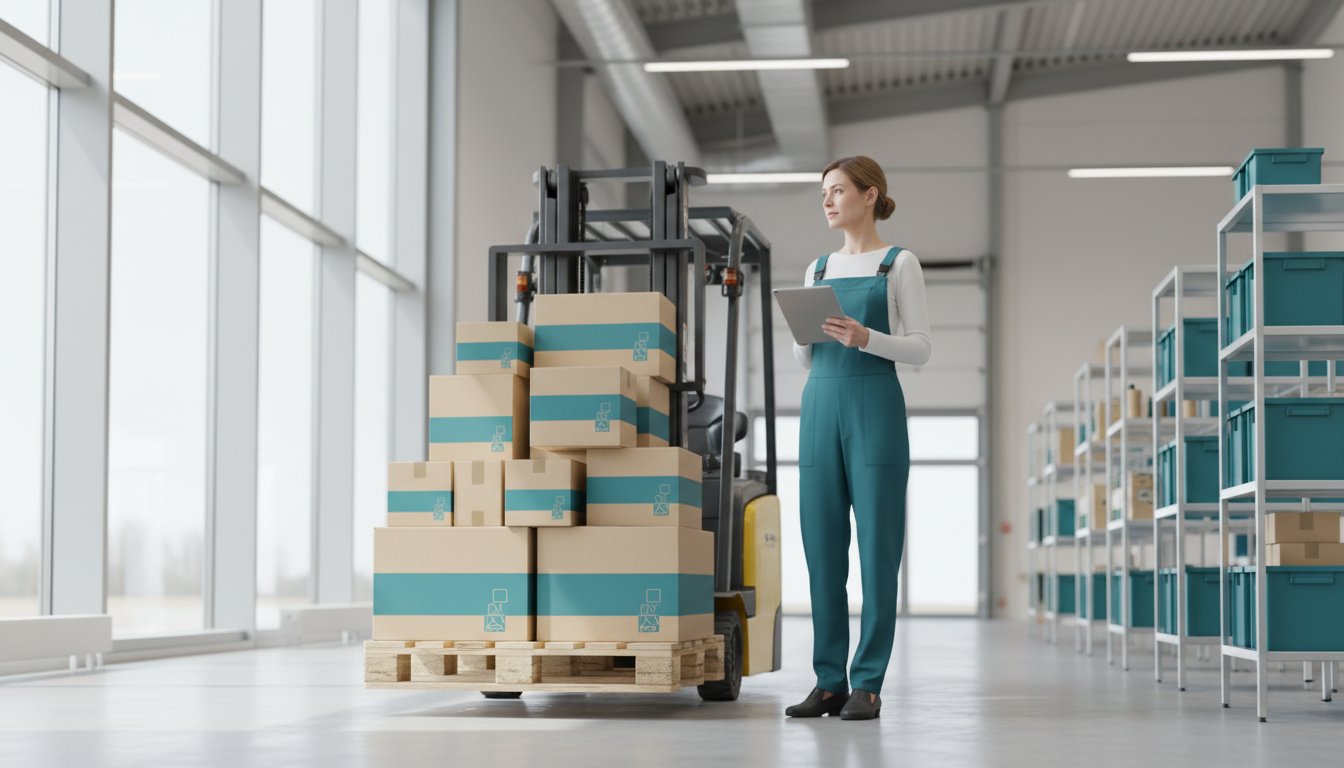
Forklift Rental: A Practical Guide for Small Businesses and DIYers (2026)
April 7, 2026
Published by Life4Rent · Operated by Brohf Software OÜ
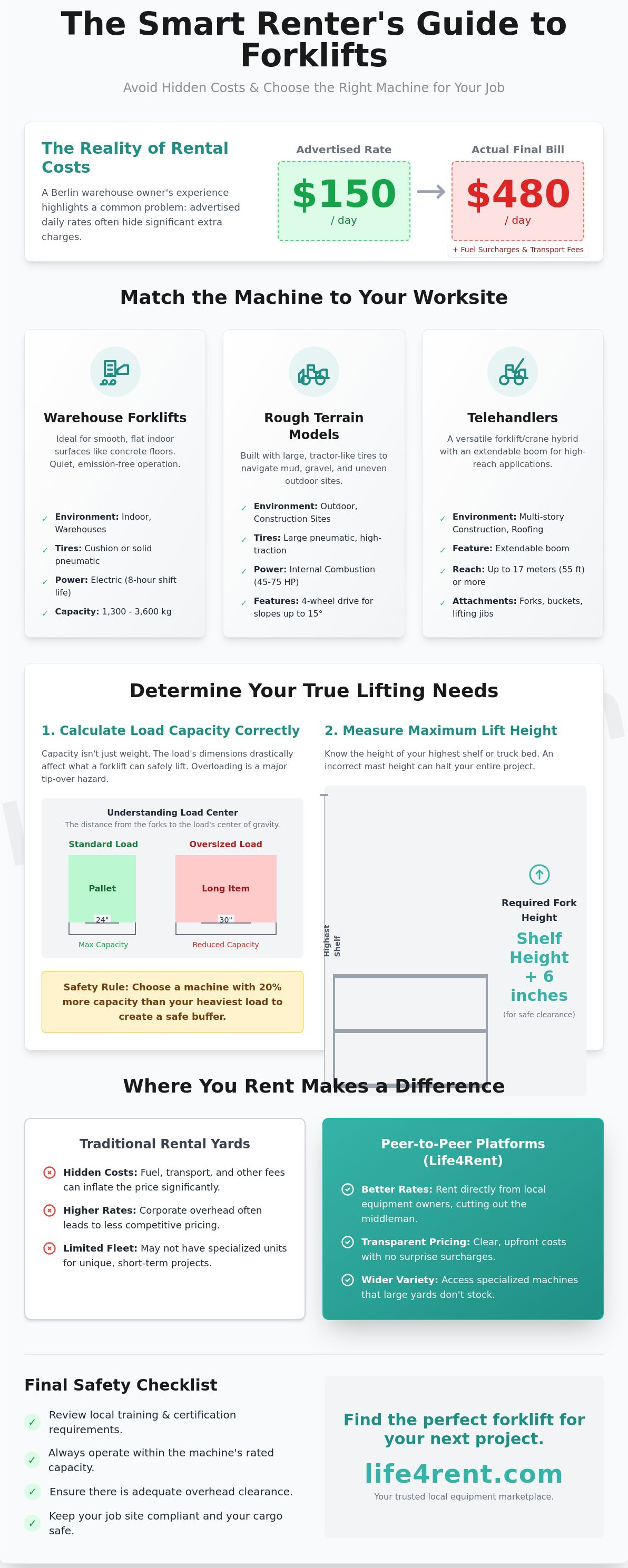
Last Tuesday, a small warehouse owner in Berlin discovered that his $150 daily forklift rental actually cost $480 after fuel surcharges and transport fees were added to the final bill. You probably know the feeling of staring at a rental contract filled with technical terms like load centers and mast heights that seem designed to confuse you. It shouldn't be this difficult to find a machine that just works for your weekend project or warehouse move.
Data from European equipment marketplaces shows that users often pay for 5,000lb capacity machines when a 3,000lb model would handle their 1,200kg pallets just as well. You can save a significant portion of your budget by understanding exactly which specifications your job requires before you commit to a provider. This guide explains how to select the right forklift rental for your specific site conditions and how to avoid the hidden costs often found at traditional rental yards. You'll find a breakdown of common technical specs and a checklist to ensure your cargo stays safe during the transition.
Types of Forklifts and Which One Fits Your Project
Most material handling projects rely on a sturdy machine to move heavy loads safely. You'll find that a Types of Forklifts search reveals dozens of variations, but your forklift rental needs will likely fall into three clear categories. If you pick a machine that's too heavy for your floor or too weak for your terrain, you risk site damage and slow work cycles. Local owners on Life4Rent often list specialized 2,500 kg units or side-loaders that large commercial rental yards don't always keep in their active fleet.
To get a better idea of how these machines operate in a real-world setting, watch this practical guide:
Warehouse Forklifts for Smooth Surfaces
Electric models are common for indoor work because they run quietly and don't emit exhaust fumes. You'll typically see capacities between 1,300 and 3,600 kilograms for standard daily tasks. Battery life for these electric models has improved by 2026, with most 48-volt systems now lasting a full 8-hour shift on a single charge. To support this shift toward electrification, Plugmycar offers specialized charging solutions that can be implemented in various industrial settings. If you work in a food-grade warehouse, these non-marking tires are mandatory to prevent floor scuffing.
Rough Terrain Models for Outdoor Sites
Large tractor-like tires help these machines move through mud, gravel, or over hills without getting stuck. Internal combustion engines provide the 45 to 75 horsepower needed to navigate uneven ground while carrying heavy loads. Construction sites and lumber yards depend on these robust machines for daily operations. If your project is outdoors, you shouldn't rely on a standard warehouse model. These machines usually feature four-wheel drive to maintain traction on 15-degree slopes.
Telehandlers for Height and Reach
Telehandlers act like a hybrid between a forklift and a crane. They feature an extendable boom that can reach heights of 17 meters or more. This makes them a popular forklift rental choice for roofing projects or multi-story construction. You can swap out the forks for buckets or lifting jibs depending on the job requirements. This maneuverability is vital when you're trying to position a 2,000 kg pallet of bricks on a muddy site or a second-story balcony.
- Warehouse Forklifts: Best for tight aisles and indoor pallets.
- Rough Terrain: Essential for unpaved construction sites and mud.
- Telehandlers: Necessary for high-reach lifting and versatile attachments.
The choice comes down to your specific environment and the weight of your heaviest load. It's always better to rent a machine with 20% more capacity than you think you need to account for load centers and safety margins. Peer-to-peer listings often provide more flexibility for short-term projects than traditional industrial yards.
Determining the Right Capacity and Reach
You need to know exactly what you're lifting before you sign a rental agreement. A common mistake is looking only at the gross weight of a pallet. Load capacity actually represents the maximum weight a machine can safely lift at a specific load center. If your load is deeper or wider than a standard pallet, the machine’s lifting ability drops significantly.
Stability is the most important factor on any job site. Mast height determines how high the forks can go, but it also affects the center of gravity. As the forks go up, the forklift becomes less stable. You'll find that most accidents happen because an operator tried to lift a heavy load to the maximum height on uneven ground.
Calculating Your Maximum Load Weight
You should identify the heaviest single item you plan to move during the rental period. Don't guess the weight; look for shipping manifests or manufacturer tags. Most forklifts are rated based on a 24-inch load center, which is the distance from the face of the forks to the center of the load. If your item is 60 inches long, the load center is 30 inches, and your lifting capacity will be much lower than the number on the side of the machine.
Overloading a small forklift creates a serious tip-over hazard for the operator. It's often safer to choose a machine that can handle 20% more than your heaviest item. This buffer accounts for uneven weight distribution or unexpected debris. When you're Managing Safety and Operational Requirements, you'll see that staying within these rated limits is a legal necessity in many European jurisdictions.
Measuring Lift Height and Overhead Clearance
You must check the highest shelf or truck bed you need to reach with the forks. Add at least 6 inches to that height so the operator can lift the pallet clear of the rack. If you're loading a high-clearance shelf at 15 feet, a standard two-stage mast might not be enough. You'll likely need a three-stage mast that extends further while maintaining a lower profile when collapsed.
Measure the lowest point of your facility's ceiling, light fixtures, or entry doors. The collapsed mast height is just as important as the maximum lift height. If your warehouse door is 2.1 meters high, but your forklift mast sits at 2.3 meters when lowered, you won't get the machine inside. This is a common issue for DIYers working in home garages or small workshops.
Sometimes a vertical mast isn't the right tool for the job. If you need to reach over an obstacle or place a load deep into a trailer, consulting the telehandler guide is a smart move. These machines offer forward reach that a standard forklift can't match. When you're ready to compare local options, you can browse available equipment on our marketplace to find a machine that fits your specific measurements.
Assessing Rental Costs and Market Options
Corporate rental yards operate on high volume and often penalize small users with steep premiums. You'll see daily rates that are 40% higher than the pro-rated weekly cost. These companies prioritize long-term construction contracts over a small business owner who needs a lift for six hours. You'll also face various surcharges for fuel and cleaning that aren't always clear in the initial quote.
Transport fees often catch people off guard. A yard located 25 miles from your site might charge $150 for drop-off and another $150 for pickup. These costs stem from the specialized flatbed trucks needed to haul five tons of steel. You can avoid this by looking for a trailer rental near me to handle the transport yourself, provided your truck has the necessary towing capacity.
You should check an industry-standard Assessing Rental Costs and Market Options guide to understand how fuel types and lift heights impact these base prices. Electric models might cost $20 more per day but save you $15 in propane costs. Understanding these trade-offs helps you build a realistic budget for your project without any surprises.
Daily vs Weekly Rental Rates
Short-term rentals work best for unloading a single freight shipment or moving heavy machinery across a shop floor. You'll pay the highest rate per hour here, but it's the most practical choice for tasks finished in a single afternoon. Most owners on Life4Rent set their daily prices to compete with local yards while offering more flexible pickup times that fit your schedule.
Weekly rates provide the best value if your project spans more than two days. You typically pay for three days and get the remaining four for free. This buffer helps if weather or logistics delays your progress. Owners on the platform often negotiate these rates if you message them directly, especially during slower months when equipment might otherwise sit idle.
Corporate Yards vs Peer-to-Peer Marketplaces
Big rental companies provide a sense of security with standardized fleets. However, you often deal with rigid contracts and environmental fees that add 10% to the bill. You also don't always know the exact condition of the unit until it arrives on the truck. These yards can be miles away, which adds to the transport burden mentioned earlier.
P2P marketplaces connect you with local businesses that have idle forklift rental equipment. You get to see the actual machine you're paying for instead of a stock photo. Direct chat with the owner allows you to confirm maintenance history or check if they have specific attachments like side-shifters or fork extensions. This local approach often means the equipment is just a few blocks away, which simplifies logistics for everyone involved.
Managing Safety and Operational Requirements
Safety is the most critical part of any forklift rental agreement. You are responsible for the machine the moment it arrives at your site. Professional rental platforms provide the equipment, but the operational risk stays with you. You must ensure the environment is clear and the ground is stable enough for the specific weight of the machine.
Local regulations in Europe often vary by country, but most regions require a valid operator certificate. You shouldn't assume that a standard driver's license is enough for heavy machinery. Statistics from safety boards show that 70% of forklift accidents could be prevented with proper training. These same strict protocols apply to boom lift rentals and other high-reach gear.
Operator Training and Legal Requirements
You need to check if your local laws require an OSHA-compliant license or a European equivalent for use on private property. Even if the law is flexible for private land, insurance companies often deny claims if the operator isn't certified. You must ensure the person behind the wheel understands the specific controls of that model. Every brand has different lever configurations and weight capacities. Safety gear is non-negotiable. You should provide hard hats, steel-toed boots, and high-visibility vests for everyone near the machine.
You must also understand the stability triangle to prevent tip-overs, which account for 25% of all forklift-related fatalities. Check the load chart located on the dashboard of your specific forklift rental. It tells you exactly how much weight you can lift at various heights and angles. You should never exceed these limits, even by a few kilograms. A 2,000 kg capacity machine might only handle 800 kg when the mast is tilted forward at full height.
Pre-Rental Inspection Checklist
You should perform a thorough walk-around before you sign the delivery note. Examine the hydraulic hoses for leaks or signs of significant wear. A small leak under pressure can cause a total lift failure during a critical move. You must check the tire pressure and tread condition before you start the engine. Uneven tires can cause a forklift to tip when the mast is fully extended. Test the brakes and lift controls to ensure they respond correctly. If the controls feel spongy or delayed, contact the owner immediately. You'll find that a 10-minute check saves hours of downtime later.
The technical condition of the machine is your primary defense against accidents under the 2026 safety standards. You can find reliable equipment by browsing our local listings. View available forklifts for rent to find a machine that meets your safety standards.
Renting a Forklift Through Life4Rent
Life4Rent functions as a bridge between machine owners and people who need equipment for specific projects. You won't deal with a massive corporation or a distant call center. Instead, you connect with local businesses or individuals who have idle machinery. This allows you to negotiate directly with someone who understands the local industry and its specific demands.
This approach often lowers costs because you can find a forklift rental within a 15-kilometer radius of your site. Our peer to peer equipment rental guide explains why this model works for modern businesses. It's a practical way to access high-quality gear without the burden of long-term ownership or expensive maintenance contracts.
Security remains a top priority for every transaction on our platform. The system handles the payment process to ensure both the owner and the renter are protected from fraud. You don't have to worry about cash handshakes or unverified bank transfers. We hold the funds until the rental period begins to ensure everyone follows the agreement.
If the machine doesn't match the description, the support system is there to help. This layer of oversight makes the peer-to-peer market much safer than unverified classified ads. You can also review the owner's history and ratings from 10 or 20 previous renters to gauge their reliability before you book.
How the Peer-to-Peer Process Works
You should start by searching the forklift category and filtering by your city or region. Owners upload real photos of their units, not stock images from a catalog. You can see the actual wear and tear on the tires or the mast before making a decision.
Use the internal messaging system to ask about specific attachments like bale clamps or rotators. Most owners respond within 4 hours during the work week. This direct contact helps you verify that the forklift rental fits your warehouse aisles and height requirements.
Ensuring a Smooth Handover
You need to meet the owner at the scheduled time to walk through the machine's specific layout. Every model has different lever placements or safety interlocks. You should take high-resolution photos of all four sides of the machine upon arrival, focusing on the forks and hydraulic hoses.
This documentation is your best defense against unfair damage claims later. Confirm whether the tank needs to be full on return to avoid a 20 percent refueling surcharge. Clear communication about the return time helps you avoid late fees that can add 50 EUR or more to your daily rate.
Plan Your Next Heavy Lift
You should focus on matching the machine's lift capacity to your heaviest pallet. You'll also need to verify the maximum reach if you're stacking materials in high racks. It's important to check that your site has the proper clearance for the mast height before the equipment arrives on site.
A local forklift rental provides a cost-effective way to handle heavy lifting without a long-term investment. You can find equipment across more than 17 categories on the Life4Rent platform. It's a peer-to-peer marketplace that keeps costs down by connecting you directly with local equipment owners. You can use the real-time chat feature to ask about maintenance records or specific attachments before you commit to a booking.
Transactions stay secure through the platform's payment system. This approach gives small businesses and DIYers access to professional tools that usually stay locked behind expensive commercial contracts. You'll find that talking to the owner directly helps clarify any operational quirks the machine might have. It's a straightforward way to get the job done without the overhead of traditional rental yards.
Find an affordable forklift rental in your neighborhood on Life4Rent
Your project will go much faster with the right equipment in place.
Frequently Asked Questions
Do I need a license to rent a forklift for my own warehouse?
You usually need a valid operator's certificate to use a forklift, even within your own warehouse. Insurance providers and safety regulations in 2026 require documented training to cover potential accidents on private property. If you're using a peer-to-peer platform for your forklift rental, check if the owner requires proof of this license before you take delivery.
What is the average cost of a forklift rental per day in 2026?
You can expect to pay between €115 and €190 per day for a standard 2.5-ton forklift in 2026. Prices vary based on the power source, and electric models often cost 15% more than diesel equivalents due to lower fuel expenses. Weekly rates usually offer a discount, which can bring the daily cost down to around €90 for longer projects.
Can a warehouse forklift be used outside on a gravel driveway?
Standard warehouse forklifts with solid cushion tires don't work on gravel driveways. These machines have low ground clearance and lose traction immediately on loose surfaces, which creates a tipping hazard. You'll need to look for a rough terrain model with pneumatic tires if your project moves outside the warehouse floor.
How much weight can a standard small forklift safely lift?
A standard small forklift safely lifts between 1,500 and 2,500 kilograms. Always check the load center data plate on the machine, as the capacity drops if the load is bulky or off-center. Most 2026 models include digital scales to help you stay within these safe operational limits and avoid accidents.
Who is responsible for the fuel and maintenance during the rental?
You're responsible for the fuel or electricity used during the rental period, while the owner typically covers routine mechanical maintenance. Most peer-to-peer agreements require you to return the machine with the same fuel level it had at the start. If a component wears out from normal use, the cost falls on the owner, but accidental damage is your responsibility.
What happens if the rented forklift breaks down during my project?
Contact the owner immediately through the Life4Rent app if the machine stops working. Most forklift rental agreements include a clause for mechanical failure that isn't your fault, often resulting in a partial refund or a replacement unit. You shouldn't attempt your own repairs, as this might void the insurance coverage for the rental period.
Are there weight limits for transporting a forklift on a trailer?
Forklifts are much heavier than they look, often weighing double their maximum lifting capacity. A small 2,500kg capacity forklift can weigh over 4,500kg, which exceeds the limit of standard car trailers. You'll need a dedicated transport truck or a heavy-duty plant trailer rated for at least 5 tonnes to move the equipment safely between locations.
Can I rent forklift attachments like carpet poles or side shifters?
You can find various attachments like carpet poles, side shifters, or fork extensions on the marketplace. Many owners include a side shifter as a standard feature, but specialized tools like rotators often cost an extra €30 to €50 per day. Make sure the forklift's hydraulic system is compatible with the specific attachment you plan to use for your task.
Life4Rent
Rent it. Earn from it. Own less, access more.
Browse peer-to-peer rentals near you, or list what you own and start earning — all protected by Life4Rent Protect.
About the author
Amsterdam, Netherlands
Joshua writes about the financial side of renting and earning on Life4Rent. His guides focus on helping people understand the real cost of ownership, calculate rental income potential, and make smarter decisions about buying versus renting. He previously wrote on household economics and personal budgeting for a pan-European finance publication.