Folding Bike Rental for Commuting: How to Choose and Rent the Right Ride in 2026
September 23, 2026
Published by Life4Rent · Operated by Brohf Software OÜ
A hefty price tag is the worst way to discover that a folding bicycle doesn't fit your daily routine. Standard bikes frequently face rush-hour bans on regional trains, and leaving an expensive ride at an outdoor station rack invites theft. A folding bike rental for commuting lets you test whether a compact setup solves that awkward last-mile gap between the transit hub and your workplace before you spend serious money.
You shouldn't have to guess whether a specific frame will squeeze onto a packed metro car or slide neatly under your desk. This guide shows you how to evaluate, test, and rent a folding bike for your daily commute without committing to an expensive purchase. You'll see which mechanical details make a genuine difference during a frantic morning rush.
Ahead, you'll find clear European transit luggage policies, crucial comfort factors, and sensible tips on borrowing quality bikes directly from trusted neighbors through community platforms like Life4Rent.
Why Folding Bike Rental Fits Modern Urban Commuting
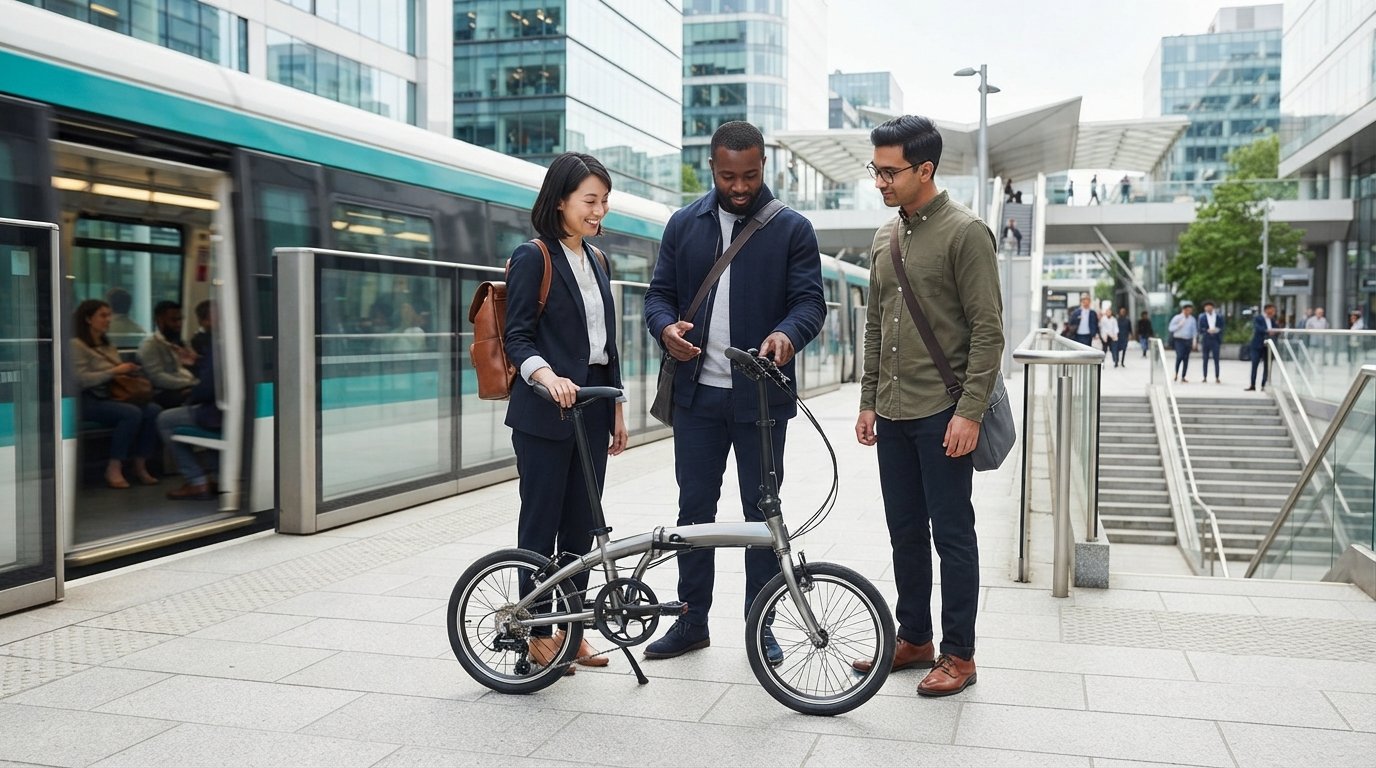
A folding bike rental provides temporary access to compact bicycles designed specifically for mixed-mode transit. City travel often falls apart during the final stretch between a rail terminal and your office door. A flexible folding bike rental for commuting bridges that gap, letting you ride directly from your platform without hunting for an available municipal dock. You simply unlock the hinge, fold the frame down in twenty seconds, and walk straight into your destination.
Outdoor bike racks at major train stations attract professional thieves, especially when high-value components are left unattended for nine hours. Indoor storage eliminates that headache completely. You can slide the folded unit beneath your workstation or tuck it into a hallway closet at home. The history and design of folding bikes illustrates how frame latches evolved so modern joints easily endure daily wear.
This quick video demonstrates how compact folding bikes handle varied urban terrain:
The Multi-Modal Transit Advantage
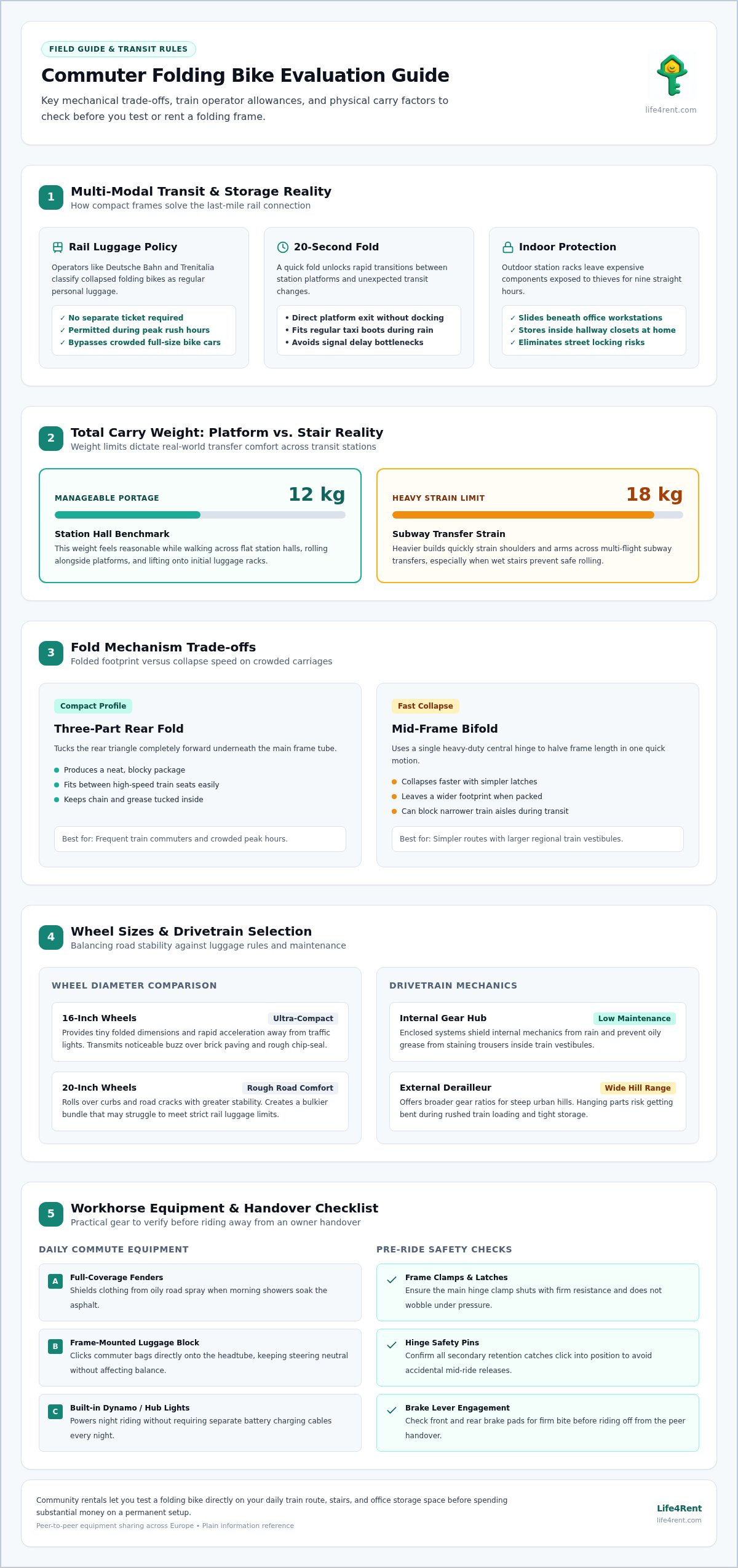
Most European rail operators view collapsed folding bicycles as standard personal luggage. Operators like Deutsche Bahn, Trenitalia, and regional subway systems allow them on board during peak rush hours without requiring a separate ticket. You bypass the crowded full-size bike cars entirely. If a sudden summer thunderstorm rolls in or regional trains face signal delays, you can pop the folded frame into the boot of a regular taxi without bargaining with the driver.
Rental Flexibility Versus Upfront Purchase Risks
Quality folding bicycles require a serious cash outlay upfront. A substantial cash investment on a model you haven't ridden over your actual daily route is a gamble. Smaller 16-inch or 20-inch wheels handle rough cobblestones, tram tracks, and steep bridge ramps differently than full-sized road wheels. A short-term folding bike rental for commuting lets you test gear ratios, carrying weight, and folding mechanisms on real streets before you decide on long-term ownership.
Key Features to Evaluate in a Commuter Folding Bike
Every compact frame involves functional trade-offs between folded footprint, road manners, and portage comfort. When you look into a folding bike rental for commuting, don't focus solely on motor watts or gear counts. The physical reality of hoisting metal up train steps matters far more on a wet Tuesday morning. Mainstream cycling guides outline helpful points on Key Features to Evaluate before settling on a particular geometry.
Fold Mechanism, Dimensions, and Total Weight
Three-part folds tuck the rear triangle forward, producing a neat package that fits easily between high-speed train seats. Mid-frame bifold designs collapse faster with a single central hinge, but they leave a wider footprint that can block busy train aisles. Weight is the true test of portability. A 12-kilogram bike feels reasonable across a flat station hall, but an 18-kilogram model quickly strains your shoulder across multi-flight subway transfers.
Wheel Diameter and Drivetrain Choices
Wheel dimensions determine how the bike responds to road imperfections. Consider how each setup performs during mixed urban travel:
- 16-inch wheels: These provide tiny folded dimensions and rapid acceleration away from traffic lights, though they transmit noticeable buzz over brick paving and rough chip-seal.
- 20-inch wheels: These roll over curbs and road cracks with greater stability, but they produce a bulkier bundle that might struggle to meet tight rail luggage rules.
- Internal gear hubs: Enclosed systems shield internal mechanics from rain and keep oily grease off your trousers inside train vestibules.
- External derailleurs: These offer wider gear ranges for steep hills, though hanging parts risk getting bent during rushed train loading.
Commuter Accessories and Weather Equipment
Practical accessories transform a weekend leisure folder into a dependable daily workhorse. Full-coverage fenders shield your clothing from oily road spray when morning showers soak the asphalt. A dedicated luggage block fixed to the front headtube lets you click a commuter bag directly onto the frame, preserving neutral steering geometry without throwing off your balance. Built-in dynamo or hub-powered lights also save you from juggling extra charging cables each night.
You can check these practical differences over your real journey without guessing. Borrow diverse setups directly from neighborhood riders on Life4Rent to see which folding layout actually fits your daily routine.
How Folding Bike Rental Compares to Bikeshare and Ownership
Urban commuters usually weigh three choices for two-wheeled travel: municipal bikeshare programs, buying a brand-new setup, or arranging a folding bike rental for commuting. While public fleets and personal ownership sound straightforward on paper, both introduce friction that can disrupt a daily work schedule. Municipal docks leave you at the mercy of dock availability, while outright ownership saddles you with ongoing maintenance and indoor space constraints.
Folding Rental Versus Municipal Bikeshare Programs
Public schemes work well for spontaneous trips, but they falter during morning transit peaks. You might arrive at your terminal station only to find every nearby bikeshare dock empty. Even worse, you could reach your office building with two minutes to spare, only to find every return cradle occupied, forcing you to pedal six blocks away just to park. A personal rental bypasses this lottery entirely:
- Guaranteed availability: The bike stays in your custody overnight, ready to depart your apartment when you are.
- Direct building access: You ride directly to the office door, fold the unit, and carry it to your workstation without searching for street bays.
- Noticeably lighter machinery: Municipal share bikes often weigh upwards of 23 to 25 kilograms to withstand street vandalism. A rented commuter folder typically weighs half that amount, making morning bridges and sprints significantly less exhausting.
Short-Term Rental Versus Direct Bike Ownership
Outright bike ownership requires ongoing mechanical care and domestic floor space. City flats often lack secure basements, forcing owners to crowd narrow hallways with grease-covered frames. If you commute by bike primarily from April to October, an owned bicycle simply gathers dust and loses value across four damp winter months.
Temporary leases remove the headache of long-term component wear. The equipment owner handles cable replacements, brake pad wear, and drivetrain servicing between rental periods. You can explore how local borrowing shifts household spending in this guide to peer to peer equipment rental across everyday goods.
A flexible folding bike rental for commuting gives you access during optimal weather without chaining you to a depreciating asset. You pay for the mobility you use, leave the winter storage issues behind, and keep your living room free of bike clutter.
Commuter Field Checklist: Route Testing and Bike Inspection
Never pedal away from a rental pickup without running through basic mechanical checks. Unlike rigid bicycles, folding frames rely on moving hinges that bear your full body weight over potholes and curb drops. A quick inspection protects your safety and ensures your folding bike rental for commuting operates reliably from day one.
Physical Bike Inspection Before You Accept a Rental
Take five minutes at the handover point to inspect critical structural joints. Ask the owner to show you how the bike folds, then practice collapsing and assembling the frame three times yourself:
- Frame hinges and latches: Open and close the central frame latch and handlebar stem clamp. Latches should close with firm, positive resistance without requiring brute force. Look closely for stripped threads, hairline cracks, or loose hardware around the clamping plates.
- Brake cable clearance: Squeeze both brake levers while turning the handlebar from side to side. Tightly routed housing can bind inside hinge folds, so verify that the cables move smoothly without dragging against the rims or discs.
- Seatpost tolerance: Extend the saddle to your riding height and tighten the quick-release collar. Sit down firmly on the saddle; if the post slips downward even slightly, the collar clamp needs immediate adjustment.
- Tire condition and true wheels: Spin both wheels to verify they run straight without rubbing against brake pads or frame stays. Check the sidewalls for deep cuts or low pressure.
Real-World Route Testing and Transit Trials
A trial run on a Saturday morning reveals timing bottlenecks without the pressure of a weekday schedule. Carry the folded bike up your actual office stairwell and through station ticket gates. That low-stress trial shows you whether the carry weight feels manageable across subway overpasses or multiple flights of stairs.
Check the luggage dimensions enforced by your local transit operators. Trenitalia accepts folded bikes within 80 x 110 x 40 cm, while Eurostar requires a protective bag under 85 cm. A quiet weekend ride also gives you space to map secondary bike lanes that bypass congested multi-lane junctions and narrow bridges.
Once you are ready to test a practical route, you can find local bikes on Life4Rent and arrange a neighborhood pickup that matches your schedule.
Finding Your Commuter Folding Bike on Life4Rent
Traditional corporate rental fleets often restrict you to one standard model, usually stationed near city centers or tourist hotspots. Life4Rent operates differently by connecting you with everyday neighbors across 17 distinct rental categories, including sports equipment and outdoor mobility gear. Setting up a folding bike rental for commuting through a local platform gives you access to diverse frame styles, from ultralight runabouts to robust geared folders. This neighborhood approach keeps quality equipment in active circulation while cutting down on unnecessary consumption.
Browse Local Listings in Your Neighborhood
Local pickups eliminate shipping delays, packaging waste, and long trips across town. You can filter listings by your specific district to find owners located within easy walking distance of your apartment. Before you reach out, review our practical guide to neighborhood peer-to-peer rentals for advice on smooth communication. Direct platform messaging lets you ask owners specific questions about tire clearance, folded dimensions, and whether they include useful commuter accessories like lights, a pump, or a lock.
Arrange Commuter Terms and Pick Up Your Ride
Modern work schedules are rarely uniform, especially if you split time between an office desk and remote work at home. You can book a folding bike rental for commuting that matches your exact schedule, whether you need a five-day trial run or an ongoing arrangement for the dry summer months. Clear messaging allows you and the host to agree on pickup windows that fit around your train timetable, avoiding corporate desk queues.
Take a few minutes during the handover to inspect the equipment together. You can test the latches, confirm brake responsiveness, and set the saddle height while the owner points out any specific folding quirks. Once you feel confident with the latching mechanisms, you can roll straight into your morning transit routine. When you are ready to find a dependable ride near your doorstep, head over to Life4Rent to browse available listings in your neighborhood.
Test Your Commute Route Before You Buy
City transit works best when your equipment adapts to your day rather than complicating it. A practical folding bike rental for commuting lets you confirm whether smaller wheels and quick-folding frames handle your daily train transfer, office stairs, and apartment storage. You skip the hefty upfront purchase price and avoid the empty-dock lottery of municipal bikeshares.
Local sharing makes route testing simple. You can arrange direct neighborhood pickups with zero delivery waiting times, letting you inspect the latches in person before setting off. Life4Rent hosts an active community spanning 17 peer-to-peer categories, making it easy to book short trial runs or longer seasonal arrangements that match your schedule.
A smoother morning trip is well within reach once you find the right frame geometry. Head over today to find a folding bike to rent on Life4Rent and experience your daily transit route with total peace of mind.
Frequently Asked Questions
Can I take a rented folding bike on the train during peak commute hours?
Yes, European rail networks generally permit collapsed folding bicycles on peak-hour trains without an extra ticket. Operators treat folded frames as standard hand luggage rather than full-sized bicycles. A folding bike rental for commuting bypasses the rush-hour bans that affect standard bicycles. You just need to fold the frame before passing through the station gates, and ensure it meets individual operator dimensions or carry-bag requirements.
How heavy is a typical folding commuter bike to carry on stairs?
Most standard folding commuter bikes weigh between 11 and 14 kilograms. Electric-assist folding models run heavier, typically tipping the scales between 16 and 20 kilograms due to the integrated motor and battery pack. If your daily route features multiple flights of subway stairs or long footbridges, a lighter non-electric model remains far easier to carry across platforms during transfer windows.
Do I need special tools to fold and unfold a rental bike daily?
No tools are needed to fold or unfold standard commuter models. Manufacturers build these frames with tool-free quick-release clamps, locking levers, and secondary safety pins that you operate by hand. With a little practice, collapsing the frame, dropping the seatpost, and folding the pedals takes less than thirty seconds. Ask the owner to demonstrate the specific latch sequence when you pick up the gear.
Is a folding bike safe to ride over rough city streets and potholes?
Folding bikes handle typical city streets safely, but smaller wheels react differently to road hazards than full-sized tires. Sixteen-inch and twenty-inch wheels drop deeper into potholes and offer less rollover momentum over high curbs. Keep your eyes further down the road, avoid sunken drain grates, and run slightly wider tire pressures. A dedicated folding bike rental for commuting lets you test how the ride feel matches your street surfaces.
What should I check on the bike hinges before riding each day?
Check that every frame hinge latch snaps fully flush against the tubing and that secondary safety catches are engaged. The main hinge bolt should show no side-to-side play when you apply pressure to the handlebars. Make sure the stem clamp is securely closed and that the seatpost collar holds firm without sliding under your weight. A thirty-second check prevents unexpected hinge looseness while you ride.
Can I store a rented folding bike inside my office or under a desk?
Most offices gladly welcome folded bicycles indoors because they take up minimal floor space. A standard folded frame measures around 60 by 60 by 30 centimeters, which slips neatly under a standard office desk or behind a reception cubicle. Bring a lightweight slipcover or mat along if you commute on wet days. That simple precaution keeps melting road water and grime off the office carpet.
Life4Rent
Rent it. Earn from it. Own less, access more.
Browse peer-to-peer rentals near you, or list what you own and start earning — all protected by Life4Rent Protect.
About the author
Stockholm, Sweden
Stella researches and writes about sustainable consumption and the circular economy for the Life4Rent Renting Academy. She previously worked at a Nordic sustainability research institute studying how access-over-ownership models reduce household CO₂ emissions, and translates that research into practical guides for everyday renters.