Dance Floor Rental: Size, Cost and How to Book One
November 28, 2026
Published by Life4Rent · Operated by Brohf Software OÜ
Dance Floor Rental: Size, Cost and How to Book One
A dance floor rental comes down to four decisions: how many square feet you need, what surface it will sit on, what the full quote includes, and whether you can book the rest of your event gear at the same time. Get those four right and the floor is the easy part of the party. On Life4Rent you can search by item, location and dates, so you can look for a floor and the gear around it in one place and compare what is actually available for your date.
TL;DR
- Plan about 4.5 square feet per dancer. A reception for 80 to 120 guests usually needs a floor of roughly 180 to 225 square feet, around 15×15 to 16×16 feet.
- In the US, a wedding dance floor typically rents for $400 to $1,500, and most couples spend $600 to $900 for a standard floor sized to their guest list.
- Grass, gravel and uneven ground need a subfloor under the dance floor, so ask about it before you book.
- Ask for an itemized written estimate: delivery, setup, removal, taxes and add-ons.
- Renting the floor together with sound, seating and decor means one set of dates, one delivery plan and one total to compare.
Table of Contents
- What a dance floor rental actually is
- How big should your dance floor be?
- Choosing a floor type
- What dance floor rental costs in the US
- Venue checks before you book
- Renting multiple event items together
- Perspective: why renting from people nearby works for events
- Where to find your dance floor on Life4Rent
- A simple booking timeline
- FAQ
- Sources
What a dance floor rental actually is
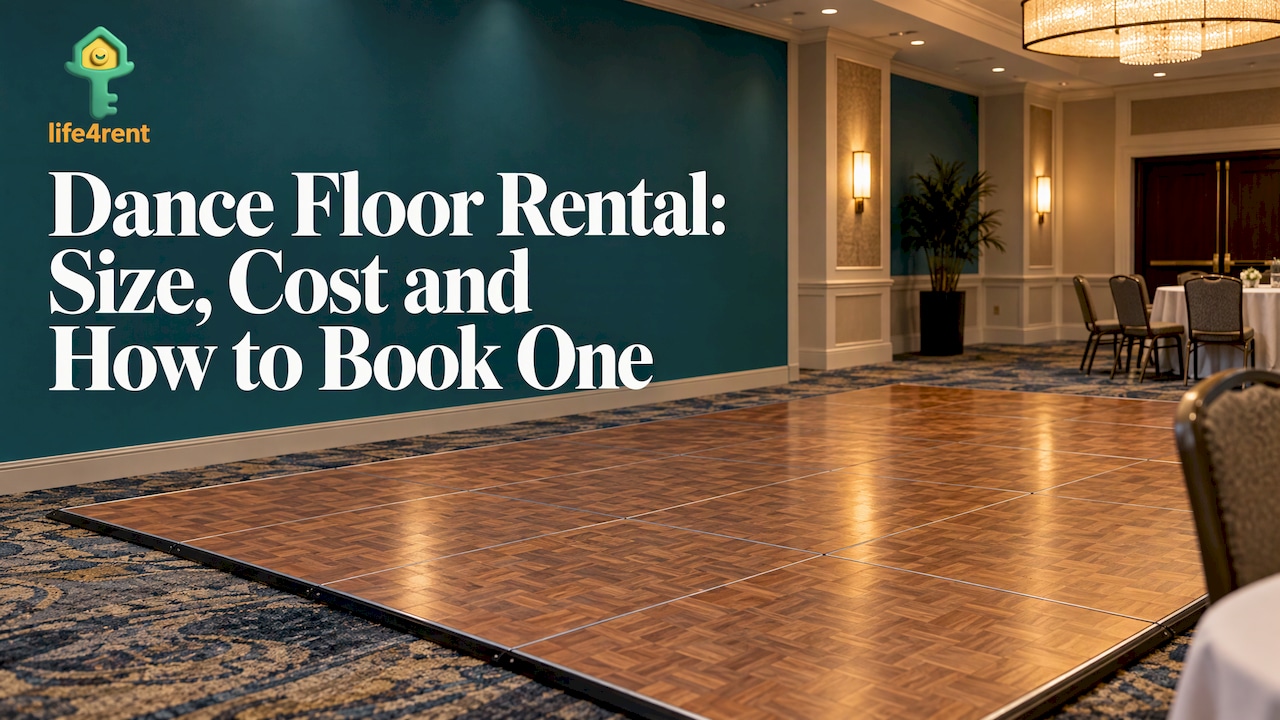
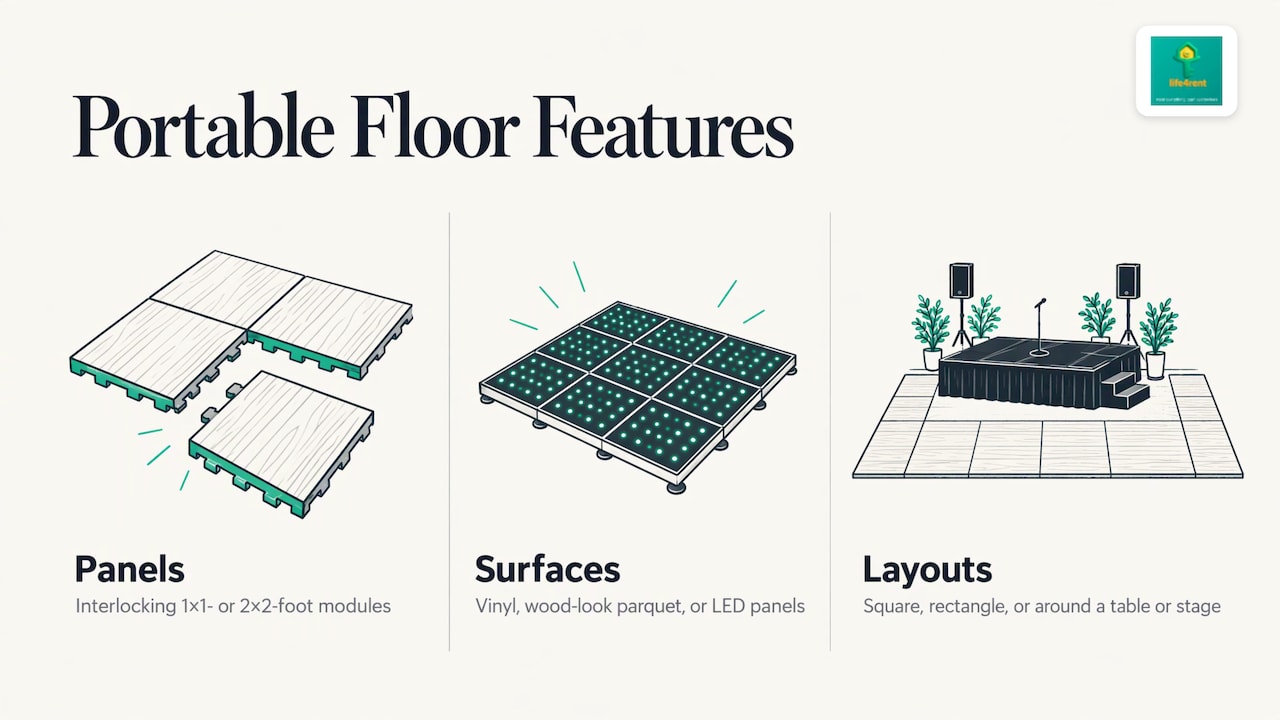
Most rented dance floors are portable. They are made of interlocking panels, often 1×1 or 2×2 feet, that snap together on top of the ground, a patio, a carpeted ballroom or a lawn. Surfaces range from plain vinyl and wood-look parquet to LED panels that light up. Because the panels are modular, you can order a square, a rectangle or a floor that wraps around a table or stage.
For you as the organizer, that means three things. The size is flexible, so you pay for the footprint you need. The floor must be delivered and assembled, so access and timing matter. And the surface underneath decides whether you need extras.
How big should your dance floor be?
The standard planning figure is about 4.5 square feet per dancer. Wedding pricing guides apply it this way: a reception with 80 to 120 guests needs roughly 180 to 225 square feet, which is a 15×15 to 16×16 foot floor.
The trick is that not everyone dances at once. Plan for the number of people on the floor at the busiest moment, not your full guest list. A simple way to work it out:
- Estimate the share of guests who will dance at the same time. A quiet cocktail party might be one in five. A wedding with a dance-heavy crowd might be one in three or more.
- Multiply that number of dancers by 4.5 square feet.
- Round up to the nearest standard dimension the rental offers.
Worked example: 120 guests at a birthday party, with about 40 percent expected to dance together. That is 48 dancers. 48 × 4.5 gives 216 square feet, so a 15×15 floor (225 square feet) fits, and a 16×16 gives a little breathing room.
Go bigger for high-energy crowds, line dances, or a floor shared with a DJ or band. Go smaller for a casual dinner event where dancing is a short moment after the toasts. A floor that is slightly too big looks empty at the start of the night, while one that is too small makes people stay at their tables, so it is better to sit near your estimate and adjust for your crowd.
Choosing a floor type
The look and the use matter more than most renters expect.
- Vinyl or plain panels: Neutral, durable and the most common option for weddings, school dances and corporate events.
- Wood-look or parquet: A warmer look for weddings and formal receptions, and a good fit for a tent or a hall with a plain floor.
- LED or light-up panels: Best for evening parties, birthdays, quinceañeras and proms where the floor is part of the entertainment.
- Outdoor-rated floors: Designed to sit over grass or gravel, usually paired with a subfloor.
Let the venue and the mood decide. If the floor will be under a tent at dusk, the lighting around it matters as much as the surface. If you are planning an outdoor summer event in a tent, it is also worth thinking about guest comfort, and our guide to portable AC rental covers sizing and safety for cooling a space.
What dance floor rental costs in the US
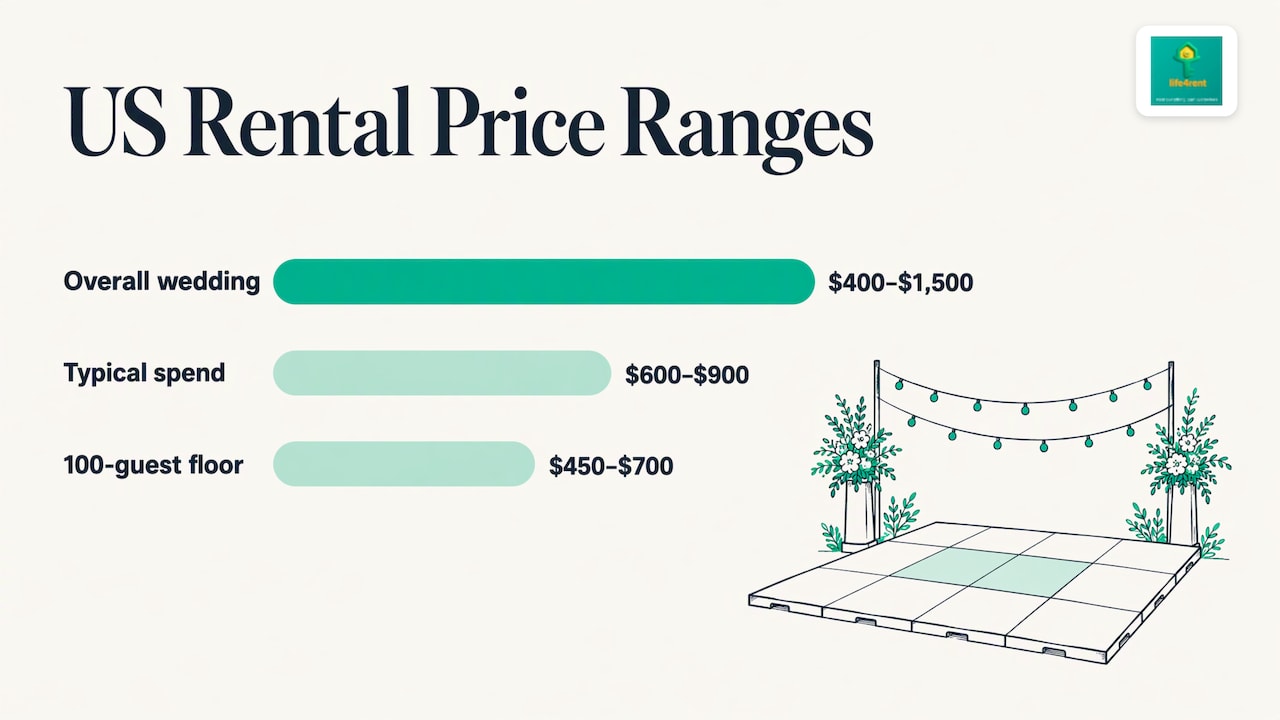
A wedding dance floor rental costs $400 to $1,500 in the US according to 2026 pricing guidance, and most couples land between $600 and $900 for a standard floor sized to their guest list. The same source puts a 15×15 to 16×16 floor, enough for around 100 guests, at roughly $450 to $700 with most vendors.
Two features of that pricing are worth knowing. First, size is the biggest lever: vendors price by square foot or by panel, so a 12×12 floor and a 24×24 floor can differ by $800 to $1,000 at the same rate. Second, prices vary by city, season and floor type, so treat these ranges as a starting point and compare local listings for your own dates. Weekends in wedding season and holidays are the busiest times, so booking early gives you more choices.
What can add to the total
The floor itself is rarely the only line on the bill. When you compare quotes, look for these:
- Delivery and pickup, often based on distance.
- Setup and teardown, sometimes included and sometimes charged separately.
- Subfloor or underlayment for grass, gravel, carpet or uneven ground.
- Edging or ramps so guests step on and off safely.
- Rental period. Many rentals run from setup the day before to teardown the day after, so check the exact window.
- Taxes, damage coverage and add-ons such as lighting.
Ask for the estimate in writing with each of these shown separately. Two quotes with the same headline price can differ by a few hundred dollars once delivery and subfloor are counted, and an itemized list is the only fair way to compare.
Venue checks before you book
A floor that arrives and cannot be installed is a failed rental. Walk through these before you commit.
- Surface. Hard, flat floors such as concrete, tile or wood are the simplest. On grass, soil, gravel or a sloped patio, plan for a subfloor of plywood or subfloor panels so the dance floor stays level.
- Access. Measure doors, hallways, elevators and any stairs. Panels are heavy in a stack, and the delivery crew needs a clear path from the truck to the room.
- Space. Add the floor footprint to your layout of tables, the DJ station, the buffet and walkways. Leave room around the edge so guests can reach the floor without squeezing past chairs.
- Edges and safety. Sloped edging makes stepping on and off easier and works for guests using wheelchairs or walkers. Light the perimeter well for evening events, and keep cables off the walking path.
- Timing. Confirm when the venue lets vendors in, how long setup takes, and when everything must be out. Tight load-in windows are a common reason for delays.
- Rules. Some venues and parks have their own requirements about floor protection, insurance or approved vendors. Ask the venue manager before you reserve.
Installation itself should be done by the owner or a crew who has handled the system before. Panels are laid from a corner or the center, tapped into place with a rubber mallet, and checked for gaps and level spots. With a large floor, two or more people make it faster and safer.
Renting multiple event items together
A dance floor is rarely rented alone. A party usually needs sound, lighting, seating, decor and sometimes a backdrop or arch. Renting these together has practical benefits:
- One set of dates. You confirm when everything arrives and leaves instead of coordinating several pickups.
- Fewer delivery fees. Items that come from the same owner or area can often travel together.
- One total to compare. You see the full cost of the setup, not a pile of separate line items.
- Fewer gaps. A floor with no sound or a stage with no lighting is a common planning miss.
Here is a simple bundle checklist for a 100-guest event:
| Item | What to check |
|---|---|
| Dance floor | Size, surface, subfloor, edging |
| Sound system | Power needs, speaker coverage, microphone |
| Lighting | Dance floor wash, outlets, safe cable routing |
| Seating and tables | Count, delivery, setup help |
| Decor | Backdrop, centerpieces, arches |
For the sound side, our guide to sound equipment rental explains how to choose, book and save. For the ceremony or photo backdrop, see wedding arch rental for costs and styles. And if you are styling a room, renting furniture shows what to rent and what to check.
When you request a bundle, tell each owner the same event date, the venue address, the load-in time and the setup surface. Then compare totals, not just the floor price.
Perspective: why renting from people nearby works for events
Events rarely need equipment for more than a day or two, and that is exactly the kind of use a peer-to-peer marketplace is built for. Many owners have gear sitting idle between occasions. Renters get temporary access without buying something they will use once.
At Life4Rent we cover 17 rental categories, including Party & Production and Event Spaces, and you search by item, location and dates, so what you see depends on what is available near you for your event. That matters for a dance floor, where delivery distance and timing affect the whole plan.
We also built the platform around the things renters and owners worry about most: secure payments, identity verification and optional protection. When the floor, the sound and the seating can all be searched in one place, planning gets simpler for families, organizers and neighbors who are sharing what they own.
the author
Where to find your dance floor on Life4Rent
Start with the public listing catalog and filter by your city, your dates and the category that fits, such as Party & Production for event gear or Event Spaces if you also need a room to put it in. Because availability depends on location and the dates you choose, check a few listings, message the owners about size, surface and delivery, and compare the total, not only the daily rate.

If you own a floor, speakers or other event gear that sits unused for most of the year, you can list it on Life4Rent and earn income from it, with earnings tracking built in for owners.
A simple booking timeline
- Eight to twelve weeks out: Set your guest count, estimate the floor size, and shortlist surfaces and venues. Busy dates fill first.
- Four to six weeks out: Request itemized quotes, confirm access and surface details with the venue, and reserve the floor and other gear.
- One to two weeks out: Confirm delivery windows, contact names and phone numbers, and the power plan for sound and lighting.
- Event day: Have someone at the venue to receive the delivery, mark the floor location and check the setup before guests arrive.
- After the event: Clear the floor, follow the return instructions, and make sure the pickup time is agreed in advance.
FAQ
How much dance floor do I need for 100 guests?
About 180 to 225 square feet is a common answer, which is a 15×15 to 16×16 foot floor at 4.5 square feet per dancer. If most guests will dance at once, step up to the larger size. If dancing is a short part of the night, the smaller floor works well.
Can I rent a portable dance floor for an outdoor event?
Yes, portable floors are made for this. On grass, gravel or uneven ground you will usually need a subfloor so the panels stay level and stable. Ask the owner about outdoor use, edging and the extra time setup will take.
What should I ask before I rent a dance floor?
Ask for the size and surface, the rental period, what delivery and setup cost, whether a subfloor is included, and the total with taxes and add-ons. Get it in writing so you can compare it fairly with other quotes.
Can I rent several event items at once?
Yes. You can search for the floor, sound, lighting, seating and decor and plan them around the same event date and location. Tell each owner your venue, load-in time and setup surface so deliveries line up.
Sources
Recommended
Life4Rent
Rent it. Earn from it. Own less, access more.
Browse peer-to-peer rentals near you, or list what you own and start earning — all protected by Life4Rent Protect.
About the author
Dublin, Ireland
Michael covers consumer rights, rental law, and EU platform regulation for the Life4Rent Renting Academy. He has reported on digital market policy and renter protections across Europe, and brings a clear, practical perspective to topics like deposit disputes, insurance, and the legal rights of renters and owners.