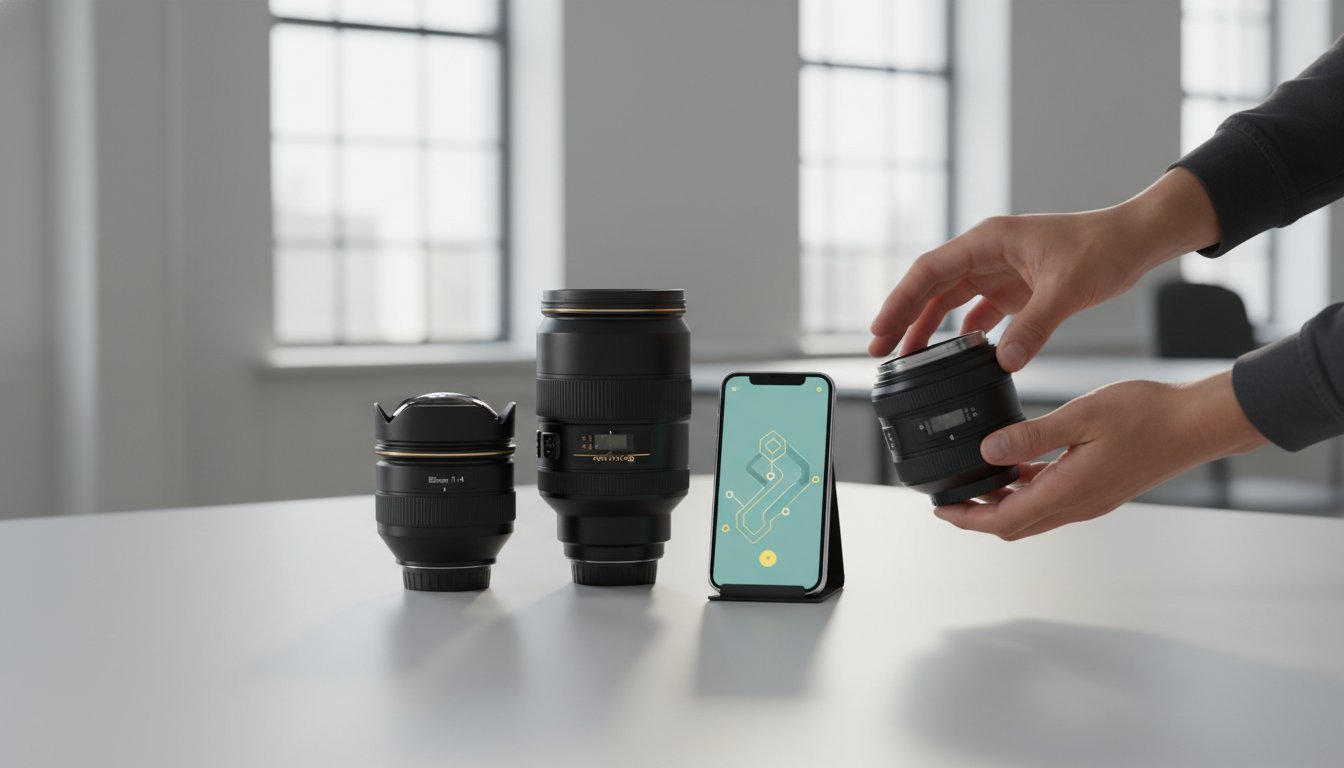
Camera Lens Rental for Beginners: A Practical Guide to P2P Gear
May 26, 2026
Published by Life4Rent · Operated by Brohf Software OÜ
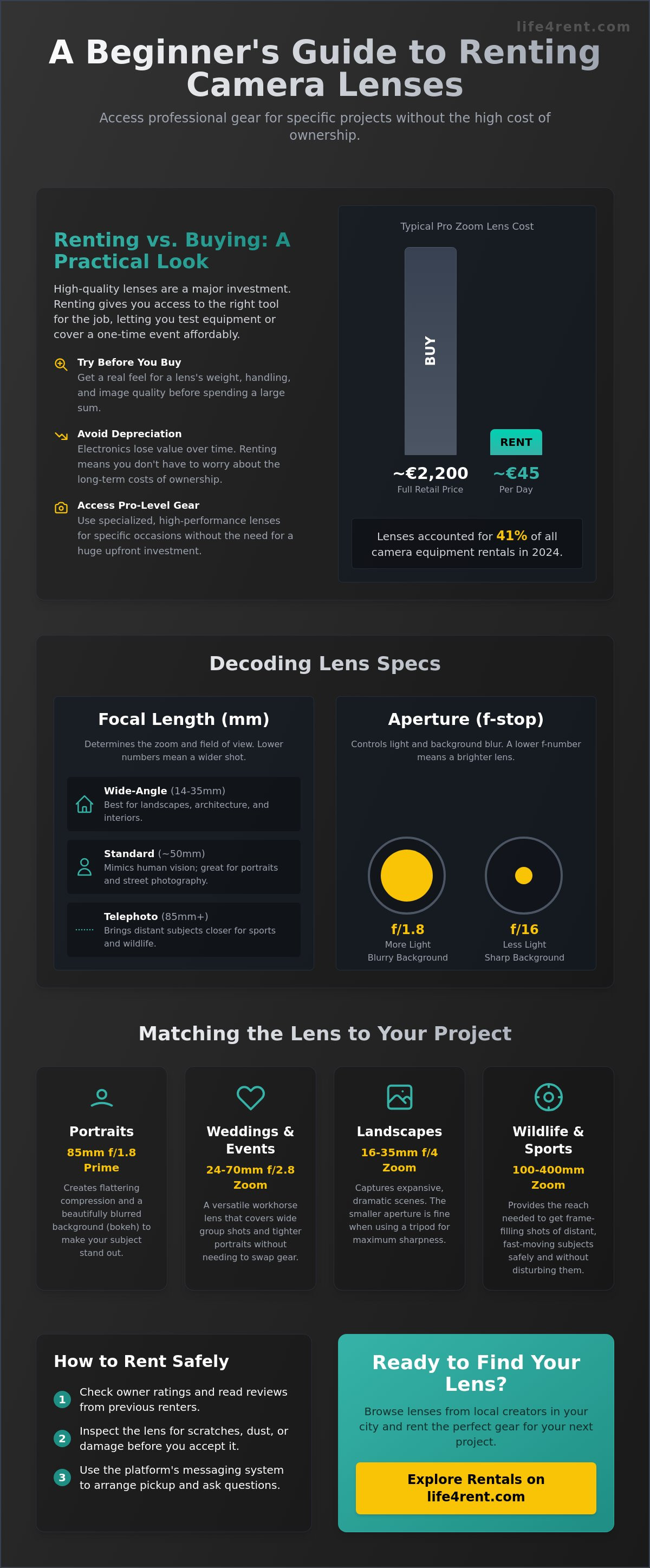
Lenses accounted for 41% of all camera equipment rental transactions in 2024. Most photographers quickly learn that the glass in front of the sensor defines the image, yet the cost of professional optics remains a major barrier for many. It's common to feel overwhelmed by technical jargon like aperture or focal length while staring at a price tag that equals a month's rent.
You want to capture a special event with clarity, but traditional rental houses often demand massive deposits that stay locked up for weeks. This guide to camera lens rental for beginners helps you skip the confusion and access high-quality gear through your local community. You'll find out how to choose the right tool for your specific needs and rent it safely without overspending.
We'll look at how peer-to-peer platforms like Life4Rent provide a practical way to test equipment and build your photography skills. This approach lets you focus on the creative process instead of the logistics of ownership. You can explore different styles of photography while keeping your budget intact.
Why camera lens rental makes sense for beginners in 2026
Professional photography often feels like a hobby reserved for those with deep pockets. Most people start with a kit lens that comes in the box, but you'll soon realize its limitations. These basic lenses often struggle when the sun goes down or when you're trying to capture a bird in a distant tree. High-quality glass usually carries a price tag that exceeds the cost of the camera body itself. Lenses accounted for 41% of all camera equipment rental transactions in 2024, proving that even experienced shooters prefer to rent rather than buy everything.
To get the most out of your gear, understanding camera lens basics is a great place to start. It helps you see why a piece of glass can cost more than the camera body it sits on. This knowledge makes the decision to rent much easier. You can access the same tools used by professionals without the massive upfront investment.
To better understand the differences between rental options and buying, watch this helpful video:
The cost-benefit of renting over buying
The purchase of a professional lens often requires an investment of several thousand euros. For a beginner, this is a heavy financial burden that doesn't always make sense. Rental fees usually represent a small fraction of the retail price, which makes high-performance gear accessible for a weekend project or a once-in-a-lifetime trip. You get to use a tool that produces stunning results without the long-term debt.
You also avoid the hidden costs of ownership. Electronics lose value quickly, and you don't have to worry about depreciation when you use a rental platform. Local peer-to-peer marketplaces like Life4Rent let you find gear in your own neighborhood and skip the high shipping costs of traditional shops. It's a practical way to get your hands on high-end electronics while supporting other creators in your city.
Trying before you buy
Online reviews are helpful, but they can't tell you how a lens feels in your hands. Weight, balance, and the way the focus ring turns are all personal preferences. A few days with a lens helps you decide if it actually fits your shooting style before you spend a large sum of money. You might discover that a lens you thought you wanted is actually too heavy for a full day of shooting.
This is exactly why camera lens rental for beginners is such a smart move. You can even rent two similar lenses for a weekend to compare them side-by-side. This practical experience ensures that when you do decide to buy, you're making an informed choice based on real-world use rather than marketing hype. It turns a risky purchase into a confident investment in your craft.
Decoding lens specs without the technical jargon
The numbers on the side of a lens shouldn't require a technical degree to understand. When you explore camera lens rental for beginners, you'll see labels like 24-70mm f/2.8. These digits aren't just random marks; they tell you exactly how the lens will behave in different lighting and how much of the world you can fit into a single shot.
Focal length and your field of view
Focal length determines the zoom level and how much of the scene appears in your frame. It's measured in millimeters, and the number tells you if the lens is built for wide vistas or tight close-ups. You'll find that different projects require very different focal lengths:
- Wide-angle lenses (14mm-35mm) are the standard choice for landscapes, architecture, or shooting in small rooms where you can't step back any further.
- Standard lenses (50mm) provide a perspective that mimics how the human eye sees the world, making them great for street photography and natural-looking portraits.
- Telephoto lenses (85mm-600mm) bring distant subjects much closer to you, which is essential for wildlife or sports where you can't get near the action.
Aperture and the blurry background effect
Aperture is the iris of the lens. It controls the amount of light that reaches your camera sensor and dictates how much of your image stays in focus. You'll see this written as an "f-number" or "f-stop" on the gear listing. The relationship between the number and the effect can be counterintuitive at first:
- Lower f-numbers like f/1.8 or f/2.8 mean the iris is wide open, which allows for more light and creates a heavy background blur that isolates your subject.
- Higher f-numbers like f/11 or f/16 keep everything from the foreground to the distant background in focus, which is ideal for group shots or deep landscapes.
Practical features to look for
Image stabilization is another spec that matters when you don't want to carry a heavy tripod. It uses internal motors to compensate for small hand movements, which helps you get sharp shots at slower shutter speeds. This feature is particularly helpful if you're shooting handheld in low light or using a heavy telephoto lens.
You must also pay attention to the lens mount. Every camera brand has its own specific mount, and a lens for a Nikon camera won't fit a Sony body without a separate adapter. Always double-check the mount type in the description before you commit to a rental. You can find detailed descriptions and compare these specifications by browsing the electronics category on Life4Rent to ensure you get exactly the right tool for your next project.
Matching the lens to your specific project or event
The right tool for a portrait session is rarely the same one you'd take to a football match. Most beginners feel overwhelmed when they see hundreds of options on a rental marketplace. You can narrow your search by focusing on the specific outcome you want for your project. This practical approach ensures you aren't carrying unnecessary weight or struggling with gear that wasn't built for your environment.
Portraits benefit from prime lenses with wide apertures like an 85mm. This specific focal length creates a flattering perspective for faces and works with the aperture to blur out distracting backgrounds. If you're heading to a wedding, you'll likely need a versatile zoom lens like a 24-70mm. This range allows you to capture a wide shot of the ceremony and a tight close-up of the couple without swapping gear in a hurry.
Sports and wildlife photography demand long telephoto lenses for distant action. You can't always get close to a bird or a player on the field, so a 70-200mm or a 100-400mm lens is necessary to fill the frame. For those interested in the finer things, macro lenses are necessary if you want to shoot tiny details like jewelry or insects. These specialized tools allow you to focus at very close distances that standard lenses simply can't handle.
The best lenses for travel and street photography
Compact prime lenses keep your camera light for long walks through a new city. A 35mm lens is a classic choice for capturing people in their environment because it's wide enough for context but tight enough to stay focused on the subject. You'll find that these smaller lenses make you less conspicuous, which helps in candid situations. Versatile zooms also have their place here, as they allow you to react quickly to changing scenes without missing a moment.
Choosing gear for low-light indoor events
Fast lenses with f/2.8 or wider are essential for dark venues like concert halls or evening parties. You'll find that a lens with a large maximum aperture allows more light to reach the sensor, which keeps your photos sharp without making them grainy. While flash equipment can help, a good lens is the first priority because it preserves the natural ambiance of the room. Zoom lenses are convenient for moving around a crowd, but primes often perform better in the dark because they usually offer even wider apertures like f/1.8 or f/1.4.
When you explore camera lens rental for beginners, matching the glass to the event is the most effective way to improve your results. This strategy allows you to experience the technical superiority of high-end glass without the long-term commitment of a purchase. You can focus on the creative process while the equipment handles the difficult lighting conditions for you.
How to safely rent lenses through a peer-to-peer marketplace
Local pickup is a significant benefit of peer-to-peer platforms that traditional shipping-based services can't match. You skip the wait for a courier and avoid the risk of gear being tossed around in a delivery truck. Camera lens rental for beginners is much more secure when you can verify the equipment's condition in person before the rental period begins.
Check the owner's rating and read their previous reviews to see how other renters have experienced their service. When you meet for the hand-off, hold the lens up to a light source to look for scratches or internal dust. Test the autofocus on your own camera body and turn the zoom ring to ensure it moves smoothly without any resistance or grinding sounds.
Take photos of the lens from several angles as soon as you take possession of it. This creates a clear record of the condition and helps avoid misunderstandings during the return process. You should also verify if the owner has included a protective UV filter or a lens hood, as these are practical tools for preventing accidental glass damage during your shoot.
Communication with the lens owner
Ask the owner about the last time the lens was professionally serviced or if it has any specific quirks you should know about. It's smart to confirm the exact pickup and return times to ensure your schedule aligns and you don't incur late fees. You should also clarify if the rental price includes accessories like front and back caps or a protective carrying bag.
Basic gear care during your rental
Keep the lens caps on at all times when you aren't actively taking photos to prevent smudges or debris from hitting the glass. You should avoid changing lenses in windy or dusty spots where grit can get inside the lens or your camera sensor. Always transport the gear in a padded camera bag or the specific case provided by the owner to keep it safe from bumps while you travel.
The Life4Rent Protect system covers all rentals with escrow payments and damage protection, giving you peace of mind while you work. You can find verified owners in your city and start your next project by visiting the Life4Rent electronics rental category.
Start your first lens rental on Life4Rent
The electronics category on Life4Rent offers a direct way to find high-quality optics within your own city. You don't have to wait for a courier or worry about shipping delays when you can pick up gear from a neighbor on the same day. This makes camera lens rental for beginners a practical solution for last-minute projects or weekend trips where you need a specific look without the long-term commitment.
The peer to peer equipment rental model keeps prices lower than traditional rental houses. Owners don't have the massive overhead costs of a retail shop, so they can offer professional glass at more accessible rates. It's a system built on trust and shared resources that helps everyone in the local creative community access the tools they need.
Search for the right listing
- Use the platform filters to narrow your search by camera brand or specific lens mount type.
- Compare prices between different owners in your area to find a deal that fits your project budget.
- Read each description carefully to see if the owner includes extras like a tripod, a cleaning kit, or a protective case.
The benefits of the Life4Rent community
Owners on the platform are often active photographers who understand the gear they list. They can frequently offer quick tips on how to get the best results from a specific lens or suggest settings for your particular camera body. This personal connection adds a layer of value that you won't find in a standard commercial transaction with a large corporation.
Local rentals also reduce the carbon footprint associated with shipping heavy glass across the country in plastic packaging. You might even find unique or vintage lenses that traditional shops don't keep in their active inventory, giving your photos a distinct aesthetic. This community-focused model encourages a more sustainable way to access high-end technology without the waste of constant new purchases.
Lenses that you already own can also become a source of income. Life4Rent covers 17 different categories, so you can list everything from camera gear to power tools or camping equipment. Owners keep 100% of the rental price they set, which is a fair way to monetize gear that would otherwise sit on a shelf gathering dust. It's a simple process that helps your equipment pay for itself while you provide a valuable service to other local creators.
Access high-end glass for your next shoot
High-quality photography doesn't have to require a massive bank balance or years of technical training. You can now access professional equipment through your own neighbors and avoid the high costs of ownership. This practical approach to camera lens rental for beginners ensures you have the right tool for every specific event without the risk of expensive shipping or locked-up deposits.
Life4Rent provides a secure peer-to-peer marketplace where you can find exactly what you need across 17 categories of daily items. Local pickups allow you to get gear today, which is helpful for last-minute creative ideas or upcoming weekend projects. You don't have to commit to a purchase when you can test different brands and focal lengths at a fraction of the retail price.
You can find your next camera lens for rent on Life4Rent and start capturing better images immediately. The platform handles the security and logistics so you can focus on your craft. Your next great photo is just a local pickup away.
Frequently Asked Questions
Is it safe to rent a camera lens from a stranger?
Yes, because peer-to-peer platforms like Life4Rent use verified profiles and escrow payments to protect both parties. You aren't just meeting a random person; you're interacting with a community member whose reputation is visible through ratings and previous reviews. Safety is built into the system through identity checks and the Life4Rent Protect policy, which ensures that your money is only released once the rental begins successfully.
What happens if I accidentally damage a rented lens?
You're covered by Life4Rent Protect, which includes damage protection and dispute resolution for all rentals. It's important to report any issues immediately to both the owner and the platform to start the resolution process. This safety net allows you to focus on your creative work without the constant fear of a minor accident. You can shoot with confidence knowing that a dedicated team is available to help if something goes wrong.
Do I need to clean the lens before I return it?
You should return the equipment in the same condition you received it, which usually means a light dusting with a clean microfiber cloth. Don't use harsh chemicals or rough fabrics that could scratch the specialized glass coatings. If the lens is heavily soiled after a shoot, it's best to ask the owner for their preferred cleaning method. Most owners appreciate the care and it helps you maintain a high user rating on the platform.
How do I know if a lens will fit my camera?
You must check the lens mount type, such as Sony E-mount or Canon RF, against your camera's specific requirements. Camera lens rental for beginners often involves double-checking these mounts because brands have different systems for mirrorless and DSLR bodies. You can usually find the mount name printed on the front of your camera or in the user manual. If you're still unsure, you can send a quick message to the owner to verify compatibility.
Can I rent a lens for just one day?
Yes, Life4Rent allows for daily rentals, which is ideal for a specific event or a quick test shoot. This flexibility is a core part of the community model, letting you access high-end gear without paying for a full week of use. You can set the exact duration that matches your project needs and avoid the high overhead of traditional shops. It's a practical way to get professional results on a budget.
What should I check when I first pick up the rental gear?
You should inspect the glass for scratches, check that the autofocus is responsive, and ensure the zoom ring turns smoothly. It's also smart to take a few test shots on your own camera body to verify the image quality and sensor communication. Document the condition with photos on your phone as a baseline for the return process. This simple step protects you from being held responsible for pre-existing wear and tear.
Is insurance included in the rental price?
Protection is integrated into the platform through Life4Rent Protect, which covers damage and provides escrow security for your payment. You don't have to worry about finding external insurance for a short-term rental or paying massive deposits. This coverage is part of the service provided to ensure both the owner and the renter feel secure during the transaction. It makes the entire process much more straightforward than traditional rental houses.
Why are some lenses so much more expensive to rent than others?
Rental prices reflect the retail value, the complexity of the internal optics, and the maximum aperture of the lens. A lens with a wide f/1.4 aperture or a long telephoto reach is more expensive to manufacture and maintain than a standard kit lens. Camera lens rental for beginners lets you see the difference in quality that these specialized tools provide for your photos. You're paying for the technical superiority and the unique look that professional glass offers.
Related guides on Life4Rent
Ready to rent instead of buy? See all cameras & drones available to rent on Life4Rent →
Life4Rent
Rent it. Earn from it. Own less, access more.
Browse peer-to-peer rentals near you, or list what you own and start earning — all protected by Life4Rent Protect.
About the author
Amsterdam, Netherlands
Joshua writes about the financial side of renting and earning on Life4Rent. His guides focus on helping people understand the real cost of ownership, calculate rental income potential, and make smarter decisions about buying versus renting. He previously wrote on household economics and personal budgeting for a pan-European finance publication.