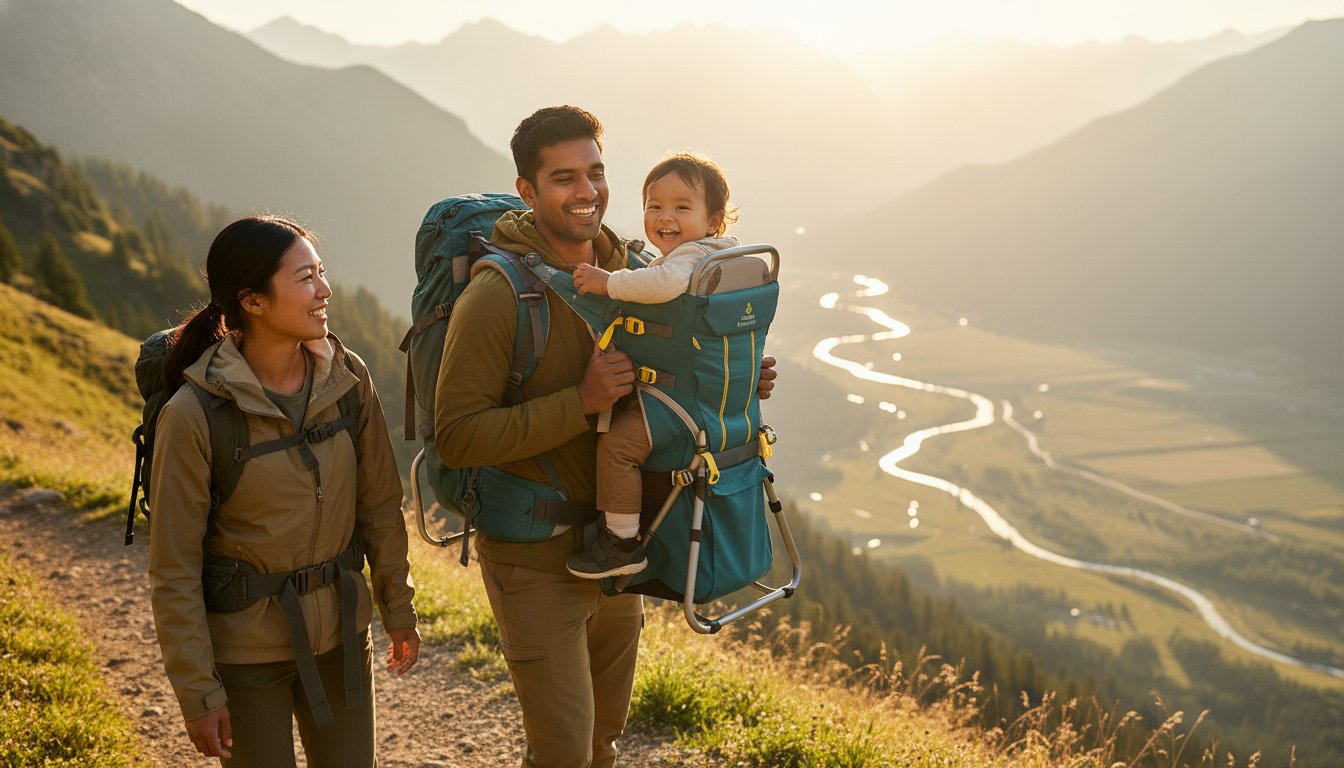
Baby Carrier Rental for Hiking: A Practical Guide to P2P Options in 2026
May 16, 2026
Published by Life4Rent · Operated by Brohf Software OÜ
Did you know the global baby gear rental market is projected to reach $6.1 billion by 2034? This massive growth shows that more parents are choosing access over ownership, especially when looking for a baby carrier rental for hiking. You likely want to share the trail with your child, but spending hundreds of dollars on a framed carrier that clutters your closet feels like a waste. It's common to worry about whether a specific model will even be comfortable for your back before you commit to it.
Peer-to-peer marketplaces like Life4Rent allow you to test high-quality equipment from neighbors for a fraction of the retail cost. You'll learn how to identify safe, CPSC-compliant models and what to look for during a physical inspection. This guide covers how to navigate rental fees and ensure the carrier you pick is the right fit for your body type and your toddler’s safety.
Practical reasons to rent a hiking carrier instead of buying
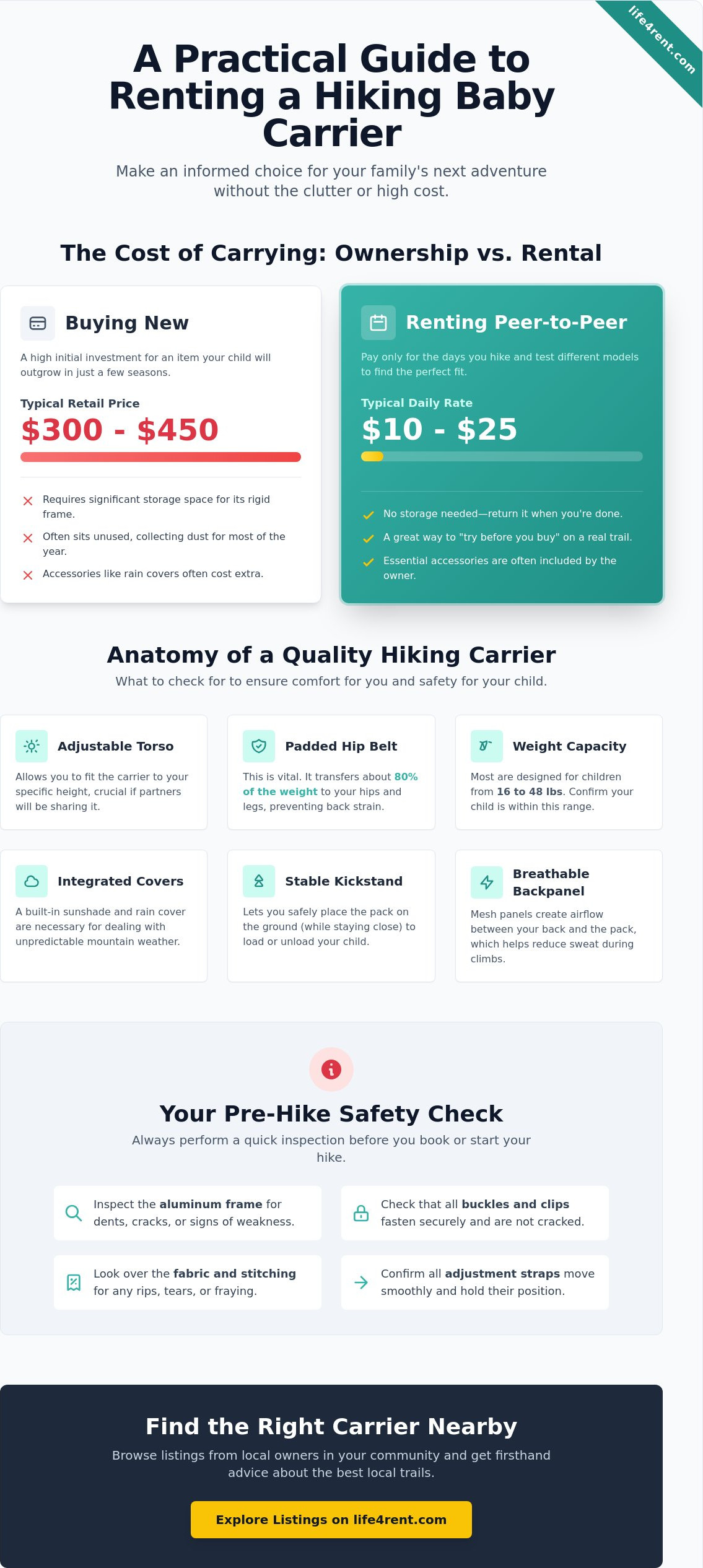
Buying a specialized hiking carrier is a significant financial commitment. Most high-end models from reputable brands like Osprey or Deuter retail between $300 and $450. For many families, these packs sit unused for most of the year. If you only plan to hit the trails three to five times annually, ownership is often an inefficient use of your budget. It's hard to justify such a high price for an item that spends months gathering dust in a closet.
Storage is another major hurdle, especially for those living in smaller homes or apartments. These carriers feature rigid aluminum frames designed to support children and gear weighing between 16 and 48 pounds. They don't fold down easily and take up considerable shelf space. A baby carrier rental for hiking solves this by letting you access the equipment only when you have the space and the plan to use it. Before you decide on a specific style, it's helpful to understand the different types of baby carriers available to ensure a framed pack is actually what you need for your child's age and weight.
To better understand how these high-end models perform in real-world conditions, watch this comparison of the top hiking carriers:
The cost-benefit of daily rentals
You can save a substantial amount of money by paying only for the days you are actually on the trail. Traditional retail purchases often require you to buy additional accessories like rain covers, sunshades, or stirrups separately. On a marketplace like Life4Rent, many local owners include these essential add-ons in the daily price. This makes the overall experience much more affordable than a commercial shop or a retail purchase. You get the technical performance of a premium pack without the long-term financial burden or the need for a large upfront investment.
Try before you buy
Comfort is highly subjective when you're carrying a toddler up a mountain. Every parent has a different torso length and shoulder width, which affects how a pack distributes weight. A carrier that feels adequate in a store aisle might feel completely different after two miles of elevation gain. A weekend baby carrier rental for hiking gives you the chance to test the suspension system and hip belt padding in real conditions. It's an honest way to see if a specific model fits your body before you ever think about buying one. You might find that a specific brand fits your frame better than others, which is a discovery you can only make through active use on a real trail.
Technical features to look for in a quality backpack carrier
You should look past the brand logo when you evaluate your options. A high-quality baby carrier rental for hiking should offer specific technical adjustments to ensure your child stays safe and you stay comfortable. Most framed carriers are designed for children between 16 and 48 pounds. You must confirm the total weight of your child and any extra water or snacks doesn't exceed the frame's capacity before you start your trip.
An adjustable torso is a mandatory feature if you and your partner aren't the same height. This allows you to shift the shoulder straps up or down so the hip belt sits correctly on your iliac crest. Mountain weather changes fast, so integrated sunshades and rain covers shouldn't be optional extras. A stable kickstand is also vital. It lets you set the pack down safely while your child is still inside, as long as you stay within arm's reach.
Support and suspension systems
Padded hip belts are the most important part of any suspension system. They transfer about 80% of the weight to your legs, which prevents shoulder fatigue and back strain. Breathable mesh panels are also helpful because they create a gap between your back and the pack to reduce sweating during steep climbs. Load lifter straps, located near your collarbone, help pull the weight closer to your body for better balance on uneven trails.
Child comfort and safety features
Safety is the top priority when you're on steep terrain. All reputable models follow federal safety standards to ensure the frame and seat are structurally sound. A five-point harness is a standard requirement to keep your child from sliding out during steep descents. These straps should be easy to tighten but difficult for a child to undo on their own.
Adjustable stirrups are a feature many parents overlook. They give your child a place to rest their feet, which prevents leg numbness and keeps them in a more ergonomic position. Removable drool pads are also a practical addition since they're easy to wash after a long day outside. When you browse the outdoor equipment listings on Life4Rent, check the photos to see if these accessories are included. A baby carrier rental for hiking is only a good deal if it comes with the features you need for a safe day on the mountain.
Peer-to-peer rentals vs traditional outdoor gear shops
Traditional outdoor gear shops usually operate from central business districts or commercial hubs. This means you often have to drive across town or pay for expensive parking just to pick up a backpack. A baby carrier rental for hiking through a platform like Life4Rent changes this dynamic by connecting you with people in your own neighborhood. You might find the exact Osprey or Deuter model you need just two streets away, which saves you significant time on your way to the trailhead.
Commercial shops carry high overhead costs for rent, staff, and inventory storage. These costs are naturally passed on to you through higher daily rental rates. Peer-to-peer owners don't have these expenses, so they can offer more competitive pricing. It's common to find rates that are 20% to 30% lower than what a specialized outdoor retailer would charge for the same equipment.
Flexibility and local access
Local owners are usually more flexible than a business with set opening hours. You can often arrange a pickup on a Friday evening or a late Sunday drop-off without worrying about a shop's closing time. This convenience is a major advantage when you're managing a toddler's nap schedule and a long drive back from the mountains. Neighbors can also provide honest feedback on how their specific child reacted to the pack's harness or ventilation.
Owners often share tips about local trails that aren't in the popular guidebooks. They might know which paths have enough shade for a baby or where the steepest sections are manageable with a loaded frame. This peer-to-peer exchange turns a simple transaction into a helpful conversation between experienced parents. You get more than just the gear; you get the confidence that comes from a neighbor's firsthand experience.
Sustainability and the sharing economy
Gear rentals instead of brand-new purchases help reduce the environmental footprint of manufacturing and shipping. A single high-quality hiking carrier can serve dozens of families over its lifespan rather than sitting idle in a garage. This approach supports a more circular economy where resources are used to their full potential. If you want to learn more about this shift, check out our 2026 guide to peer-to-peer equipment rental for deeper insights into the benefits of access over ownership.
Shared resources also build stronger ties within your local community. When you rent from a neighbor, the money stays in your neighborhood instead of going to a large corporation. It's a practical way to meet other active families while keeping your gear costs low. This model ensures that high-quality baby carrier rental for hiking remains accessible to everyone without the need for mass-produced, low-quality alternatives that often end up in landfills.
Safety checks you should perform before your first trail
Safety is the most critical part of your preparation. When you pick up a baby carrier rental for hiking from a local owner, you need to conduct a thorough physical inspection. You shouldn't rely solely on the photos in the listing. A hands-on check ensures the equipment is trail-ready and safe for your child. It's also wise to check if the specific model has any active recalls. For instance, the CPSC issued a warning on April 30, 2026, for certain toddler carriers due to fall hazards, so a quick search of the model name is always worth the time.
The aluminum frame is the backbone of the carrier. You should look for any deep scratches, bends, or hairline cracks in the metal. Even a small bend can compromise the structural integrity of the pack when it's fully loaded with a child and gear. Frayed stitching on the shoulder straps or the hip belt is another red flag. These areas bear the most tension, so any loose threads could lead to a strap failure while you're walking.
Check every buckle and zipper on the pack. They should click shut firmly and stay closed even when you pull on them. The cockpit harness, which keeps your child secure, must be intact and adjust without sticking. If the straps are stiff or the buckles feel brittle, it might be better to look for a different unit. You should ensure the five-point harness holds the child's weight comfortably without cutting into their shoulders or legs.
Testing the mechanical parts
The kickstand needs to lock into place with a clear, firm action. You should open and close it several times to make sure it doesn't collapse under pressure. This part is vital for safely loading and unloading your child on uneven ground. Pull on the webbing of all straps to check for hidden tears that might be obscured by the padding. The sunshade is another key component. It should click into its slots easily and stay stable without wobbling, as a loose shade can be a distraction or a safety hazard in high winds.
Cleanliness and hygiene
Hygiene is a valid concern when you rent used gear. You can wipe down the frame and fabric with a damp cloth if there's any visible dust or dirt from previous trips. Most high-end carriers have a removable chin pad where the child rests their head. Check this specific part for stains or odors. You should ask the owner about their cleaning routine to ensure it aligns with your own standards. Many owners use hypoallergenic detergents to keep the fabric safe for sensitive skin. If you're ready to find a well-maintained pack, you can browse local baby gear listings on Life4Rent to see available options in your area.
Use Life4Rent to locate a carrier in your neighborhood
Life4Rent provides an organized marketplace where you can find exactly what you need for your next outdoor adventure. The platform features 17 different categories, ranging from tools and electronics to specialized baby gear. You can search by your specific location to find a baby carrier rental for hiking right in your neighborhood. This localized approach often means you can pick up a pack from a neighbor living just a few blocks away, which eliminates the need for long trips to a city center. You save time and fuel while supporting a family in your own community.
How to book your first rental
The first step involves creating a profile and verifying your identity to maintain a secure community for everyone. Once your account is ready, you can message the owner directly to ask about specific technical features or sizing details mentioned in the listing. You simply select your required dates and complete the transaction through the platform's secure marketplace system. This direct communication ensures both parties are on the same page regarding pickup and drop-off times before the rental begins. You can even ask the owner if they have extra accessories like rain covers or sunshades available for your trip.
Earning cash with your own gear
Owners can also use the platform to list their own unused baby gear once their children have outgrown it. This helps offset the cost of your next family trip or allows you to invest in new equipment for your growing child. You have full control over your daily rates and the dates your items are available for others to use. You can also rent out your camera for cash or list other specialty outdoor items that are currently taking up space in your garage. Your shared equipment helps others enjoy the outdoors while you earn back some of your original investment. It is a practical way to participate in the circular economy while clearing out your storage space.
Preparing for your next family adventure
You don't need to own expensive gear to enjoy the trails with your child. A baby carrier rental for hiking lets you access the best equipment without the storage problems or high retail prices. You now know how to check for frame integrity and how to find owners right in your own neighborhood.
Life4Rent has operated as a secure marketplace since 2021, providing local pickup options in major cities. It's a platform trusted by parents across Europe who prefer the efficiency of the sharing economy. Find a hiking baby carrier near you on Life4Rent and get ready for your next weekend trip.
Frequently Asked Questions
What age can a baby start using a hiking backpack carrier?
Most babies can start using a framed carrier at six months old or once they can sit up independently with consistent head control. It's unsafe to use these backpacks before the child's neck muscles are strong enough to handle the movement of a trail. You should consult your pediatrician if you're unsure about your child's physical development before your first trip.
How much does it usually cost to rent a baby carrier for a weekend?
Daily rates for a baby carrier rental for hiking vary depending on the model and the platform you choose. Commercial shops often charge around $38 for a three-day rental, while some specialized services offer rates as low as $15 per day. Peer-to-peer platforms allow individual owners to set their own prices, so you can often find competitive deals in your local area.
Are these carriers safe for long-distance mountain hikes?
These backpacks are specifically engineered for rugged mountain terrain and provide better support than standard soft carriers. They feature internal frames and suspension systems that distribute the child's weight to your hips to prevent back fatigue. As long as the gear meets current safety standards and you've performed a physical inspection, they're reliable for all-day use on steep trails.
What happens if the carrier gets dirty or damaged during my hike?
You should check the specific terms of the rental marketplace before you book your gear. Most owners expect a reasonable amount of dust or mud from a trail, but significant damage to the aluminum frame or fabric might involve a repair fee. It's a good idea to take photos of the pack when you pick it up to document its original condition.
Do I need to bring my own sunshade or rain cover?
Most high-end rentals include integrated sunshades and rain covers as part of the standard package. Peer-to-peer owners often include these extras because they originally bought them for their own family adventures. You should always verify the included accessories in the Life4Rent listing to ensure you're prepared for unpredictable mountain weather before you head out.
Can one person put on the carrier alone with the child inside?
You can put on a hiking carrier by yourself by using the integrated kickstand on a flat, stable surface. It's best to practice this in a safe environment like your backyard before you head to a remote trail. You should keep one hand on the frame at all times until the pack is securely on your back and the straps are tightened.
How do I know if the carrier will fit my specific torso length?
You should look for models with an adjustable harness that slides to match your specific back measurements. Most premium carriers use a simple pin or velcro system to move the shoulder straps up or down in seconds. This ensures the weight sits on your hips rather than pulling on your shoulders, regardless of whether you're tall or short.
Is there a weight limit for these hiking backpacks?
Most framed hiking carriers have a total weight capacity that ranges from 16 to 48 pounds. This limit includes the weight of the child plus any water, snacks, or extra clothing you pack in the storage compartments. You shouldn't exceed the manufacturer's stated limit as it can strain the aluminum frame and the suspension stitching over time.
Related guides on Life4Rent
Ready to rent instead of buy? See all outdoor gear available to rent on Life4Rent →
Life4Rent
Rent it. Earn from it. Own less, access more.
Browse peer-to-peer rentals near you, or list what you own and start earning — all protected by Life4Rent Protect.
About the author
Dublin, Ireland
Michael covers consumer rights, rental law, and EU platform regulation for the Life4Rent Renting Academy. He has reported on digital market policy and renter protections across Europe, and brings a clear, practical perspective to topics like deposit disputes, insurance, and the legal rights of renters and owners.