Art and Decor Rental for Home Staging: Buying Guide
October 3, 2026
Published by Life4Rent · Operated by Brohf Software OÜ
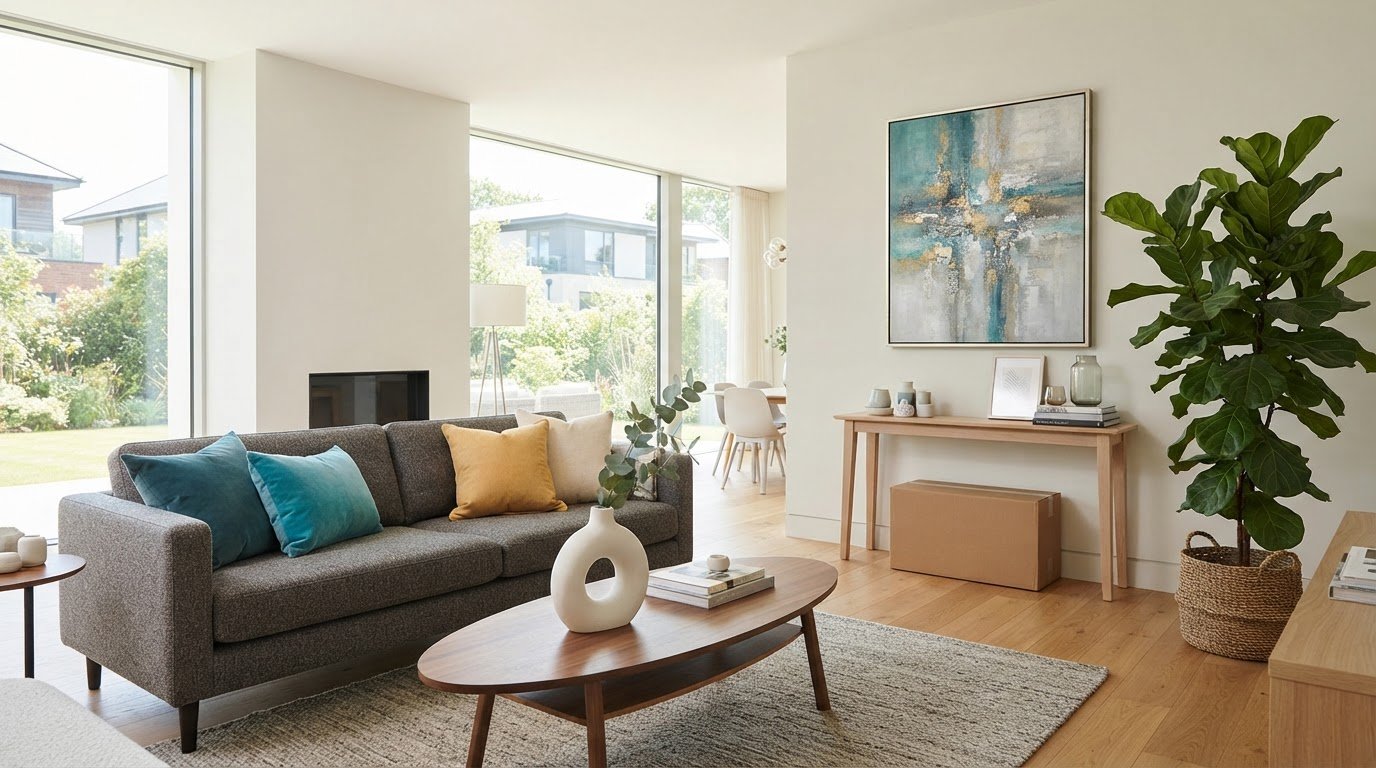
A strong staging plan often starts with leaving more out. A room can photograph well with one well-scaled artwork and a few considered accents; too many competing pieces can distract from the property. Art and decor rental for home staging is less about filling every surface and more about supporting the home’s layout, light, and character.
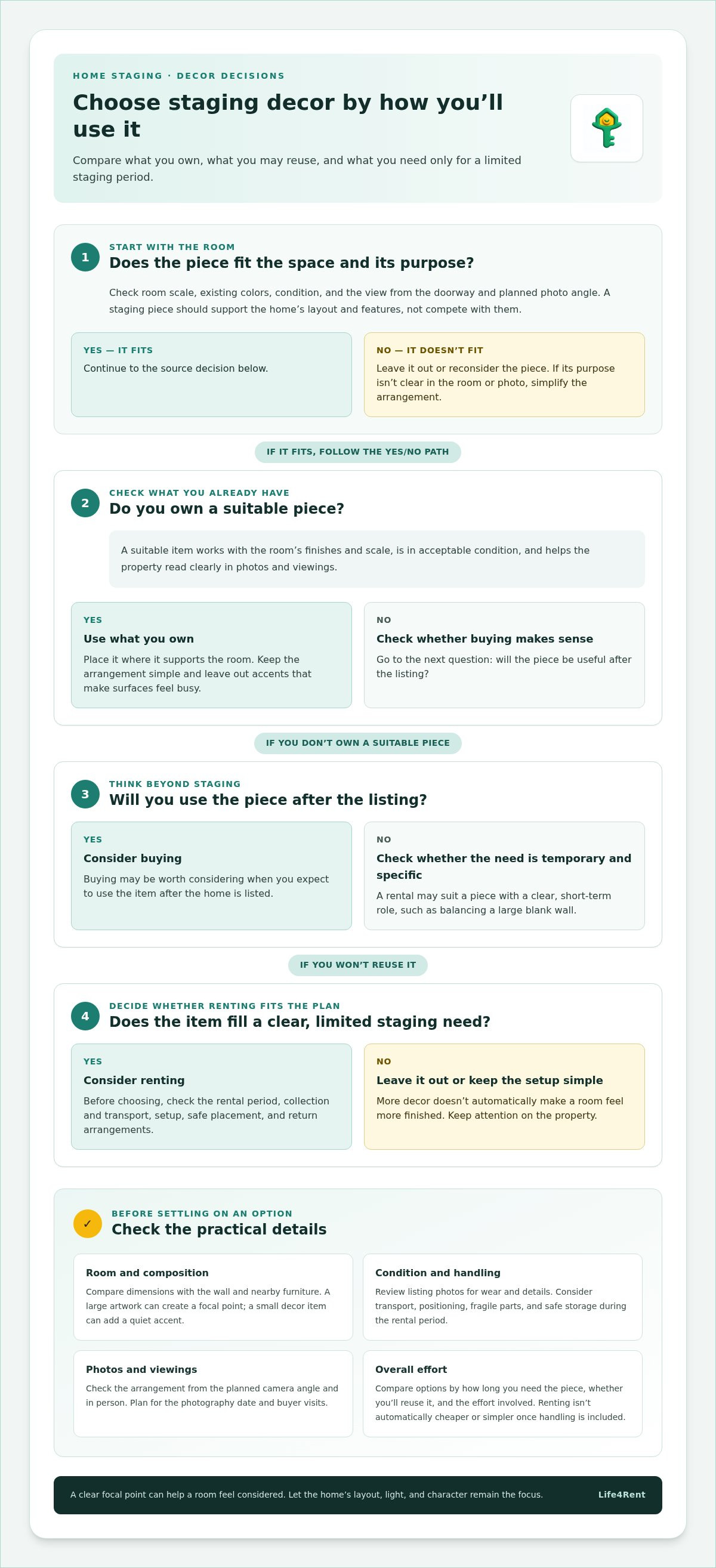
It’s understandable to worry that rented pieces won’t suit the space, fit the staging timeline, or justify the effort. Start with the property’s features, then decide what to use from home, what to rent temporarily, and what might be worth buying because it will be useful after the listing.
This guide explains how to choose artwork and decor for listing photos and viewings, compare renting with buying or using what you own, and plan placement, condition notes, and returns. Life4Rent connects people who list everyday items with people who need them temporarily across 17 categories. Peer-to-peer rental can be one way to source a piece for a limited staging period, while a few well-chosen items can add focus without pulling attention from the home.
Art and decor rental for home staging: start with the property’s story
Art and decor for staging are temporary visual supports that help a home read clearly in listing photos and during in-person viewings. A useful distinction: home-staging decor helps people see the property; event decoration creates a setting for an occasion. Staging choices should draw attention to the home’s light, proportions, and features, not compete with them. For a neutral overview of what home staging is, see the practice’s basic goals and context.
That principle gives art and decor rental for home staging a clear purpose: add focus where a room needs it while keeping the property’s own character in view. A consistent visual story can connect rooms without making them feel identically decorated. It also helps buyers follow the layout and imagine how each space could be used.
For a practical look at choosing artwork for a staged home, watch this video:
What should rented decor help a buyer notice?
Start with the home’s strongest features, such as natural light, an interesting ceiling, original trim, or a useful room layout. Choose colors and materials that sit comfortably alongside the floors, walls, and fixed finishes. The aim is to make the home feel considered, not to give it a new identity that buyers may struggle to connect with.
If a room feels empty or visually uneven, try one clear focal point, such as artwork on a broad wall. A few small accessories can help, but objects on every shelf and table may draw attention away from the room. Check what a piece contributes from the doorway and in the listing photo. If its purpose isn’t clear from either view, leave it out.
Which rooms and listing moments deserve attention first?
Begin with the spaces that shape the listing’s first impression. The entry sets the tone, while the main living area often shows how the home’s central space functions. Then consider rooms that matter to the property’s everyday use instead of trying to stage every corner equally.
Plan for a consistent appearance in photos, during viewings, and in the home’s usual condition. A setup that works only from one camera angle may feel awkward in person, and rented pieces need to stay in place for the agreed staging period. Keep the arrangement simple enough to maintain between photos and buyer visits.
How to choose art and decor rentals that work in the space
A piece can look appealing on its own and still feel wrong in a room. For art and decor rental for home staging, judge each item in context: against the wall and furniture, beside the home’s fixed finishes, and from the angle buyers will see in listing photos. The Real Estate Staging Association offers information about professional home staging. You can also make practical choices by checking fit, condition, and purpose before arranging a rental.
How do size, color, and placement affect the result?
Compare an artwork’s dimensions with the wall and nearby furniture. A small piece above a long sofa can look lost, while an oversized one may dominate a compact room. Leave breathing room around a focal item so viewers can take in the space as well as the decor.
Check color in the room’s actual light. A shade that looks muted in a listing photo may appear much brighter beside a pale wall or in strong daylight. Take a phone photo from the planned camera angle, then ask whether the artwork draws attention to the room or becomes the first thing viewers notice.
What should renters assess before choosing a piece?
Review listing photos for visible wear, color, shape, and details that might be missed in a single image. Compare the stated dimensions with the intended wall or surface, and think through how the item will be transported, positioned, and kept safe during the rental period. A versatile piece may suit more than one room or photo composition, which can help if your plan changes.
| Scale | Visual role | Placement | Handling considerations |
|---|---|---|---|
| Large artwork | Creates a focal point | On a broad, uncluttered wall | Check dimensions and how it can be carried and positioned |
| Small decor item | Adds a quiet accent | On a clear shelf or side table | Check for fragile parts and a stable place to set it |
| Medium artwork | Balances a smaller wall | Near furniture without crowding it | Review condition and plan where it can be stored safely |
More pieces don’t automatically make a room feel more finished. Choose one focal item where the composition needs it, then add only supporting decor that helps the room feel connected. Leave out any accessory that competes with the architecture or makes a surface look busy.
For a broader explanation of temporary access compared with ownership, read the peer-to-peer rental guide. If renting from individuals suits your plans, explore the Life4Rent marketplace, where people list everyday items for others to rent.
Renting, buying, or using what you own: compare staging options
The right choice depends on how long you need a piece, what you’ll do with it afterward, and how much handling it adds to the staging plan. Art and decor rental for home staging can suit a distinctive focal piece that fills a temporary gap. Renting isn’t automatically cheaper or simpler once collection, transport, setup, and return are included.
Compare the options by practical use, not assumption:
- Rent: Consider renting a piece with a clear, short-term role, such as artwork to balance a large blank wall during the listing period. Include the rental terms and the time and effort needed to collect, position, and return it.
- Buy: A versatile item may be worth buying if you’ll use it at home after the sale or have another clear use for it. Think about storage and future use, not just how it looks in one room.
- Use what you own: Existing belongings can be the simplest fit if their scale, condition, and colors suit the room. You may need to edit or rearrange them so they support the staging plan consistently.
When can renting make more sense than buying?
A rental may be practical when a room needs one specific focal piece that you don’t expect to use again. A clearly defined staging period makes it easier to assess whether temporary use fits your plans. Include the logistics, too: an item that needs special care or awkward transport may take more effort than its visual impact justifies.
Potential reuse can change the calculation. If you expect to stage another property or want the same piece at home later, buying may be more useful over time. If you’d have to store an item you rarely use, renting may avoid that ongoing inconvenience. The overall value depends on the rental terms, handling, duration, and what happens to the piece afterward.
When are existing belongings or purchases a better fit?
Start with items you already own if they suit the room and can stay in place between photos and viewings. A clean, well-proportioned lamp or restrained artwork may work better than introducing something new simply because the room feels unfinished. If you buy, choose a piece with a purpose beyond the listing, such as artwork you’d enjoy displaying later.
The same practical thinking applies to other temporary-use rentals. Life4Rent’s tool rental guide offers a broader example of weighing short-term access against ownership. Across 17 categories, the Life4Rent peer-to-peer marketplace connects people who list everyday items with people who rent them.
Plan an art and decor rental for home staging from selection to return
A simple plan keeps a rental from becoming a last-minute problem. For art and decor rental for home staging, work through the rooms, the look, the sourcing, the placement, and the return before committing to a piece.
- Define the rooms. Note which spaces need rented items and what each item should help show.
- Set the look. Choose a few colors and materials that fit the home’s finishes and existing belongings.
- Source with purpose. Select items that match the space and photo composition, then understand the rental and handover arrangements.
- Arrange placement. Decide where each piece will go and check that it works from the camera angle and in person.
- Schedule collection and return. Align both plans with photography, viewings, and the agreed period of use.
Quotable rule: “Choose the rooms, set the look, source the pieces, plan their placement, and agree on collection and return before staging begins.”
How can you coordinate rentals with photos and viewings?
Work backward from the photography date so there’s time to collect and position each item before the photographer arrives. If viewings take place later, keep the arrangement consistent and make sure the pieces can remain safely in place. Understand the handover and return arrangements before building the plan around an item.
How should renters protect the item and avoid last-minute confusion?
At handover, record the item’s condition with clear notes and photos, and point out visible marks with the owner. Agree in advance on transport, placement, care, and return expectations. Keep the rental details and contact information accessible so you can refer to the arrangements during the staging period.
A little attention to logistics can prevent a mismatch between the rental period and the listing schedule. It also gives you a record of the item’s condition and a shared understanding of how it will be handled.
If peer-to-peer rental suits your staging plan, explore Life4Rent’s peer-to-peer rental marketplace. It connects people who list everyday items with people who need them temporarily across 17 categories.
Source Staging Decor via Peer-to-Peer Marketplaces
A peer-to-peer marketplace connects people who own items with people who need temporary use of them. An owner lists an item, and a renter looks for a piece that fits a particular room and rental period. Life4Rent is a marketplace for everyday items across 17 categories, offering a way to explore peer-to-peer rentals.
This approach adds another option to buying or using belongings you already have. The trade-off is that the renter and owner need to coordinate practical details, including handover, care, and return. Weigh that effort alongside the item’s visual fit and how long you’ll need it.
What does peer-to-peer decor rental involve?
The owner lists an item for others to rent, and the renter considers whether it suits the staging plan. Compare the listing information with the room’s needs: dimensions, appearance, visible condition, and how the piece might look in the planned photo composition. An item listed for general use won’t necessarily suit a particular home, so judge it against the space and the staging purpose.
Discuss handover and return arrangements with the owner, including how the item should be transported and cared for. That coordination is part of the rental, not a detail to leave until staging day. Rental can work for a temporary focal piece, while an existing belonging or a purchase may make more sense if it has a lasting use.
How can renters make a considered marketplace choice?
Start with a clear purpose for the piece. Artwork intended to balance a blank wall has a different job from a small accent meant to support the room quietly. Review the listing details and photos for signs of wear, then compare the item’s size, placement, and handling needs with the room and staging schedule.
Build the practical plan around photography, viewings, and the end of the rental period. Allow time to position the item before photos, keep the arrangement workable for viewings, and plan how it will be returned. If transport or care seems difficult to manage, choose a simpler option, including something you already own.
For art and decor rental for home staging, a marketplace is a sourcing route, so assess fit and plan the handover as part of the decision. Browse the Life4Rent marketplace to explore everyday items listed for rent.
Make your staging choices with a clear plan
Good staging decor supports the home rather than competing with it. Start with the rooms and features buyers should notice, then choose a few pieces that fit the scale, colors, and light. A consistent look can help the property feel connected in listing photos and during viewings.
For art and decor rental for home staging, compare renting with buying and using what you already own. Consider how long you need each item, whether you’ll use it again, and the work involved in collection, setup, care, and return. Plan around photography and viewings, and document the item’s condition at handover.
Life4Rent connects item owners and renters through a peer-to-peer marketplace spanning 17 categories of everyday items. If temporary access fits your plan, browse Life4Rent’s marketplace for rental options. Choose with the property in mind, keep the arrangement manageable, and let the home remain the focus.
Frequently Asked Questions
Is renting art and decor for home staging worth it?
It can be worthwhile when a room needs a specific piece for a defined staging period and you don’t expect to use it afterward. Compare the rental terms and the effort of collection, transport, setup, care, and return with the value it adds to the room. Renting isn’t automatically the cheaper or easier option. A suitable item you already own may work just as well.
What art and decor should I rent to stage a home?
Choose pieces that help buyers notice the room’s scale, light, or useful features. A single artwork can give a blank wall a focal point, while a restrained accessory can support a shelf or table without drawing too much attention. Match the piece to existing colors and finishes, and consider how it looks in listing photos and from the doorway. Skip items that make the room feel crowded.
How much art and decor do I need to rent for staging?
There’s no fixed amount; start with the rooms and surfaces that need visual support. A clear focal piece in a living area may do more than several small accessories spread around the home. Check each planned item from the main photo angle and during an in-person walkthrough. If a piece doesn’t help the room feel balanced or clarify how it can be used, leave it out.
Can I rent decor for just the listing photos?
That can work if the rental period and arrangements with the owner suit that use. Before relying on an item, understand the rental terms, handover, setup, and return plan. Also consider whether buyers will view the property after the photo shoot. If the decor won’t remain in place for viewings, the home may look different in person from the listing photos.
What happens if a rented decor item is damaged during staging?
The next steps depend on the arrangements made with the owner. Before the rental begins, note the item’s condition and any visible marks, and agree on how to handle and care for it. If damage occurs, document what happened and contact the owner promptly to discuss it. Don’t assume ordinary wear, accidental damage, or repair costs are handled in the same way for every rental.
How do I choose art that fits a staged room?
Compare the artwork’s size with the wall and nearby furniture, then check that its colors work with the room’s finishes and natural light. A piece above a sofa should feel in scale with it, not lost on a broad wall or so dominant that it distracts from the space. View it from the camera angle and from the entrance. The room, not the artwork, should hold attention.
Should I rent, buy, or use my own decor for home staging?
Use belongings you already own when they suit the room and can stay in place consistently. Consider buying a versatile piece if you’ll have a clear use for it after the sale. Renting may suit an item needed only temporarily, but include coordination and handling in your decision. For art and decor rental for home staging, compare the length of use, potential for reuse, storage, and practical effort instead of assuming one option always costs less.
Life4Rent
Rent it. Earn from it. Own less, access more.
Browse peer-to-peer rentals near you, or list what you own and start earning — all protected by Life4Rent Protect.
About the author
Stockholm, Sweden
Stella researches and writes about sustainable consumption and the circular economy for the Life4Rent Renting Academy. She previously worked at a Nordic sustainability research institute studying how access-over-ownership models reduce household CO₂ emissions, and translates that research into practical guides for everyday renters.