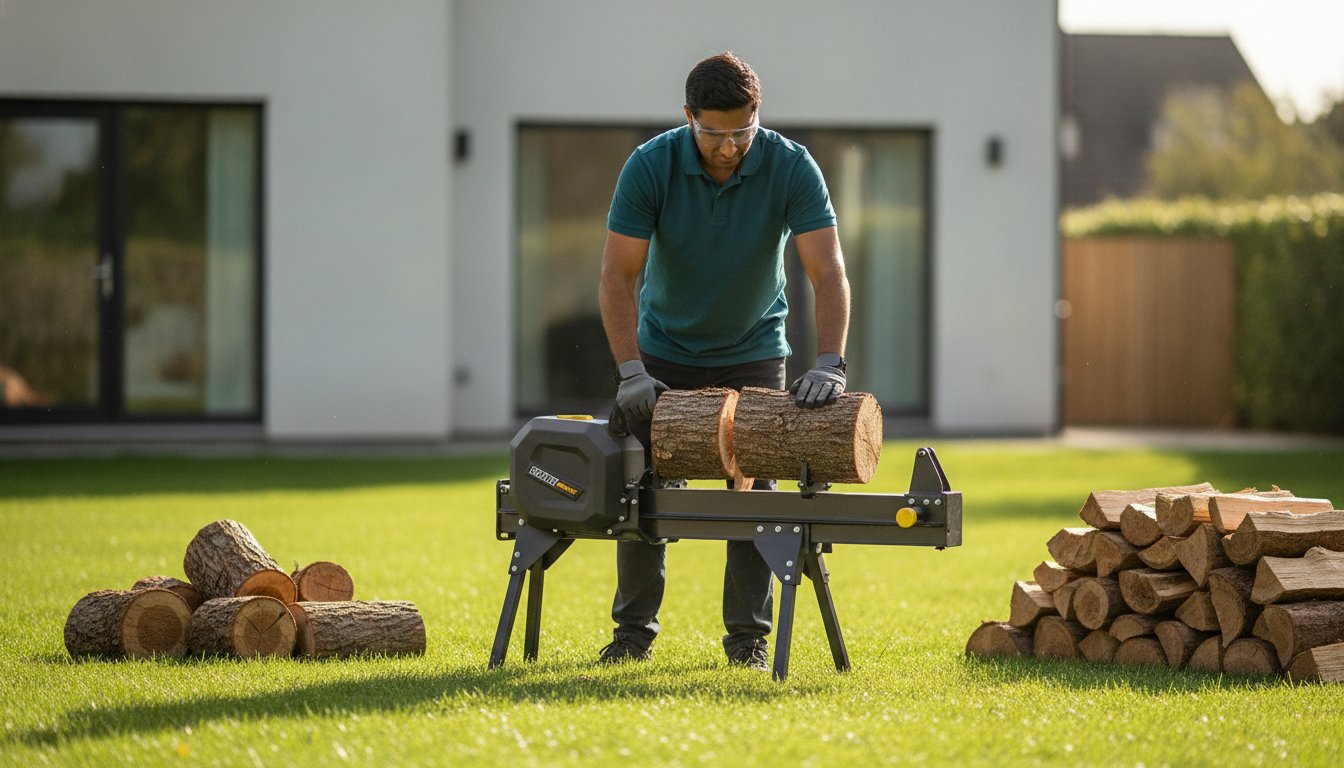
Lei en vedkløyver: En praktisk P2P-utleieguide
Joshua Price
September 6, 2026
A massive pile of oak rounds looks a lot less like a cozy winter fire when you're standing over it with a dull splitting maul. You might think buying a heavy machine is the only way to avoid back-breaking labor, but that choice often leads to a crowded garage and a lighter wallet. It's often smarter to rent a log splitter for firewood from someone in your own neighborhood. This approach gives you professional power without the burden of maintenance or high commercial depot fees.
Most homeowners struggle with the high costs of traditional rental services and the confusion of choosing between 20-ton or 30-ton models. You likely want a reliable machine that gets the job done in a single weekend so you can get back to enjoying your home. This guide will show you how to select the right tonnage for your specific wood type, manage rental costs effectively, and stay safe while operating heavy machinery.
We'll walk through the practical steps of using a peer-to-peer marketplace like Life4Rent to find equipment nearby. You'll also find tips on processing your entire winter supply efficiently. By the end, you'll know exactly how to turn those logs into a neat stack of firewood without overspending or wasting space.
How to Choose the Right Log Splitter for Your Wood
You should understand what a log splitter is before you browse local listings. Tonnage is the most important metric because it defines the amount of pressure the machine applies to a log. If you choose a machine with too little force, the ram will simply stop when it hits a tough knot. Most people who rent a log splitter for firewood find that a mismatch between machine power and wood type is the biggest cause of frustration.
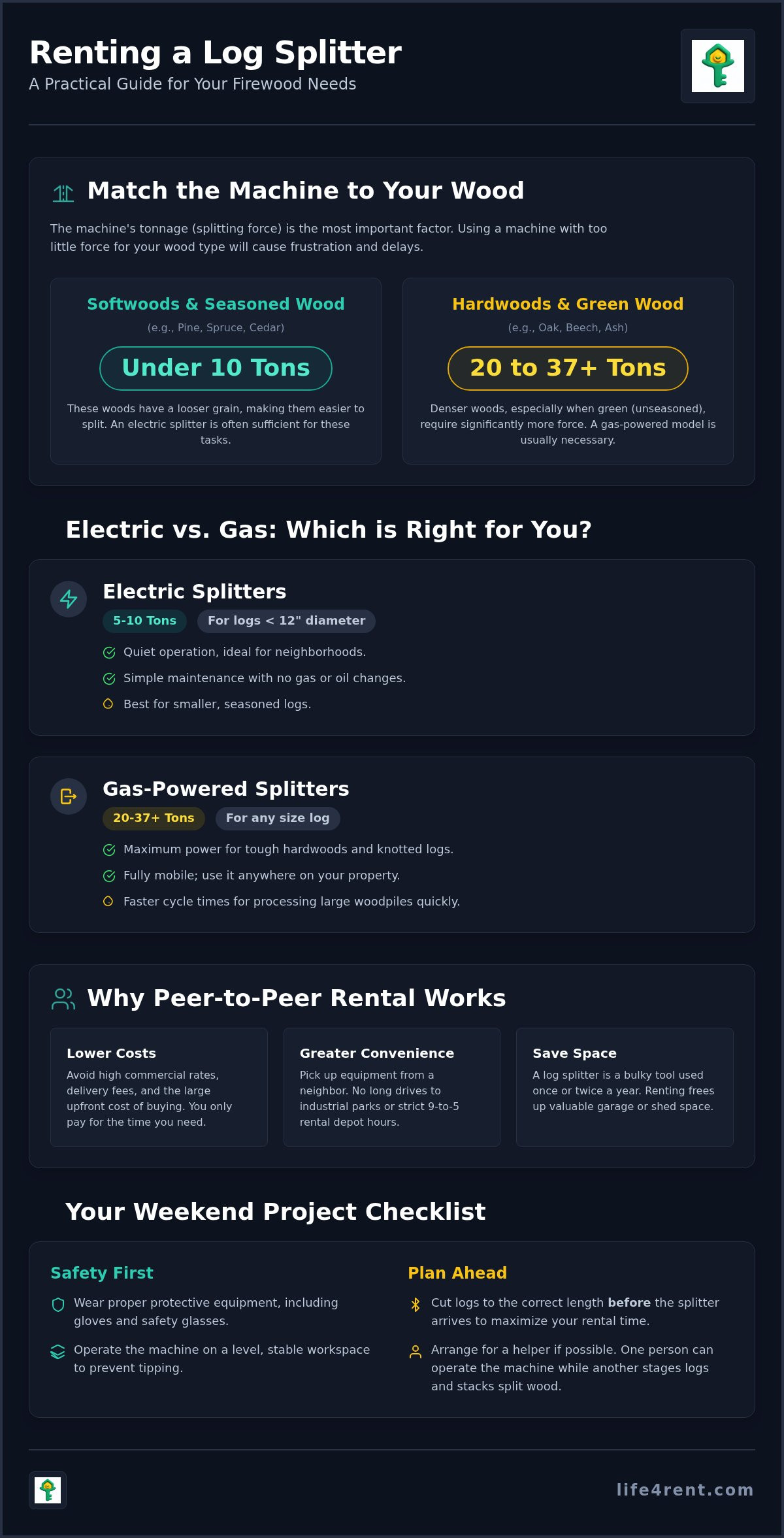
Softwoods like pine, spruce, and cedar have a loose grain structure. These species are manageable with lower pressure, often requiring less than 10 tons of force. Hardwoods like oak, beech, and ash are much denser. These require higher tonnage to overcome the internal friction of the wood fibers. If your wood is green or unseasoned, the moisture inside makes it even harder to split, so you'll need to aim for the higher end of the power scale.
Electric Splitters for Small Residential Tasks
Electric units are perfect for homeowners with modest firewood needs. These machines typically range from 5 to 10 tons of splitting force. They're designed for logs under 12 inches in diameter. If your logs are larger or particularly knotty, an electric motor might struggle to complete the cycle. These tools are best suited for wood that has already been seasoned for several months.
Quiet operation is a major benefit for suburban environments. You won't have to deal with the loud exhaust of a combustion engine while you work. Maintenance is also much simpler. You don't need to handle gasoline, check oil levels, or worry about air filters. Just plug the machine into a standard outlet and start working. This simplicity makes them very popular on peer-to-peer marketplaces.
Gas-Powered Splitters for Hardwoods and Large Batches
Gas models provide the heavy-duty performance needed for large properties. These machines usually offer between 20 and 37 tons of force. This level of power is necessary if you're dealing with thick rounds of oak or maple. Gas splitters handle twisted grain and large knots with ease, ensuring that your workflow stays consistent throughout the day.
Mobility is a key factor when you rent a log splitter for firewood. Gas units don't require a power cord, so you can take them directly to your wood pile. This saves you from hauling heavy logs across your yard. These machines also have faster cycle times than electric models. A faster cycle means you can split more wood per hour, which is essential if you want to finish your entire winter supply in a single weekend.
Why P2P Rental is Practical for Seasonal Firewood Prep
Neighborhood owners often provide a level of flexibility that big-box stores can't match when you need to rent a log splitter for firewood. You can arrange a pickup at 7:00 PM on a Friday without rushing through rush-hour traffic to reach a commercial depot in an industrial park. This convenience makes the entire process much less stressful for homeowners with busy schedules.
This localized approach is a primary reason to tool on rent through a community platform. Local rentals eliminate the need for long drives, which saves both fuel and your valuable weekend time. You won't have to worry about expensive delivery fees that often exceed the daily cost of the machine itself.
Many users prefer to rent a log splitter for firewood because they can pick up the equipment on their way home from work, avoiding the rigid hours of industrial rental yards. Peer-to-peer prices generally stay below commercial rates because individuals don't have the massive overhead of a storefront or a fleet of delivery trucks. These savings are passed directly to you, making the seasonal project much more cost-effective.
These savings allow you to focus your budget on higher-quality wood or other home improvements. You'll find that neighbors are often more willing to accommodate a late return if your wood pile is larger than expected. This personal connection makes the entire process feel like a community effort rather than a cold corporate transaction. You can browse the current listings on Life4Rent to see which neighbors have equipment ready for your next project.
The Financial Advantage of Sharing Equipment
Ownership involves high upfront costs and annual maintenance expenses for items like hydraulic fluid and engine oil. A heavy splitter also takes up significant floor space in a garage, often requiring a footprint similar to a large lawnmower. This is a lot of wasted space for a tool used only once or twice a year.
Renters pay only for the time they actually use the equipment, which maximizes the value of every dollar spent. Once the job is finished, the machine is returned to the owner, leaving your storage space clear for other items. This model is particularly practical for those living in suburban areas where garage space is at a premium.
Accessing High-Quality Tools Locally
The peer to peer equipment rental model connects you with well-maintained machines owned by people who actually use them. Neighbors often provide practical tips for operating their specific unit, such as the best way to prime the engine or how it handles frozen logs. This hands-on advice is something you rarely get from a commercial clerk.
Safety remains a priority, so you should always review OSHA safety standards before starting the machine. Life4Rent ensures a secure environment for these community agreements, making it a reliable choice for your local needs. You get access to professional-grade power without the industrial-grade price tag or the logistical headaches of traditional rental shops.
Safety and Operation Basics for First-Time Renters
Safety is the foundation of a productive weekend when you rent a log splitter for firewood. These machines use intense hydraulic pressure to force a metal wedge through solid timber, so they require your full attention at all times. You must set up the equipment on a level, stable surface to prevent the unit from tipping or shifting during operation. A machine that wobbles under pressure is a hazard to both the operator and the equipment itself. Proper placement also ensures that the engine and hydraulic pump receive consistent lubrication, which prevents mechanical failure during your project.
Your hands should stay firmly on the control levers until the splitting cycle is complete. Never reach into the splitting zone to adjust a log while the ram is moving forward. If a piece of wood gets stuck on the wedge, stop the machine completely before you attempt to clear the jam. A common mistake involves having a second person help load logs while the operator works the controls. This practice significantly increases the risk of crushed fingers or more serious injuries. Only one person should handle the machine and the wood during the active splitting phase.
Essential Protective Gear for Wood Splitting
Professional results depend on your preparation. Steel-toed boots are a requirement because heavy rounds can easily roll off the machine bed onto your feet. You'll also need safety glasses to block sharp wood chips that can fly out at high speeds when a log finally yields to the wedge. Heavy-duty gloves provide the grip you need to handle rough bark while protecting your skin from deep splinters. Avoid loose-fitting clothing or dangling jewelry that could get caught in the engine or moving parts.
Inspecting Your Rental Unit
Hydraulic systems are the heart of these powerful tools. Check the hydraulic fluid levels before you pull the starter cord to avoid damaging the pump or the ram. Look closely at the hoses for any signs of wet spots or frayed outer casings. High-pressure fluid leaks can be dangerous and will quickly make the machine unusable. You should also test the auto-return feature on the first few cycles to ensure the wedge retracts smoothly without sticking. If something feels off, contact the owner immediately through the Life4Rent platform to discuss the issue before you continue your work.
Practical Planning for Your Firewood Splitting Weekend
Efficiency is the key to getting the most out of your rental. You shouldn't spend your limited hours with a chainsaw in hand while the machine sits idle. A well-organized wood pile allows you to process your entire winter supply when you rent a log splitter for firewood from a neighbor. You can find local equipment that fits your specific project needs and schedule.
Weather conditions play a significant role in your productivity. Wet ground can make it difficult to position a heavy gas-powered unit, especially if you need to tow it across a lawn. Extreme cold might affect hydraulic fluid viscosity, which can slow down the cycle time of the ram. Plan your project for a clear window of time to ensure you stay safe and the machine operates at peak capacity.
A clear path to your wood source is essential. You'll save hours of labor if you can park the splitter directly next to the pile. This setup minimizes the distance you have to carry heavy rounds before they hit the wedge. When you rent a log splitter for firewood, logistical preparation is just as important as the splitting itself.
Log Preparation and Sizing
Most residential splitters accommodate logs up to 24 inches long. You should measure your wood rounds before the machine arrives to ensure they fit within the frame. If a log is too long, the ram won't be able to cycle, forcing you to stop and recut the piece with a saw. This interruption breaks your rhythm and wastes fuel or electricity.
Green wood requires more force to split because the fibers are still flexible and full of moisture. You might find that seasoned wood, which has dried for several months, pops apart much more easily. Straight logs with minimal knots will always be the fastest to process. If you have forks or large knots, save those for the end of the day when you've already finished the easier material.
Workspace Logistics and Transport
Towable splitters are common, but you must verify the hitch ball size on your vehicle first. Most units use a 2-inch ball, though some smaller models might require a 1 7/8-inch hitch. If you don't have a tow package, look for small electric splitters. These compact machines often fit inside the trunk of a standard SUV or the bed of a pickup truck.
Your split wood should be staged near the final stacking area to save time. You don't want to leave a massive pile of fresh wood exactly where the machine needs to sit. Use a wheelbarrow or a small garden trailer to move the split pieces to their final drying location as you go. This keeps your workspace clear and prevents you from handling the same piece of wood multiple times.
How to Use Life4Rent for Your Next Project
You can find the right equipment without visiting a commercial depot by using local search filters. These tools allow you to narrow down results to a specific distance from your home. This is helpful when you want to rent a log splitter for firewood, as transporting heavy machinery over long distances is often impractical. You'll see exactly where each machine is located, which helps you plan your pickup route efficiently.
Detailed descriptions on the platform provide the technical specs you need to make an informed choice. You should look for information on tonnage, engine type, and whether the owner includes accessories like safety gear or extra fuel cans. This transparency helps you avoid surprises during the handover process. Secure payment through the platform protects both parties and ensures the transaction is documented and safe.
Owner ratings and reviews offer genuine insight into how well the equipment is maintained. You can read about the experiences of other neighbors who used the same machine for their firewood projects. Consistent high ratings suggest the owner takes care of the hydraulics and engine. These peer reviews are often more reliable than a generic commercial pitch because they come from actual users in your community.
Browsing Local Listings Effectively
You should compare different units based on their daily rates and technical specifications. Some owners might offer a 20-ton gas model that is perfect for your oak rounds, while others have smaller electric units for lighter tasks. Check available pickup and return times to ensure they align with your weekend schedule. Use the internal messaging system to ask the owner about hitch sizes or specific fuel requirements before you commit to the rental.
Clear communication prevents logistical errors on the day of your project. Most owners are happy to provide a quick demonstration during the handover if you're unsure about the controls. This personal interaction is a key benefit of the peer-to-peer model. You get practical advice from someone who knows the tool's quirks, which makes your work safer and faster.
Listing Your Own Equipment for Extra Cash
You might already own a high-quality machine that sits idle in your garage for most of the year. If you list your equipment on the marketplace, you can turn that stored value into extra income. Many people in your community need to rent a log splitter for firewood but want to avoid high commercial costs. Your well-maintained tool could be exactly what they need for their seasonal prep.
Accurate descriptions and clear photos attract reliable renters. Mention the tonnage and any recent maintenance, like oil changes or hose inspections. Set a fair daily price to ensure consistent demand from your neighbors. This approach helps you cover the costs of your own tool while providing a useful service to the local area.
Ready Your Wood Pile for the Season
Success with your firewood project depends on matching the right equipment to your specific logs. You've seen that seasoned hardwoods require higher tonnage, while electric models handle smaller suburban tasks with ease. It's best to prepare your wood rounds and safety gear before the machine arrives to maximize your rental time. When you rent a log splitter for firewood through a neighbor, you avoid the logistical headaches of industrial depots.
Local rentals provide a flexible way to process a full winter supply without the high costs of ownership or storage. You can rely on a secure peer-to-peer marketplace to find well-maintained tools right in your community. This approach keeps your project affordable and your garage clutter-free once the job is done.
You can Find a log splitter for rent near you on Life4Rent to start your project today. The platform lets you browse 17 categories of local rentals with no hidden corporate delivery fees. It's a practical choice for any homeowner who values both their time and their budget. You'll be ready for the first frost with a neatly stacked wood pile and money saved.
Frequently Asked Questions
How much does it cost to rent a log splitter for a day?
Market rates for equipment usually depend on the machine’s tonnage and your local area. You'll often find that smaller electric units are the most affordable option, while heavy-duty 30-ton gas models sit at the higher end of the scale. P2P listings often stay below commercial depot prices because owners have lower overhead. It's a good idea to check Life4Rent listings for specific daily rates in your neighborhood before you start your project.
What size log splitter do I need for oak or hickory?
Hardwoods like oak and hickory require significant force because of their dense grain and high fiber strength. You should look for a machine with at least 20 to 27 tons of splitting force to handle these species effectively. If the logs are green or particularly thick, a 30-ton or 37-ton model is a safer bet. A machine with insufficient power will stall the ram and waste your rental time.
Can I tow a rented log splitter with my car?
Most gas-powered splitters are built on a towable frame with a standard hitch coupler. You must verify that your vehicle has a compatible hitch ball, which is typically either 1 7/8 inches or 2 inches in size. It's also important to check the weight rating of your hitch to ensure it can handle the equipment. Smaller electric models don't usually tow; they're designed to fit inside a trunk or a pickup bed.
Do I need to buy my own hydraulic fluid for a rental?
Owners typically provide a full reservoir of hydraulic fluid as part of the rental agreement. You shouldn't need to purchase your own unless the listing specifically mentions it or the project is exceptionally long. However, you're usually responsible for the fuel used in gas-powered engines. It's best to return the machine with a full tank of gas to maintain a good relationship with the owner and ensure positive reviews.
Is an electric log splitter powerful enough for a cord of wood?
Electric models can certainly process a full cord of wood if the logs are within the machine's diameter limits. These units are often rated between 5 and 10 tons, which is plenty for seasoned softwoods or smaller hardwood rounds. You'll find that the cycle time is slower than gas models, so it might take a bit longer to finish the job. If you rent a log splitter for firewood that's electric, ensure you have a heavy-duty extension cord.
What happens if the rented log splitter breaks during use?
Stop using the machine immediately and contact the owner through the Life4Rent messaging system. You should document the issue with photos and a brief description of what happened. Since this is a secure marketplace environment, the platform provides a framework for resolving disputes or mechanical failures fairly. Most owners are helpful and will work with you to find a solution, whether it's a repair or a partial refund for the lost time.
Can I split green wood with a rented machine?
You can split green wood, but it requires much more hydraulic pressure than seasoned timber. Freshly cut logs are full of moisture and flexible fibers that resist the wedge. If you're working with green wood, you should rent a log splitter for firewood with a higher tonnage rating to compensate for the extra resistance. It’s also helpful to let the wood dry for a few months first if your schedule allows for it.
Do I need a special license to operate a hydraulic log splitter?
No special license or certification is required for residential log splitter operation. However, you must read the owner's manual and follow all safety guidelines to prevent injury. Most owners will give you a quick walkthrough of the controls when you pick up the machine. Always wear safety glasses and sturdy boots, and keep other people at least 10 feet away from the work area while the ram is in motion.
Life4Rent
Rent it. Earn from it. Own less, access more.
Browse peer-to-peer rentals near you, or list what you own and start earning — all protected by Life4Rent Protect.
About the author
Joshua Price
Amsterdam, Netherlands
Joshua writes about the financial side of renting and earning on Life4Rent. His guides focus on helping people understand the real cost of ownership, calculate rental income potential, and make smarter decisions about buying versus renting. He previously wrote on household economics and personal budgeting for a pan-European finance publication.