Portable Ramp Rental for Wheelchairs: Costs and Terms
Michael Wright
October 25, 2026
The rental period matters less than finding a ramp that fits the entrance and is available when you need it. A portable ramp rental for wheelchairs may be offered for a day, a week or a month, and some rental programs also provide a rent-to-own option. The right term depends on how long access is needed and which ramp suits the rise and layout.
Before arranging a temporary ramp, it’s reasonable to want clear answers: how long you can keep it, what sizes are offered and whether one is available for your dates. These details determine whether renting works for a short visit, a recovery period or a longer-term need.
This guide explains rental periods and size options, what affects availability and the practical details to consider when matching a ramp to your entrance. Focus on the measurements and timing that matter before choosing your next step.
How Long Can I Rent a Wheelchair Ramp?
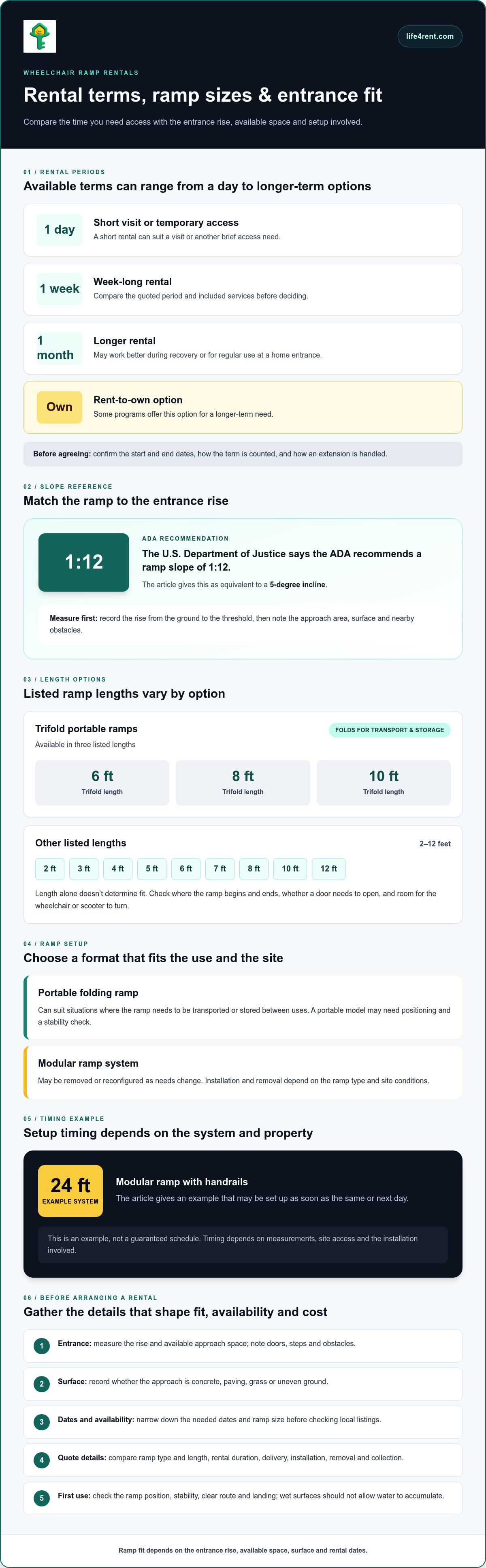
Rental programs offer day, week and month terms, plus rent-to-own options. A short term can suit a visit or temporary access need; a longer rental may work better during recovery or for a regularly used home entrance. Before choosing, consider how long access is expected to be needed and whether the ramp requires installation.
Safety starts with matching the ramp to the entrance rise and keeping its path clear. The U.S. Department of Justice says the ADA recommends a ramp slope of 1:12, equivalent to a 5-degree incline. Check that the ramp sits securely and that its surfaces are suitable for the wheelchair or mobility device using it. For wet landings, the U.S. Access Board says the design must prevent water from accumulating.
Check the property surface and approach area before arranging delivery or professional installation. Measure the rise from the ground to the threshold, and note whether the approach is concrete, paving, grass or uneven ground. Also record nearby doors, steps and obstacles. Clear measurements help assess where the ramp and its landings can fit.
A consultation can help determine whether the entrance needs a portable ramp or a modular setup. Share measurements, photos, and details about the surface and access route so a professional can assess the layout and installation requirements. This is especially useful for a narrow approach or raised doorway, where ramp placement may affect access around the entrance.
Installation and removal depend on the ramp type and site conditions. A portable model may need positioning and a stability check, while modular ramps can be removed or reconfigured as needs change. Ask about the setup and removal steps before selecting a rental term, so you can account for installation and collection when planning how long you need the ramp.
Timing also depends on measurements, site access, and the installation involved. Gather entrance dimensions before the consultation, and share the dates access is needed. A 24-foot modular ramp system with handrails may be set up as soon as the same or next day. That example does not set timing for every ramp; setup depends on the system and property.
Before first use, inspect the ramp’s position, approach and landing. Check for movement, obstructions and water on a wet surface. Keep the route clear whenever the ramp is in use. If the entrance changes or the ramp shifts, stop using it and have the setup assessed before continuing.
Rental pricing and minimum rental periods
Rental programs may offer day, week or month terms, with rent-to-own as another option. For a portable ramp rental for wheelchairs, compare the full rental period and included services before choosing.
One-Week and Four-Week Pricing
A week-long rental may suit a visit or short-term access need. For a four-week plan, compare the total quoted cost with the month-long option rather than assuming they use the same rate. Check whether each quote covers the same ramp type, rental duration, delivery, installation and removal.
Get the rental period’s start and end dates in writing. Confirm how the provider counts a week and whether collection happens on the final rental day. These details make offers easier to compare, especially when one estimate covers equipment only and another includes setup.
Rental Estimates and Minimum Periods
A rental estimate depends on the arrangement and is provided after a quote request. Main cost factors include ramp length and type, rental duration, delivery, installation and removal. Share the entrance measurements and requested dates so the estimate reflects the setup you need.
Minimum rental terms vary by program. Some offer day, week and month options, while rent-to-own may suit a longer-term need. Ask which minimum term applies to the selected ramp and whether extending the rental changes the total.
Build a useful estimate by collecting the same details for each option:
- Rental start and end dates, including how the term is counted.
- Ramp length and type, based on the entrance and approach.
- Whether delivery, installation, removal, or collection are included.
- How an extension is handled if access is needed beyond the original end date.
A clear comparison avoids mistaking an initial figure for the full cost. One weekly estimate, for example, may cover the ramp, while another includes setup and removal. Compare the same rental period and services, then review how the agreement handles extensions, late returns and cancellation.
For a portable ramp rental for wheelchairs, choose a term that reflects the expected need, not just the smallest initial commitment. A brief visit may call for a short rental, while a changing recovery timeline makes extension terms more important. Before accepting an estimate, make sure the dates and setup match your entrance plan.
Wheelchair ramp rental options and sizes
Rental choices include portable folding ramps and modular systems, with lengths matched to the entrance and approach. The right option depends on the rise, available space, mobility device and whether the ramp needs to move between locations.
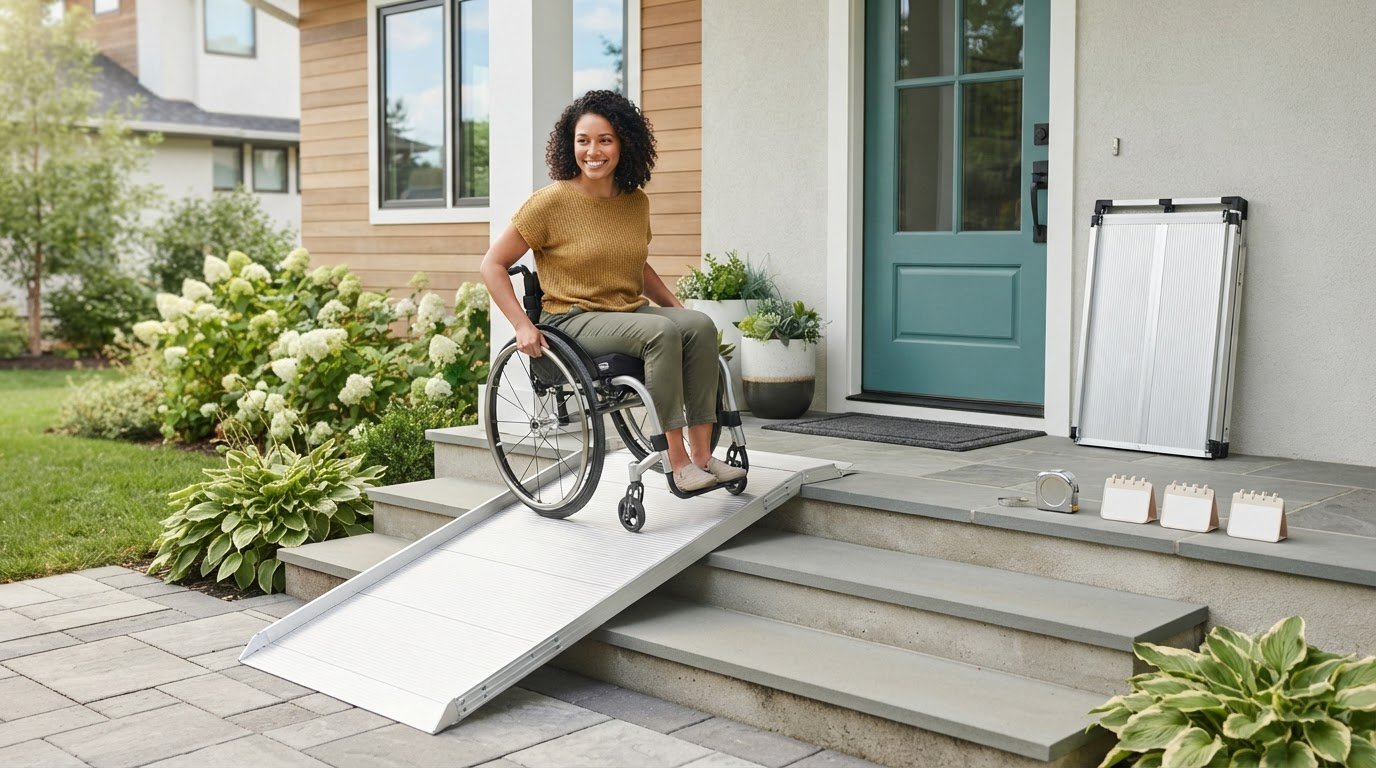
Portable models suit situations where a ramp must be transported or stored between uses. Some rented ramps fold in half, which can make storage and transport easier. Trifold models are available in 6-foot, 8-foot, and 10-foot lengths. Measure the entrance and the clear approach before comparing these sizes; the shortest model isn’t automatically suitable for every threshold.
Other rental listings offer lengths from 2 to 12 feet: 2, 3, 4, 5, 6, 7, 8, 10, and 12 feet. That range helps match a ramp to a particular rise, but length alone doesn’t determine fit. Consider where the ramp will begin and end, whether a door needs to open, and how much room the wheelchair or scooter needs to turn.
Modular ramps work differently from a single portable unit. Aluminum modular sections can be removed or reconfigured as access needs change. That can suit an entrance where a straight ramp won’t fit or a layout that needs a longer route. A 24-foot modular system with handrails may be set up as soon as the same or next day, although the site layout determines the configuration.
Some programs also offer rent-to-own. It may be worth comparing if the access need could continue beyond a short rental. Review how the program applies rental payments, what the total purchase arrangement covers and what happens if your needs change. Those terms determine whether it suits your circumstances better than a straightforward rental.
Rental and purchase costs vary by ramp type, length, rental term and setup; an estimate is provided after a quote request. Renting spreads the cost across the period of use, while purchasing means paying for equipment intended for ongoing access. Residential aluminum ramps and portable folding ramps serve different setups, so compare like with like rather than treating every ramp as interchangeable.
Most health insurance policies and Medicare plans don’t pay for wheelchair ramps. That can affect whether a short rental, longer rental, rent-to-own plan or purchase fits your budget. Before deciding, match the ramp format to the entrance, then compare the full rental or ownership terms and required setup.
For a practical comparison, write down the rise, usable approach space and whether the ramp needs to fold or change configuration. Then compare listings using those measurements. A portable ramp may suit transport and storage, while a modular system can address a more involved layout.
Ramp dimensions and weight
Measure the entrance and approach before selecting a ramp. The rise, available landing space and ramp capacity all affect whether it will fit.
Measurements for Ramp Selection
To select a wheelchair ramp, measure the vertical rise from the lower surface to the threshold, then measure the available approach and landing space. These dimensions help determine a suitable ramp length and whether the user can approach and turn safely.
A 6-inch vertical rise calls for a minimum ramp length of 6 feet. Measure the route, too, including door swing and nearby obstacles, so the ramp doesn’t block access. Record each measurement clearly before comparing models or requesting an estimate.
For buses and vans, ADA guidelines require ramps to be at least 30 inches wide, have edge guards at least 2 inches high, and include visual-contrast striping along the perimeter, according to the U.S. Access Board. These vehicle guidelines address a different setting than a residential entrance.
Ramp Weight Considerations
Ramp weight matters when a portable model must be lifted, folded or carried between locations. Check the product’s weight and how it separates or folds, then consider who will handle it and where it will be stored. A folding ramp may be easier to transport than a fixed setup.
Don’t confuse the ramp’s weight with its weight capacity. Compare the stated capacity with the combined load of the wheelchair or mobility device and its user, and follow the ramp’s instructions.
Width also affects daily use. Compare the ramp’s clear usable width with the wheelchair or scooter, including its wheels and attachments. Check for edge guards and make sure the approach allows the user to line up without clipping the sides.
Before choosing, use this measurement sequence:
- Measure the vertical rise at the exact entrance point.
- Measure the space available for the ramp and its landings.
- Record the clear width needed for the mobility device and approach.
- Compare the listed ramp capacity and product weight with the intended use and handling.
For example, a 6-inch rise has a minimum ramp length of 6 feet, but the entrance layout still matters. A doorway with limited approach space may need a different configuration. Share the measurements and a clear photo with the rental provider, then compare the ramp dimensions, capacity, and handling requirements before committing.
Wheelchair ramp rental availability
Availability depends on the requested dates, ramp configuration and whether the property can accommodate the setup. For a portable ramp rental for wheelchairs, compare listings with your access needs before focusing on timing alone.
Some programs offer short-term rentals. Same-day access depends on whether a suitable ramp is available and whether setup can be arranged for the property. A portable folding model and a modular system may require different preparation, so review each listing’s details rather than assuming every option follows the same schedule.
Make your availability search specific. Note the location, dates access is required, type of mobility device and any restrictions on delivery or setup at the property. A scooter user, for example, should look for a listing that identifies compatible mobility devices and provides enough detail to compare the ramp with the intended use.
Use a short checklist before comparing listings:
- Set out the rental dates and whether they can shift.
- Record the ramp configuration and length that suit the entrance.
- Check the listing for collection, delivery, or installation arrangements.
- Compare the listed details with the user’s mobility device and access route.
Search results are useful only when a listing matches the actual need. If your preferred configuration isn’t shown for your dates, compare another option only if its measurements and setup suit the site. Don’t assume a similar-looking ramp is interchangeable without checking its stated details.
Review the listing calendar and rental terms together. A date marked as open may not explain when equipment can be collected or installed. Look for handover arrangements and any stated limits on the rental period, then make sure they fit your access plan.
Property details can determine whether an available ramp will work. An uneven approach, limited space near the doorway or a route shared with others can affect where the equipment fits. Include these details when discussing a listing so the proposed arrangement accounts for more than the ramp itself.
Keep a suitable alternative configuration in mind if your first choice doesn’t fit. For a portable ramp rental for wheelchairs, matching the ramp to the site and user is more useful than choosing solely by the earliest date shown.
If you're comparing peer-to-peer options for everyday items, browse rental marketplace listings and review each listing’s dates and details.
Life4Rent: Your Marketplace for Daily Equipment Rentals
Life4Rent connects people who want to rent everyday items with people who list them. If you’re also looking for tools, electronics, or outdoor gear, you can explore rental listings on Life4Rent alongside planning your access needs.
Clear item descriptions help renters judge whether a **portable ramp rental for wheelchairs** suits their needs. Read the listing carefully and compare its details with your requirements.
Make Your Next Step Count
Before arranging access, put your measurements, preferred dates and setup needs in one clear note. This gives you a practical starting point for comparing options and explaining the entrance requirements. A portable ramp rental for wheelchairs should suit the actual site and the person’s routine, not just look convenient in a listing.
Keep the plan flexible where possible. If the first ramp option doesn’t match the entrance, clear measurements make it easier to reassess the length or configuration. Focus on a setup that works for the route the wheelchair user will take each day.
Life4Rent is a place to explore peer-to-peer rental listings for everyday needs. Visit Life4Rent’s rental marketplace to see what the platform offers, and take your access requirements into your next decision with confidence.
Frequently Asked Questions
How Long will it Take for the Ramp to be Installed?
Installation time depends on the ramp design, property access and preparation needed at the entrance. Ask what must be cleared or moved before the installer arrives, and whether someone needs to be present. For a tight hallway or shared entrance, provide photos of the route and doorway beforehand. This can help identify practical obstacles, such as a door that needs to stay open during setup.
Want to learn even more about wheelchair ramps?
Consider how the ramp will fit into everyday routines, not just its initial installation. Note whether it will be used in rain, whether other household members need the route kept clear and where loose equipment can be stored. A written routine can help caregivers agree who checks the access path and reports changes to the setup.
What if I Decide I Need the Ramp Long-Term after Renting it for a Couple Months?
Ask whether the rental can continue or transition to rent-to-own. Before agreeing, read how the existing rental period is treated, how ownership would transfer and whether the agreement changes if the access setup needs adjustment. Keep copies of the original terms and any later changes to make it easier to compare the long-term arrangement with your ongoing needs.
Where can I rent a portable wheelchair ramp near me?
Life4Rent is a peer-to-peer rental marketplace where people list and rent everyday items. Use the location and listing details to see whether a relevant ramp listing suits your situation, then compare the item description with the entrance and mobility device. Payments on Life4Rent are secured through Stripe and PayPal, and the EU-registered platform includes Life4Rent Protect for safety.
How much does it cost to rent a portable wheelchair ramp?
The total depends on the rental arrangement and what the estimate includes. Before comparing options, check whether the quoted amount covers the full period, delivery or setup, and the return or collection process. Get the terms in writing, including how an extension is handled. A clear breakdown helps you compare the full commitment instead of focusing only on the initial amount.
What types of portable wheelchair ramps are available to rent?
Rental listings may describe ramps by their construction and how they’re intended to be handled. Read the item description for details such as whether it folds, is designed to stay assembled, and which mobility devices it names. A ramp carried between locations has different practical requirements from equipment arranged for a fixed entrance. Use these details to narrow your options.
How do I choose the right ramp length and weight capacity?
Compare the entrance measurements with the ramp’s listed dimensions and capacity, then consider the mobility device’s footprint. Check that the route leaves room for the user to approach without catching wheels or accessories on the sides. If a caregiver assists, include their position in the approach plan. These checks help determine whether the setup suits the user and route.
What delivery, installation, and pickup services do ramp rental companies offer?
Arrangements differ, so read the listing or rental agreement for each stage: how the ramp reaches the property, who positions or assembles it, and how it is returned. Clarify whether you need to prepare the area or be present for handover. Note the return condition and collection instructions, too. These details help avoid practical confusion at the start and end of the rental.
Life4Rent
Rent it. Earn from it. Own less, access more.
Browse peer-to-peer rentals near you, or list what you own and start earning — all protected by Life4Rent Protect.
About the author
Michael Wright
Dublin, Ireland
Michael covers consumer rights, rental law, and EU platform regulation for the Life4Rent Renting Academy. He has reported on digital market policy and renter protections across Europe, and brings a clear, practical perspective to topics like deposit disputes, insurance, and the legal rights of renters and owners.