Retkeilyauton vuokraus: Kansallispuistojen suunnitteluopas 2026
September 30, 2026
Julkaisija Life4Rent · Ylläpitäjä Brohf Software OÜ
The best vehicle for a national parks trip may not be a campervan. A camper van rental for national parks trip works best when it fits your route, campsite access, and overnight plans, not just the appeal of traveling with a bed on board.
It’s worth weighing a compact campervan against a larger RV or a car-and-tent setup. Each has trade-offs in space, driving comfort, and overnight options. The right choice depends on your group and itinerary, especially when park roads or campground sites have vehicle length limits.
Start with the parks and roads you plan to visit, then compare vehicle options and overnight arrangements. Check official park and campground guidance for current road restrictions and reservation details. Before booking, confirm the vehicle’s dimensions, pickup location, dates, and rental terms. If you’re considering a peer-to-peer option, Life4Rent is one place to check for relevant local listings. Confirm availability and suitability in the listing before building your plans around it.
Camper Van Rental for a National Parks Trip: What to Decide First
A campervan combines transportation with a place to sleep. It’s generally more compact than a larger recreational vehicle, but layouts and features vary by listing. The term recreational vehicle covers a broad range of vehicle types, so check the actual dimensions and setup rather than relying on a label. For a camper van rental for national parks trip, start with the journey you want to make, not the vehicle category.
With a standard rental car, you arrange lodging separately. A campervan combines driving and sleeping arrangements, which may simplify a route with several overnight stops. But the vehicle doesn’t automatically provide a place to stay inside a park, and its sleeping setup may offer less living space than a larger RV or a room. Confirm where you can stay before counting the vehicle as your lodging plan.
This short video offers a glimpse of a campervan trip in Yellowstone:
Does a campervan suit your national parks itinerary?
Begin with your route, the number of travelers, and how you want to spend each night. A campervan may suit a trip with frequent stops if you want your driving and sleeping setup together. A car with separate lodging may be a better fit if you want more indoor space or already have accommodation planned. In either case, check park access and overnight arrangements separately.
Which trip details should you settle before searching?
Write down the fixed details first, then separate must-haves from preferences. This helps you compare listings without assuming a vehicle’s category guarantees a particular feature.
- Route: List your target parks and the order you plan to visit them.
- Dates and pickup area: Note your travel dates and where you need to collect and return the vehicle. Check that those arrangements work with your driving sequence.
- Overnight plan: Decide whether you’ll seek park campgrounds, other nearby stays, or a mix. Check current park and campground information before relying on a site.
- Vehicle needs: Identify whether cooking, sleeping, or storage features are essential. Confirm each requirement, along with the vehicle’s dimensions, in the listing and rental terms.
Use preferences to guide your search, but confirm every requirement. Once these details are clear, you can compare vehicle types against the trip you’re actually planning instead of choosing by appearance alone.
Campervan, RV, or Car and Campsite: Compare the Trip Setups
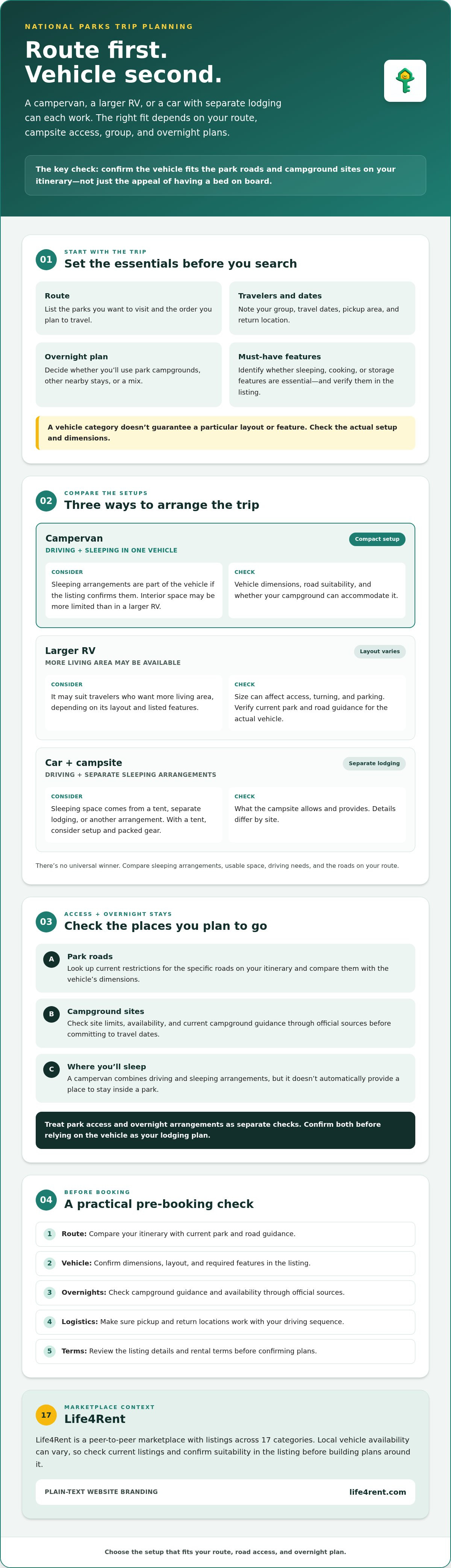
There’s no universal winner. The right fit depends on your group size, how much room you need, the roads on your route, and where you plan to sleep. Use this comparison as a starting point, not a promise about any particular vehicle. Layouts, equipment, and dimensions vary by listing.
Comparison takeaway: A campervan may be a practical middle option if you want to combine driving and sleeping without choosing a larger RV, and its space and dimensions suit your group and route.
When is a campervan more practical than a car and tent?
A campervan can save you from setting up a tent at each stop, but its sleeping arrangement and usable space depend on the specific vehicle. Consider the weather, how much time you expect to spend inside, and what facilities your campground offers. Ask which equipment, if any, comes with the rental instead of assuming bedding, cooking gear, or other items are included.
When might a larger RV or separate lodging fit better?
A larger RV or separate lodging may suit travelers who need more indoor space or prefer not to sleep in a vehicle or tent. A larger vehicle can also require more planning for roads and parking. Compare its listed dimensions with official guidance for your route and campground, and choose based on the actual setup rather than the category name.
The Main Concern: Will a Campervan Work at the Parks You Want to Visit?
Renting a van doesn’t guarantee access to every park road, a suitable parking space, or permission to stay overnight where you stop. Check each separately. For a camper van rental for national parks trip, compare the vehicle with your route and overnight plan before booking, then confirm current details through official park and campground sources.
What should you verify with the National Park Service?
Check official information for every park and planned route. A vehicle may fit one campground but not meet a road restriction or suit a parking area elsewhere on your itinerary. Guidance for one destination doesn’t necessarily apply to another.
- Park access: Check current entry guidance and any reservation requirements that apply to your dates or planned activities.
- Roads: Look for vehicle length or other restrictions on the specific roads you intend to drive. Compare them with the rental listing’s stated dimensions.
- Parking: Confirm relevant parking details for trailheads, visitor areas, and other planned stops.
- Services: Verify current operating details and reservation requirements for visitor services you plan to use.
Use park-specific official pages and check them again close to your trip in case information has changed. The listing can describe the vehicle, but it can’t confirm that every road, activity, or facility on your route is suitable for it.
How should you confirm where you can stay overnight?
Check official park and campground information for availability and vehicle suitability. A campsite reservation is different from permission to park or sleep somewhere else. Don’t treat a roadside stop or general parking area as an overnight option unless official guidance confirms it.
Before committing, compare the campground’s available dates and site details with the vehicle you’re considering. If your preferred location is full, identify another legitimate overnight option rather than assuming you can stay nearby without checking its rules.
- Confirm whether the campground accepts reservations or uses another arrangement, and check current availability for your dates.
- Compare the vehicle’s listed dimensions with the site’s requirements or guidance.
- Keep a backup campground or other suitable lodging option in your route plan.
Once the park logistics are clear, you can search more effectively. Explore Life4Rent and check for relevant local listings, then verify the item, location, dates, and listing terms directly. Campervan availability isn’t confirmed, so make sure a listing exists and suits your plans before relying on it.
Plan the Rental and Route with This Pre-Booking Checklist
A workable plan connects your park route, vehicle, and overnight arrangements. Before you book a camper van rental for national parks trip, check the following in order. If the vehicle or dates change, revisit your route and campsite plan as well.
- 1. Map the route. List the parks and the order you expect to visit them, then compare pickup and return locations with your starting point and final stop. A distant pickup or return can add driving that doesn’t help your trip.
- 2. Check park details. Use each park’s official information to verify current road guidance, vehicle restrictions, reservations, and campground details for your dates. Check the specific roads you plan to drive, not just general park access.
- 3. Find a suitable vehicle. Compare the listing’s stated dimensions and sleeping arrangements with your group and route. Note any required cooking or storage features, then confirm whether the listing says they’re included.
- 4. Confirm the terms. Review availability, pickup and return times and locations, rental terms, and how to contact the owner. Ask about unclear features, vehicle condition, or operating instructions, and keep agreed details in writing through the communication method available to you.
- 5. Finalize overnight plans. Check official campground availability and whether the site suits the vehicle. Keep a backup option in case your preferred dates or location aren’t available.
What should a campervan rental listing clarify?
Look for the exact vehicle, confirmed dates, pickup and return arrangements, included equipment, and sleeping setup. If a detail matters but isn’t clear, ask the owner before making other bookings. Photos and a vehicle label don’t necessarily confirm dimensions, equipment, or how a feature works.
For a broader introduction to renting through a peer-to-peer marketplace, read the practical peer-to-peer rental guide. The same principle applies here: review the individual listing and clarify its terms before you commit.
How can you shape a realistic national parks route?
Group nearby destinations only after checking current travel times and road guidance for your vehicle. Leave room for campground availability, changing park conditions, and the pace your group prefers. A route that looks compact on a map may involve longer drives or tighter logistics than expected, so don’t plan around a fixed trip length.
With your route and requirements in hand, review relevant local rental listings and confirm the item, location, dates, and terms directly. Campervan availability isn’t confirmed, so treat any suitable listing as something to verify, not an assumption to build your trip around.
How to Use Life4Rent as One Option in Your Campervan Search
Life4Rent is a peer-to-peer rental marketplace where individual owners list daily items across 17 categories, including outdoor and sports gear. Campervan availability isn’t confirmed, so use the platform as one place to check for relevant local listings, not as a guaranteed source of vehicles. A camper van rental for national parks trip still needs to fit your dates, pickup location, route, and overnight plans.
Review the individual listing rather than relying on its category label or photos. A vehicle only fits your plans if its details and terms work for the trip you’ve mapped out.
What should renters check before choosing a marketplace listing?
Confirm that the listing describes the exact vehicle you’re considering and that it’s available for your dates. Compare the pickup location with your route, and read the rental terms closely. If the description leaves questions about dimensions, sleeping arrangements, equipment, or use, ask the owner before committing.
Don’t assume payment arrangements, cancellation terms, or protections beyond what the platform clearly states. Check where those details are explained, and keep a record of points the owner clarifies through the communication process available to you.
What can you do if there is no suitable local listing?
If you can’t find a suitable vehicle, check other rental providers or consider a different setup, such as a car with separate lodging. Neither option is guaranteed to fit, so compare its availability and terms with the route and park arrangements you’ve already checked. A different pickup area or travel date may help only if the change still works for your itinerary.
Keep your plan flexible, but don’t compromise on a requirement that affects whether the vehicle or overnight arrangements will work. A listing that doesn’t fit your dates, location, or needs isn’t a useful match.
Check Life4Rent for available local rental listings, then verify each listing’s vehicle details, dates, pickup location, and terms directly before making plans. If nothing suitable is listed, continue your search elsewhere or reconsider the vehicle setup while keeping park access and overnight arrangements in view.
Set Your Route, Then Choose Your Rental
A good national parks trip starts with the route and overnight plan, not the vehicle label. Compare a campervan, larger RV, and car-and-campsite setup against your group’s space needs, driving plans, and preferred sleeping arrangements. Then check official park guidance for the roads, parking, and campgrounds on your itinerary.
Before booking a camper van rental for national parks trip, confirm the specific vehicle’s dimensions, included equipment, dates, pickup and return arrangements, and rental terms. A van doesn’t guarantee access to every road or a place to stay overnight, so keep a backup plan if your preferred campground isn’t available.
Life4Rent is a peer-to-peer marketplace connecting item owners and renters, with listings across 17 categories, including outdoor and sports gear. Campervan availability isn’t confirmed, but you can check relevant local listings and verify any listing’s details directly. If there’s no suitable match, consider other vehicle or lodging options that fit your route.
Frequently Asked Questions
Is a campervan a good choice for a national parks trip?
A campervan can work well if you want transportation and sleeping arrangements in one vehicle, especially on a route with several overnight stops. It may offer less usable space than a larger RV, and you’ll still need to arrange suitable overnight stays. Start with your group size, route, and preferred lodging, then check park road guidance and campground availability before choosing a vehicle.
Can you sleep anywhere in a campervan at a national park?
No. Having a campervan doesn’t automatically allow you to sleep in any parking area or roadside spot. Check official park and campground information for permitted overnight locations, current availability, and vehicle suitability. A campsite reservation is separate from permission to park or sleep elsewhere. Keep a backup plan in case your preferred campground or dates aren’t available.
How do I choose between a campervan and an RV for a parks trip?
Choose based on the space your group needs, the route you’ll drive, and your overnight plans. A campervan combines travel and sleeping functions in a vehicle that may be more compact than a larger RV, but layouts and dimensions vary. A larger RV may better suit travelers who want more living space, though its size can affect road access and parking. Check the actual vehicle details against park guidance.
What should I check before booking a campervan rental?
Confirm the exact vehicle and dates, pickup and return locations, dimensions, sleeping setup, included equipment, and rental terms. Compare pickup and return arrangements with your route, and ask the owner to clarify anything unclear, including vehicle condition and operating instructions. Check park road guidance and overnight options separately. Don’t assume equipment, payment arrangements, cancellation terms, or protections that aren’t clearly stated in the listing or platform information.
How much does a campervan rental for a national parks trip cost?
Rental prices vary by vehicle, location, dates, and rental terms. altCamp reported a U.S. median nightly campervan rate of $225 in September 2026, with half of listings priced between $180 and $288 per night. Treat this as an industry reference, not a Life4Rent price or a quote for your trip. Check the specific listing and clarify what the quoted amount includes before comparing options.
Do national parks require campground reservations for campervans?
Campgrounds don’t all use the same reservation system, so check the official page for each park and campground on your route. Many reservable sites use a rolling booking window, while others have different release schedules or availability arrangements. Confirm whether your intended site accepts your vehicle and is available for your dates. Don’t assume a van can stay overnight at a park without a suitable campsite or other permitted option.
Can I find a campervan on Life4Rent for a national parks trip?
Campervan availability on Life4Rent isn’t confirmed, so check current local listings rather than assuming a suitable vehicle is available. Life4Rent is a peer-to-peer marketplace connecting item owners and renters, with listings across 17 categories, including outdoor and sports gear. If you find a relevant listing, verify the exact vehicle, dates, pickup location, route fit, and rental terms directly before making plans.
Related guides on Life4Rent
Ready to rent instead of buy? See all vehicles available to rent on Life4Rent →
Life4Rent
Rent it. Earn from it. Own less, access more.
Browse peer-to-peer rentals near you, or list what you own and start earning — all protected by Life4Rent Protect.
About the author
Amsterdam, Netherlands
Joshua writes about the financial side of renting and earning on Life4Rent. His guides focus on helping people understand the real cost of ownership, calculate rental income potential, and make smarter decisions about buying versus renting. He previously wrote on household economics and personal budgeting for a pan-European finance publication.